Gliding to Galapagos

As we sailed and grew more confident in the boats surprisingly high speeds in the light winds, we turned slightly further into the wind and pushed forward on a straight course to the Galapagos . It felt like the boat was gliding effortlessly over the increasingly calm water. We had a strong current helping us along and as the breeze dropped further we marvelled at our continued rapid progress.


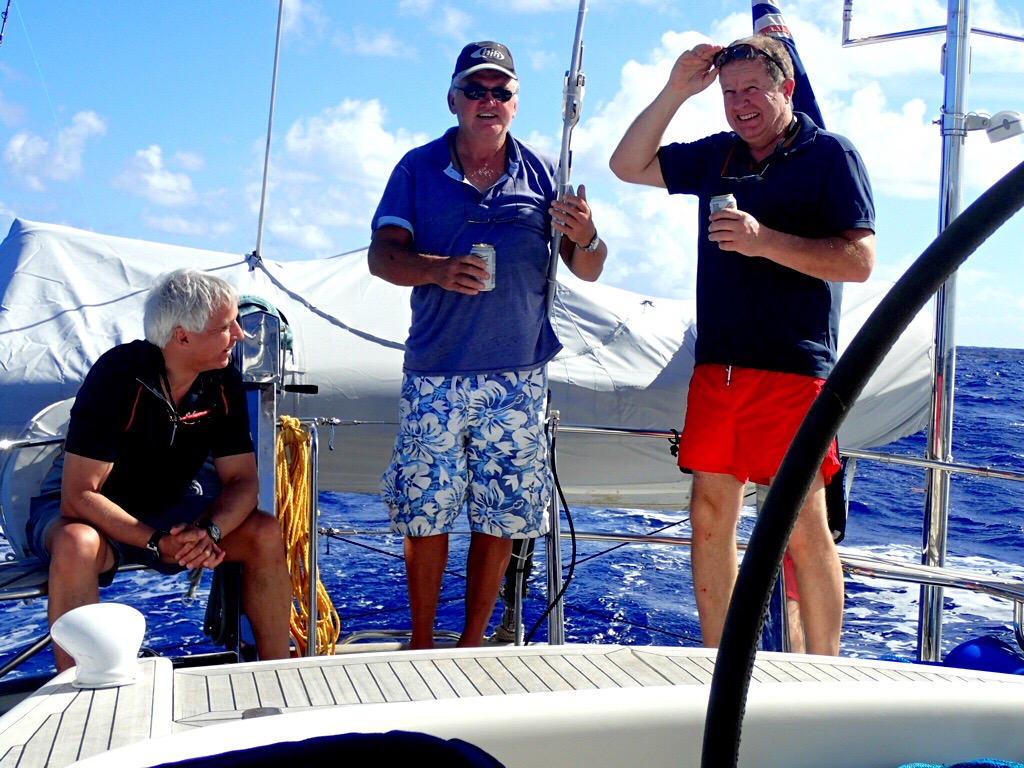
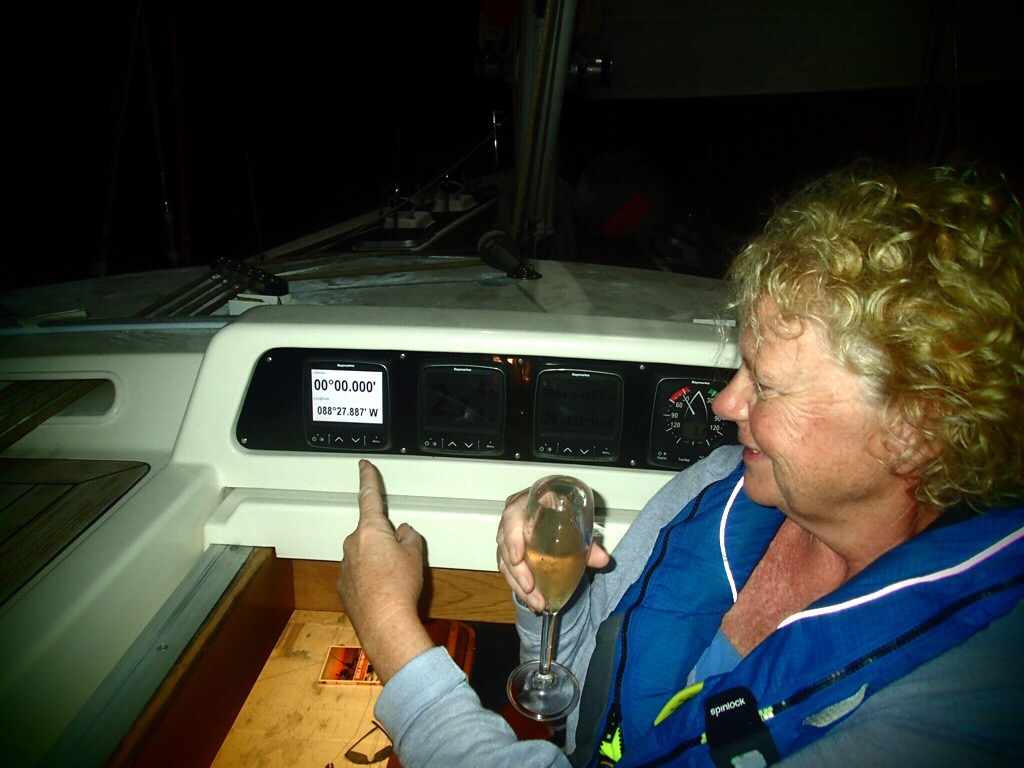
Finally, Wednesday afternoon and about 120 miles out, the wind dropped so low sailing was impossible and we started the engine. The sea became glassy smooth, the humidity increased and an erie mist hung in the air. At just after nine in the evening we approached the equator. We had suspended the watch system so we could all enjoy the moment and share a bottle of champagne. Tradition requires when you cross the equator for the first time that you make a donation to Neptune, so we filled five glasses, one for each of us and one for the ocean. The conditions were so peculiar we switched off the engine and moved to the back of the boat to fully witness our introduction to the South Pacific. Ghostly shapes of birds flew around us, the full moon shone through the dense mist casting a silvery sheen, the water, seemingly viscous, undulated slowly under us and the warm humid air enveloped us in a damp hug, none of us had experienced anything like it.
  

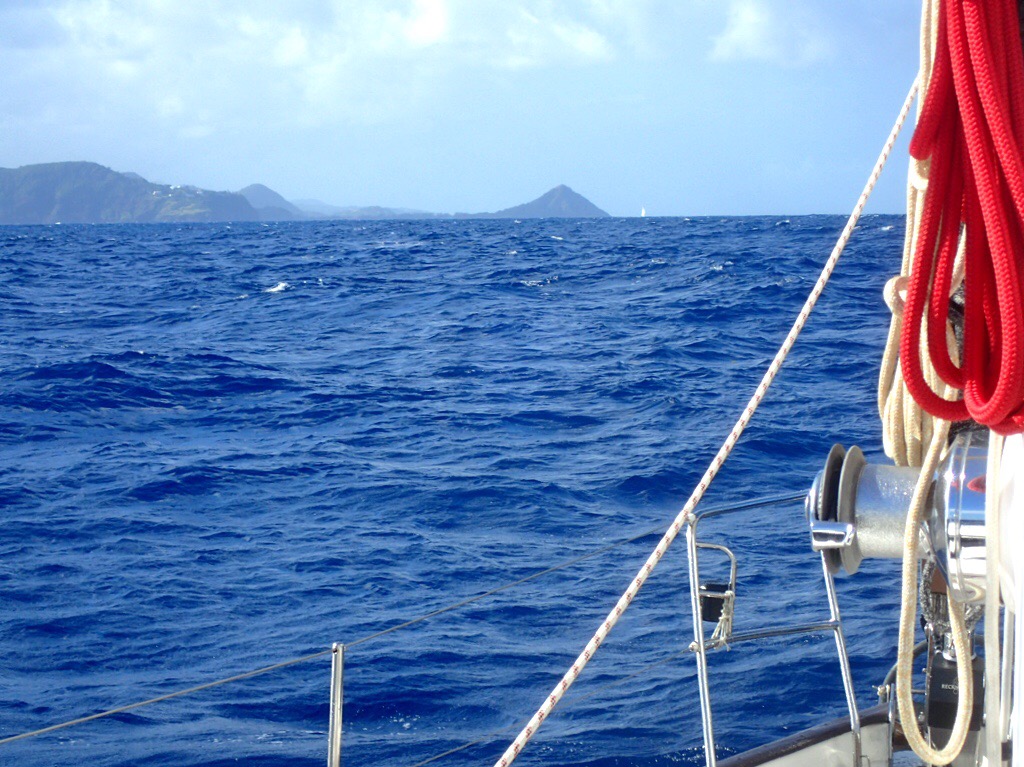
Slowly the morning sun burnt off the haze and the Islands of Galapagos came into view.
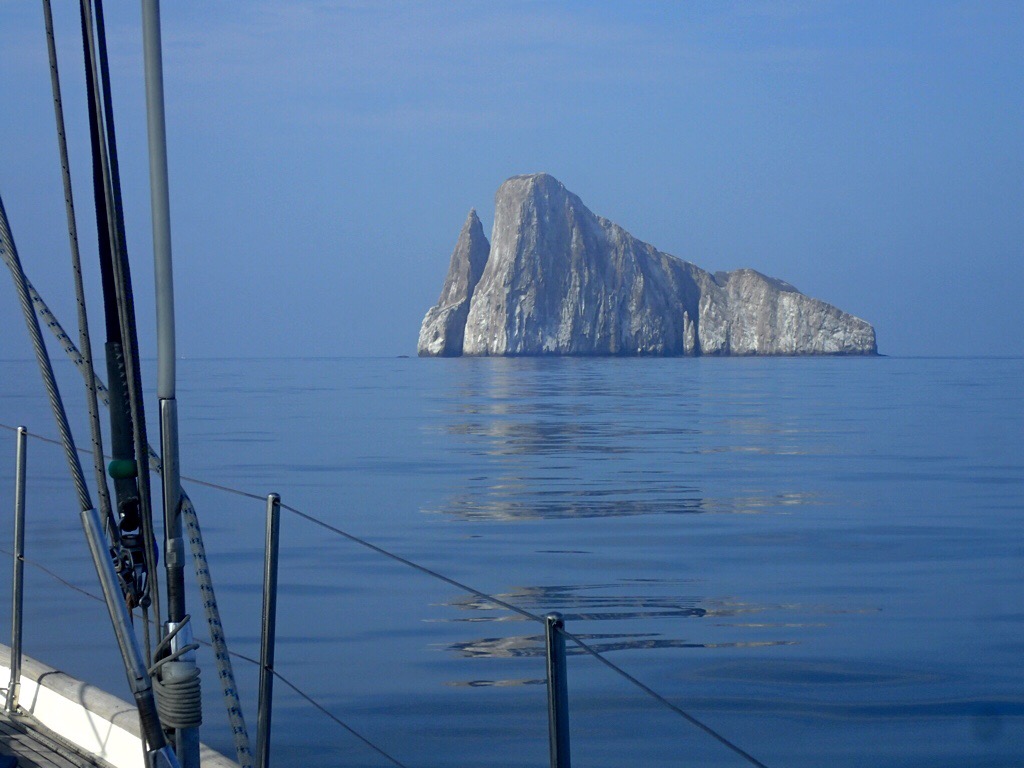
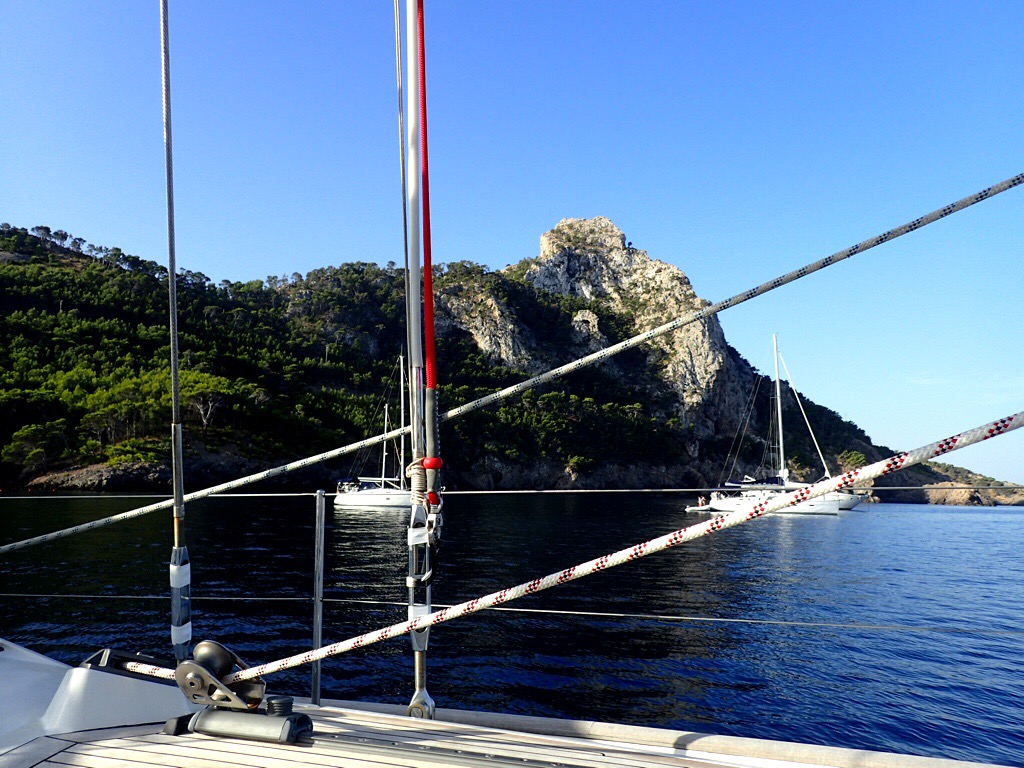
Kicker Rock off the North Coast of San Cristobal

By ten we were making our way into the anchorage in Wreck Bay, Puerto Baquerizo Moreno on the southwest tip of San Cristabal Island and the first stop of our visit here. Access by yachts is very restricted we have a pass to visit three of the islands but are limited to the one designated anchorage on each island.

Our agent hadn’t replied to my latest emails and we had no clue how to proceed with all the processes we knew we had to get through before we could go ashore. We flew the yellow quarantine flag, a hang over from the days when all crew had to be past fit to go ashore and is these days flown to indicate that we have yet to check in with customs and immigration. We needn’t have worried within minutes of dropping our anchor and while still drinking our ‘got here’ beer, the agents island representative was onboard sorting things out for us. We were informed the authorities would arrive at four that afternoon until then we must stay on the boat. 

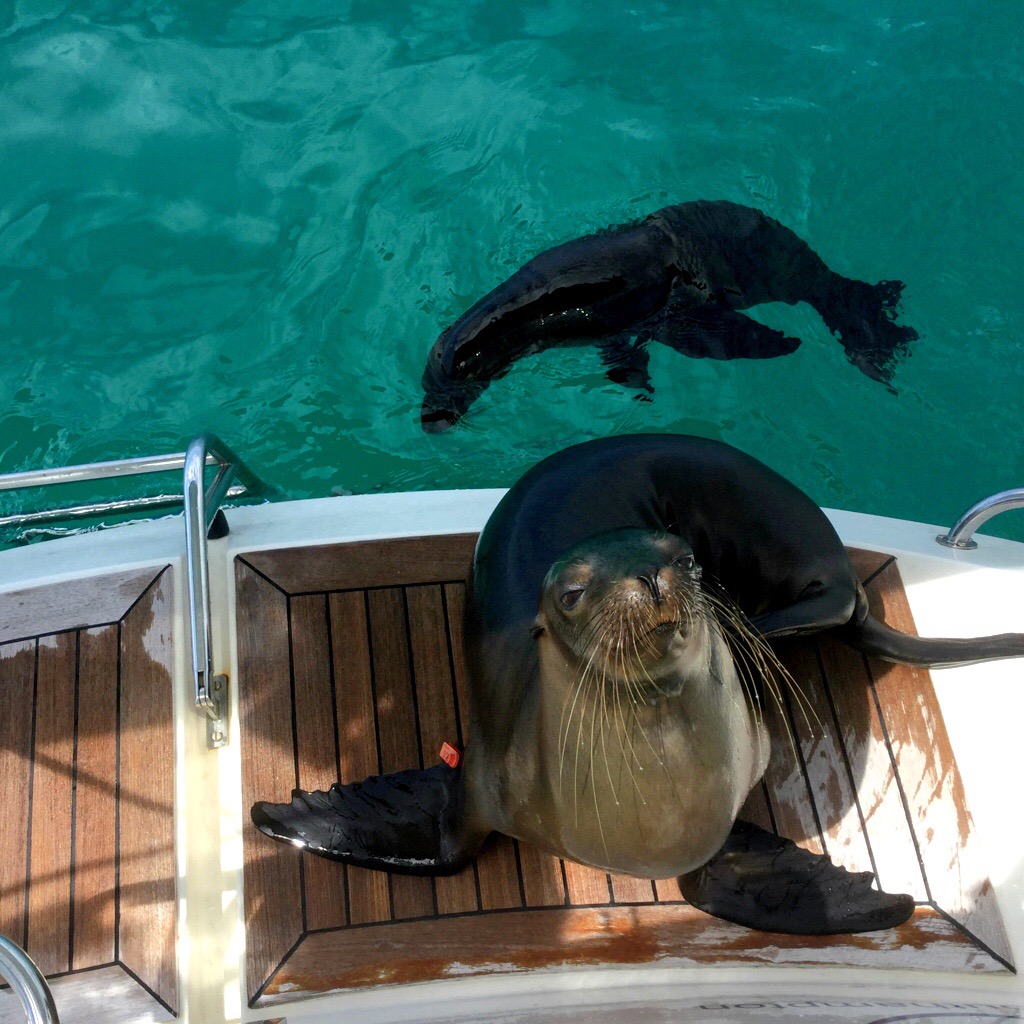
We were allowed to have a swim however, so feeling hot in the humidity we dived in. One of the attractions of these islands is, with no predators, how unafraid the large animals are here and soon after getting in we were swimming with sea lions. In fact one immediately laid claim to our swim deck barking at us as we approached the swim ladder and getting out of the water became rather precarious. It seems to have become the favourite spot of the bay, with battles occurring to secure a place on the warm teak. It is amazing to watch them, despite their rather grumpy nature, but they are very noisy, constantly barking at each other to maintain their place and loudly snoring in their sleep. 
  

On the dot of four a water taxi approached carrying six officials, one a diver who went into the water to check our hull, everyone else crowded into the cockpit and an orgy of form filling took over the boat. There was one person from immigration, one from customs, an official from the Nation Parks Organisation, the Port Captain and one from environmental control who walked around below searching for unwanted foreign species. Luckily all was past fit except for one rather mouldy looking orange that was, with a suitable amount of tutting, carefully bagged and taken away. Passports and forms were ceremoniously stamped and then it was hand shakes all round and we were free to enter Galapagos. It may have been a bit over the top but it certainly beat trudging into town and waiting around hot, bleak custom offices to be grunted at by glum bureaucrats. Galapagos gets the thumbs up so far.
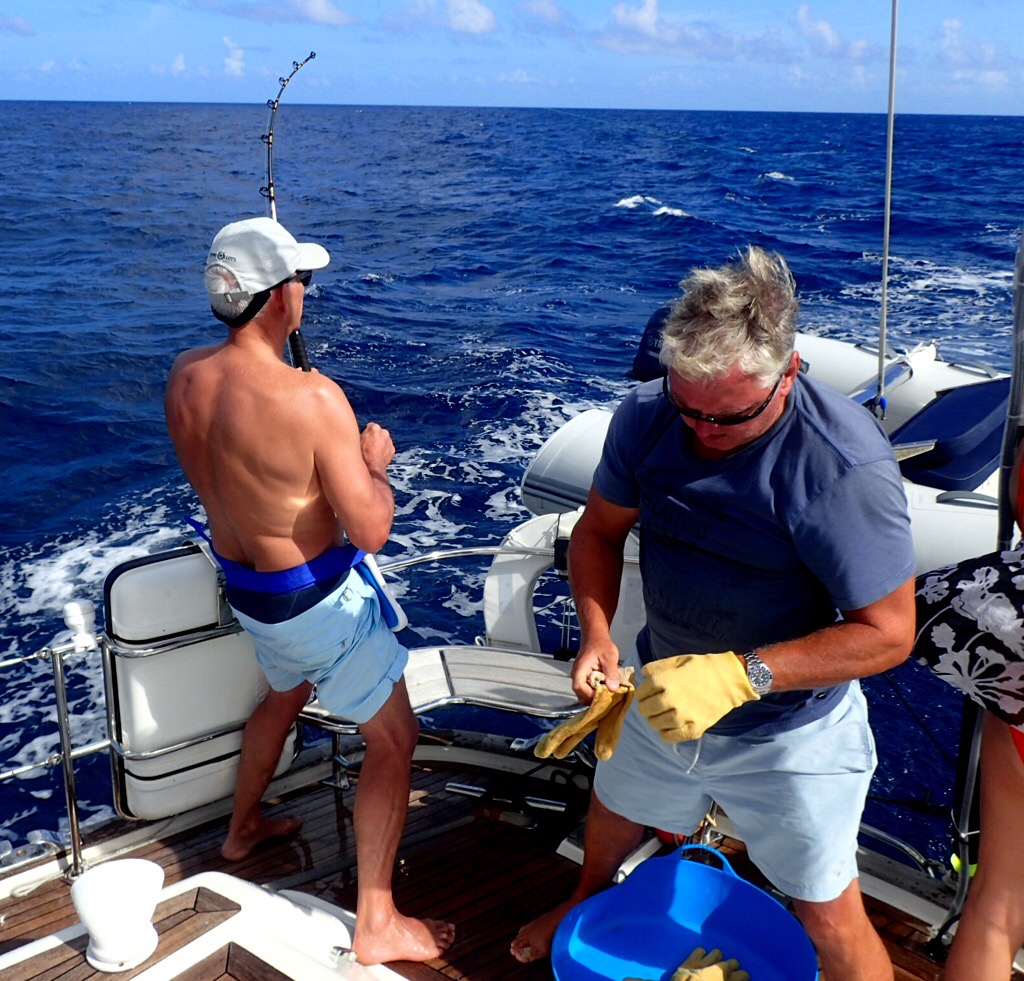
Peaceful Pacific

Monday 22nd February

At this exact moment, right now, I can not think of a place I’d rather be. Sitting at the bow, in the shade cast by the Genoa, my feet, over the side of the boat, being tickled by the spray from the bow wave, my skin bathed in the soft Pacific breeze. The ocean spreads out around me, a vast area of nothing, just us.

We are 500nm NE of Galapagos, 03.58.200N, 82.58.418W, we have been at sea for two days and for the past day we have seen only the sea, the sky and an occasional bird. There has been the odd AIS target on the screen but the cargo ships, heading for ports on the Equadorian coast, have all been beyond the horizon and out of sight. We have had one flying fish on the deck but none spotted at sea and what we were sure were whale blows were disappointingly too far away to spot an actual whale.

We left Panama City early in the morning and sailed for Contadora one of the Las Perlas Islands. Just as we rounded the corner into the bay we saw our friends onboard Toothless sadly disappear out to sea on their own passage to the Galapagos. They had warned us the water here was murky, due to a cool seasonal current bringing blooms of algae and so it proved to be. The green soup effect wasn’t really enticing us in, but we were there for a purpose and valiantly put on our masks and armed with cleaning implements started on cleaning of the waterline and inspection of the hull. To be honest the visibility was so bad except for the bow thrusters that Rick attacked with a brass brush, we left the water just hoping the guy in Panama had done a good enough job for the authorities in Galapagos.

We flew out of the Gulf of Panama with twenty five to thirty knots on our starboard quarter. The Pacific, so far, has been a revelation, even now with only eight to twelve knots of wind we often have over seven knots of boat speed. It all come down to the relatively smooth sea state we have a much smaller swell than in the Atlantic and a lot less chop than in the Caribbean Sea. With little roll the sails stay filled and Raya, seemingly with a smile on her face, bowls along happily.

The wind did drop completely last night forcing on the engine but we are back to ‘perfect ‘ sailing again now. We are approaching the doldrums or to use the correct terminology The Intertropical Convergent Zone . This is an approximately five degree wide band of weather that runs anywhere from just south of the equator to about 10 degrees North, here the NE trades meet the SE trades. Basically an area where the conditions become confused resulting occasionally in tropical squalls but more often than not with no winds at all. Looking at the forecast for the next couple days and our run into the Galapagos we seem to have wind arrows with 0.5 kts written on them, lets hope they have plenty of fuel to top up with when we get there.

Challenging Chores

Wednesday 27th January

The sun is rising behind us and even on a relatively benign night such as we have just had, the appearance of the sun is always welcome. We are 25nm north of the San Blas Islands and the point in our heads, where, throughout all the years of planning, the real adventure begins.

Bonaire to San Blas my route plotter informs me is 670 miles The San Blas are a group of small coral islands and to enable us to safely navigate the reefs it is important to arrive in daylight. This meant we either had to go fast or much slower and the high winds that are common off the Columbian coast have ensured this trip has been really quick. We have made really good time averaging about 7.5kts. The winds have been lively we have often had all the sails deeply reefed with gusts of over 50kts.

It’s not been the easiest of passages, we are all feeling a little jaded. Until this morning, when the sea has calmed down we have had a large swell, luckily mostly behind us. The middle days were the windiest and particularly rough with 4m waves looming up behind the dingy on the back of the boat. They seem to hang towering above you for a moment, before lifting the stern of the boat and if you are lucky, cause the boat to surf at great speeds, we broke our surfing record this trip with a top speed of 16.2kts! Not many waves catch you straight on of course and the further to the side they get, the more you roll and the more uncomfortable it is.

Even in a small roll life can be challenging, take two examples. Firstly cooking, the cooker is gimballed, that is, it rocks with the boat and therefore is always on a flat plane. It does take a big leap of faith to feel comfortable with a pan of hot food that is leaning dramatically towards you, looking like it will topple at any moment but of course the food is in fact flat and the surroundings and you are the things that are tipping over. Nothing you put on any other surface stays still, next time you cook even something simple just notice how many bits and pieces you have around you. Now try to imagined you are having to wedge yourself against the counter to steady yourself and that everything you put down is sliding back and forth, constantly – that is cooking at sea. We have overcome some of these problems by cooking in short stages, keeping as much as possible in the lockers till needed and we have numerous nonslip dishes, boards and mats that in most conditions keep things relatively still. We have deep bowls to help keep the food from spilling while you eat and a drinks rack to keep mugs and drinks upright. On short trips or when it’s very rough we resort to something pre made from the freezer, beans on toast or a sandwich but even for this trip, of just under four days, with three meals a day, that’s twelve meals and you can only eat so many sandwiches or tins of beans.

Then think of taking a shower, again if we are sea for one or two days we don’t bother. We are lucky, Raya has a large water tank and an efficient watermaker, so we can shower when we need to but if it’s at all rough it’s not easy. Firstly you need to undress, try taking your clothes off while you are clinging on to stay upright. Then into the shower, the soap, shampoo, conditioner etc won’t stay still, I put mine in the sink and step precariously out for them as necessary. To wash your hair takes two hands – again just try it with one, so I keep myself upright by planting my feet wide apart and pressing my bum against the wall, washing quickly. It feels great to be clean but still you need to dry and again you need two hands, comb your hair or whatever and then get redressed. This is not an elegant life.

One returns to the cockpit from the galley or the bathroom hot and bothered and in need of a rest. We are reminded yet again that the sailing is often the easy bit. But on the days when the sea and wind are feeling kind to you and when you arrive at somewhere as unforgettable as the San Blas Islands it is all definitely worth it.

Bonaire Bound

Wednesday 20th Jan
Jonathan and Sheridan flew out Saturday, they are sailing with us to Panama and through the canal with a few stops en route. After a morning provisioning and lunch at the beach we readied the boat to leave. Midmorning Monday we said a fond farewell to Grenada to sail westward. It is often hard to find a moment to look up from coiling the lines, stowing the fenders and checking the charts as we leave a marina or anchorage but I always try to make sure I say a quiet goodbye to places as we sail away.

For the first few hours the winds were light and directly behind us, add to that rather lumpy seas that rolled the boat and flogged the sails, it wasn’t comfortable. The 410 nm to our next destination, Bonaire, seemed like a long way away. Within a few hours however the sea settled, the wind increased and backed slightly to the north and a strong westward current appeared. For the next 48hrs that’s pretty much how it stayed. We were running a downwind rig with the genoa poled out to windward, the boom on the other side as far forward as the shrouds would allow and the stay sail pulled tight in the centre. With the favourable current we have been flying along often at over 8kts with the promise of arriving in Bonaire with an hour or two of daylight remaining. Today unfortunately the wind has dropped and is back in the east, so to keep us on schedule the engine is on.

But it has been a pleasant sail, conditions have been relatively benign, with little rain, sparkling sea and moonlit nights. The watch system has worked well and with Jonathan, an experienced sailor, onboard, Rick has got much more sleep than normal. We have been entertained by shoals of flying fish and flocks of fishing birds. We saw again the elusive green flash as the sun dipped below a crisp horizon and at night we have whiled away the hours identifying the stars using a clever star guide app on my iPad.

It is amazing how far the flying fish can fly, a few feet above the waves they swoop and glide, looking much like a swarm of giant dragon flies. For some reason at night they fly much higher, sometimes high enough to strand themselves on our decks, as Sheridan can attest to. During her early morning watch she was startled as one flew straight into the cockpit and hit her on the head!

We are sailing less than a hundred miles from the Venezuelan mainland so we have had plenty of bird life around the boat as well. Our favourites were the masked Boobies, largish white birds with black around their faces, on their tails and under their wings. They dive spectacularly, vertically straight down, to catch small fish which they eat on the surface before taking off and diving again.

Not too much luck however with the fishing this trip, there was the ‘one that got away’, a 3ft Dorado that escaped as Rick attempted to haul him onboard and a Spanish mackerel too small to bother with, otherwise the rods have been quiet. We have noticed one odd thing, all our catches on the boat so far have been with the starboard rod, whichever lure is put on the port side nothing happens?

Landing the ‘fish that got away’

Friday 22nd January 

Bonaire is the B of the ABC islands, three islands that lie north of Venezuela and are part of the Netherlands Antilles. The coast off Bonaire is very deep and the water crystal clear, the National Park to the north is home to the rare yellow shouldered parrot and many of the beaches are turtle nesting sites. The authorities are making a big effort to preserve this pristine environment, imposing strict rules, there is no anchoring anywhere around the Island, large sections of beach are off limits and to dive or even snorkel you need a permit. Yachtsmen are asked to dispose of their rubbish correctly, use their black tanks at all times and be careful not to allow anything to end up overboard. A couple times a year the local population don thier scuba gear and take to the harbour to clean the sea bed.

We approached around the south of the island past the salt lakes, used still, to provide salt for export. We pass three coloured obelisks along the shoreline, spaced about half a mile apart, that years ago were used to indicate the location of varying grades of salt available to the ships arriving to take salt around the world.

The main island is kidney shaped with a small island lying to the west, providing a well protected natural harbour at its centre. We sail in as the sun sits low in the sky and pick up a mooring bouy off the main town. Kralendrjk is an interesting place, which we are finding as hard to describe as to pronounce. It stretches long and thin along the sea front, the buildings architecturally unremarkable but solid and colourful with their orange roofs and yellow and blue walls. The traffic moves along the streets at a snails pace and the locals, a mix of Caribbean, Dutch and American, are happy and helpful, there is a definite feeling of a place stuck, pleasantly, in the past.

After checking in at customs and immigration and wandering around, we pop into one of the numerous dive centres to buy our snorkel permits and get the low down on the best spots to visit. The island of Kliene Bonaire, an easy dingy ride away, is one of the spots recommended, so we collected our stuff and motor across. 

A wet crossing in a very full dingy

As we approach, the white sand and turquoise sea is breathtaking and when we put our heads underwater the clarity of the water is amazing. We are surrounded by hundreds of fish, of dozens of species, large dazzling Parrot Fish, inquisitive Sargent Major’s and large silver Bermudan Chub, yellow and blue Scrawled Filefish, two foot long Trumpetfish and tiny iridescent blue Angel Fish. The corals seem to sparkle in the sunlight. Bonaire, our guide book tells us, is one of the top three of the Worlds scuba diving areas, we were sceptical, could it really compete with the Maldives or the Red Sea, after our first rate snorkel we decide to stay another day and take a dive trip to investigate.


About 30m off the beach a change in colour from turquoise to dark blue marks where the sea bed drops away to hundreds of meters deep, creating what’s termed in scuba speak as a wall. These walls are brilliant to dive as they are covered in coral and fish and importantly to us, without a guide, you can’t get lost. The coral was extremely petty, hundreds of different varieties of hard and soft corals, the branches swaying in the current. The small fish weave in and out and the larger ones patrol up and down the sides. A shoal of bright blue Chromis rush past us, we peer warily into the never ending blue to see what might be chasing them. After 40mins we come to the top feeling exhilarated, but top three, well perhaps at other spots on the island.

Jonathan and I diving the wall

Atlantic Crossing in pictures


Team Raya preparing to leave Las Palmas


An upside to the Atlantic squalls

5000 miles sailing Raya, 1784 miles to St Lucia

Boys enjoying the moment


Sailing with our blue cruising chute


Sailng west

Erics second Dorado


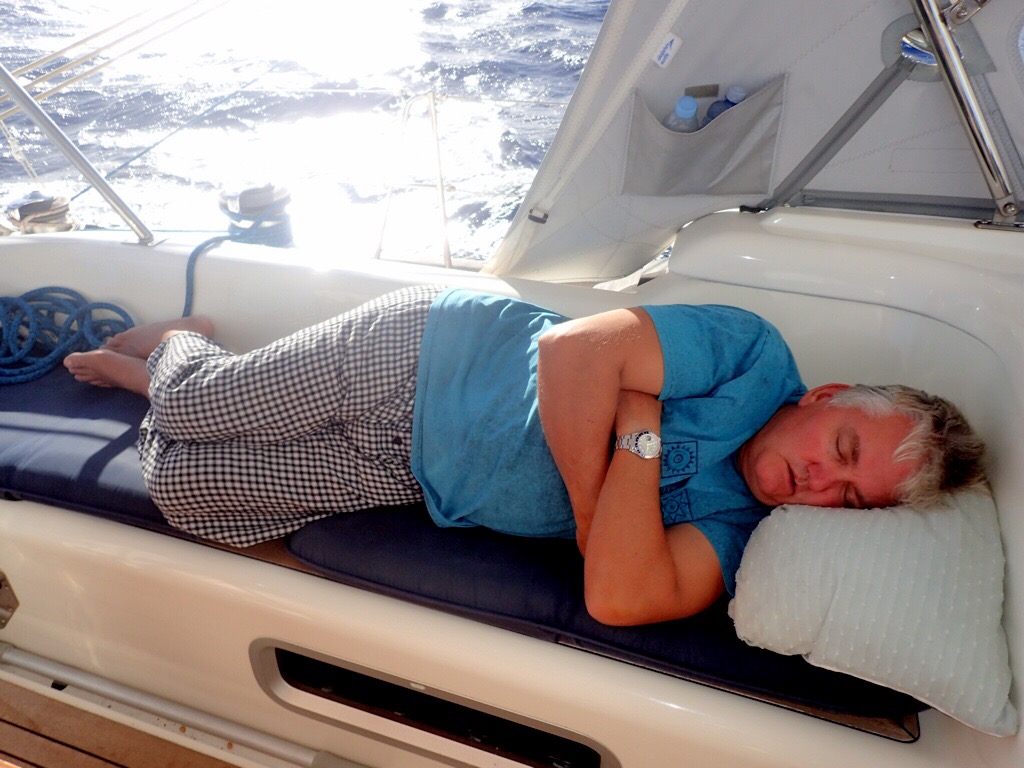
Captain “just call me Ben” Smith grabbing some sleep


First sight of land for fifteen days


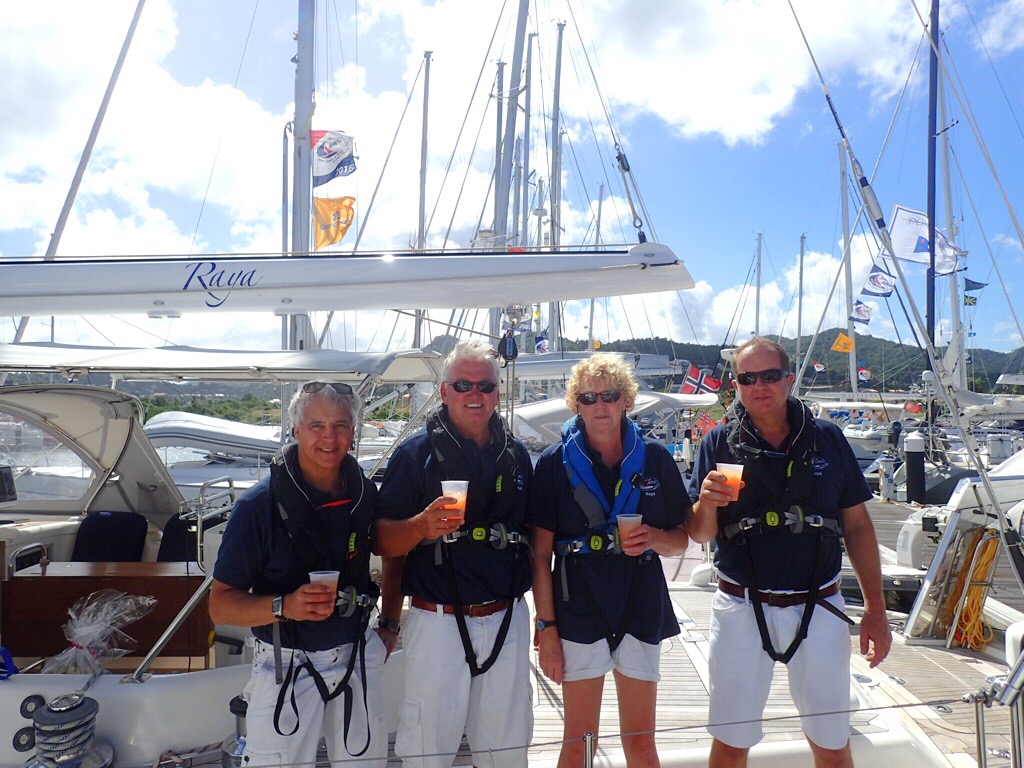
Rum punch welcome to St Lucia


The blog that got away

Below is a blog that seems to have got lost in the ether of Atlantic satellite comms. 

Halfway there

Monday 30th November

The suntan lotion is back out, the crew are in T-shirts and shorts and have smiles on their faces. The sea temperatures is up to 25C, the air is 28C in the shade. Our lat/long is 22N/35W and the flying fish have started to land on our decks, we have reached the tropics. 

Today with much excitement we successfully flew our big coloured cruising chute. Ricks relief was obvious as it launched without a hitch and sped us along in the now light winds, justifying all that effort to drag it out with us to Las Palmas. Unbelievably we are still leading our class and the cruising chute will help keep us competitive, we need all the help we can get Raya doesn’t really perform well in light winds.

We get a position update at midday each day from ARC Control, so we know more or less where everybody else is but we haven’t actually seen any other ARC boats for a couple of days now, there have been a few targets on the AIS but we haven’t even glimpsed their lights at night, the radio is silent.

We have been sailing for a week now but I still struggle to grasp the enormity of the body of water around us. There have been plenty of times in the last six months when we have been out of sight of land and there is nothing now to show there is not an island, or continent for that matter, just over the horizon here too. I try to visualise us as that tiny speck on the ocean you see way below on a flight to NewYork but in reality our world is the twenty or so miles to the horizon all around us. We have plenty of sea below us too, as we committed a broken plate to the depths, Eric reflected on what it would past on its 2 mile trip to the seabed.

We have had moments of wonder, such as the stars last night. With no light pollution the sky was full to bursting and the cloud of the milky way was as clear as day. To add to the scene there was phosphorescence twinkling in our wake – stars above and below us. Within an hour the moon had risen and the stars faded as the moonlight shone so bright you could almost read by it. There have been lots of magnificent rainbows, their colours bright against the dark grey of the squall clouds, one particularly impressive one was a complete half circle that ended seemingly metres from our feet. On their watch the boys even saw a rainbow created by the moonlight, a very obvious bow of dull colours, I didn’t even know such a thing existed. And yesterday we were joined by our first pod of Atlantic dolphins.

There have been moments of calm when we can relax and enjoy being in this unique spot. Times of high activity as we change sails or battle the swell to prepare lunch and moments of suspense as we check out the latest position update or await a bite on the fishing line we are trailing.

However there is one thing you can be certain of when sailing and that is that no particular moment or situation lasts long. One minute the boat is sailing along nicely and then a slight wind shift will mean we can no longer point to where we want to go and everything is different. 

It is five in the morning my watch doesn’t start until six but the roll of the boat is making it impossible to sleep, the wind has shifted and not wanting to change our downwind twin sail rig in the dark we have had to turn slightly north bringing the swell onto the side of the boat. There is not much wind and the sails flog noisily, our speed has dropped and St Lucia feels a long way away. At least I am warm and dry, a few nights ago on my 3-6am watch, I had the rolling, the flogging and rain! 

We crawl slowly towards the half way mark that with the high winds seemed we would reach yesterday but at this speed we won’t make it for another eight hours. Sunrise will lift our spirits, the forecast is for the light winds to continue, so it’s all hands on deck to raise the cruising chute back up and try and to push on as fast as possible.

Atlantic Time

Fri 4th

Time, normally it’s quite a straight forward thing, but here on Raya, six hundred miles from St Lucia, we are grappling with Atlantic time, which has four different times at once.

Firstly there is boat time, currently GMT -2 .This is the time we use for the the day to day running of the boat, particularly the time we use for the watch system. As we travel west we have to add an hour about every four days to keep sunset and sunrise in sync with life onboard.

Then there is ARC control time which is set at GMT, this is the time all their updates relate to and is essential as we work out weather forecasts and the position of other boats.

Next is St Lucia time, GMT -4 which as we draw closer becomes more important as we try to calculate our arrival time.

Finally there is the random times all our electronics are keeping, my iPad for instance can’t find what time it is mid Atlantic and I can’t find a city that is GMT -2 to set it to, so it is stuck on GMT -1. When I wake bleary eyed and confused for my watch grappling with what the actual time is, can be a bit of a challenge.

To add to the confusion not one of us knows what day of the week it is and if it hadn’t been for Matts birthday on the 2nd, giving us some point of reference, the date would be a mystery too. Talk of Christmas from back home seems incomprehensible, as does the fact that in a few days we will be in the Caribbean without going anywhere near Gatwick. We are all however very clear about how many days we have left at sea, at our current
pace that will be  3-4 days depending on our old friend the wind.

We are sailing fast, dead downwind, flat out with our twizzler rig (two genoas one set either side of the boat)  but its touch and go if it is fast enough, the opposition is closing in. We can’t actually go any faster so we are just trying to enjoy the ride which includes 12kt surfs down 12ft high Atlantic rollers.

Each day is different, the sea is rougher or calmer the sky cloudy or clear, we spot a way off tanker or the dolphins come to play but they are tending to meld into one. Tuesday however stands out amongst the crowd. it started badly with us ripping the cruising chute. We had flown it carefully all night with winds rarely going above 12kts, as the sun rose Hartmut and I were on watch when suddenly a gust of 50 kts appeared from seemingly nowhere shredding our beautiful blue sail. This sail is not essential but Rick was beginning to really enjoy mastering it and we may miss it in the light winds we expect to encounter as we approach St Lucia.

That afternoon our mood was lifted, Eric caught a fish, a magnificent three foot dorado, that he filleted and cooked for supper, delicious and probably the freshest fish we have ever eaten. As he also is in charge of bread making he is rapidly gaining a certain status however his attempts at walking on water still need some refinement.

Today is much like any other we trim the sails trying to squeeze every last bit of speed from Raya, we cook, eat, sleep, read and clean, we stare out into the never ending blue, fill in the log book and increasingly pour over the position reports.

We are now all ready to get there and setting all our clocks and especially our body-clocks back to just one time, Caribbean time.

Race or Rally?

Thursday 26th – Day 4

It’s a very bright moonlit night and there is nothing but sea and sky. No whales or dolphins, no sign of any other boats, not even any phosphorescence, just us sailing through a vast ocean. This isolation feels very special, the nearest land is 700 miles away, even the sea bed is a couple of miles away. The boat is screaming along at over 8kts.

Our Atlantic rally has suddenly turned into an Atlantic race, much to our surprise we are leading our class. This has turned all of us from laid back cruisers to embarrassingly competitive beings. We are suddenly trying to take advantage of every opportunity to increase our speed and are pouring over the position lists with a fine tooth comb. If the wind drops it will become much more difficult for us to keep up with many of the yachts that have more crew in numbers and experience. But for now we are enjoying the glory and trying our best to make use of the windy conditions.

The high winds of course make for bigger waves and everyday life is very difficult. It is a challenge to cook, clean, dress, even brush your teeth as the boat lurches from side to side. All things that can be delayed if necessary on a short sail but are essential on a longer trip like this. I am collecting my normal clutch of bruises on the tops of my arms and my hips as I slam into tables and doors but beyond that we all seem to be coping. The really good news is that besides a bit of queasiness in the first few days, the pills have been doing a sterling job and we are now all weaned off them. Not even I am sick!

The only slight disappointment is the lack of sun, the temperature is pleasant even during the night now but there is nothing to beat the sun twinkling off a blue sea. We are being chased by a continuous string of squalls that bring cloud and rain, but they also bring the wind – so for the new racing team Raya it’s not all bad.

OMG! We are off across the Atlantic 

I am sitting here luxuriating in the stillness, we leave tomorrow and for the next two to three weeks my life will be lived on a moving platform. We are eager to get going, we have been sitting n the marina for long enough, the Caribbean beckons.
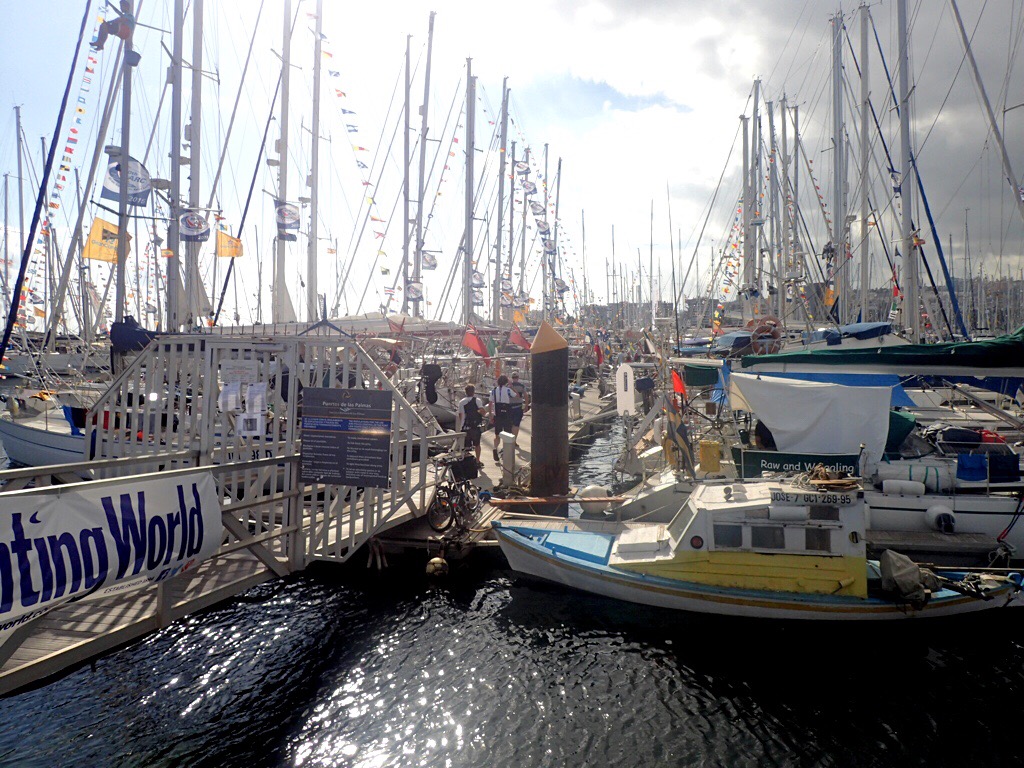
ARC World continues to defy description. We have made dozens of new friends, partied every night and fretted over everything from which route to take to when or whether to change the bed sheets. Getting anywhere takes ages as you continually bump into people all on a similar mission. The pontoon is full to bursting with people rushing here or there, boxes of groceries, delivery boys, and pieces of boats. It is crazy just how much activity is still going on on the boats. We have a guy from Oyster dangling 23m up our mast, opposite they are attaching a spinnaker pole and next door but one awaits a new boom!

  
  S pontoon 

The team from Oyster do a brilliant job pre ARC, they come to each boat and spend three or four hours checking through everything with a fine toothcomb and when they find a problem they help fix it. Raya thankfully and after all the money spent on the refit, expectedly, is still in good condition. They did however find a small problem at the top of the mast, a fitting had been left with a rough edge and this over the six months we have been at sea has chafed our spinnaker halyard (halyards are the ropes that pull sails up). As we are about to fly our coloured sail this could have proved problematic and Oyster have kindly been sorting it out for us.

 Further peace of mind came in the form of Andy from Stella Maris (our refit team) who stayed on board and helped us with the pre-trip checks as well. We really can’t be leaving feeling any safer than we are.

  
  Andy at the top of the mast. 

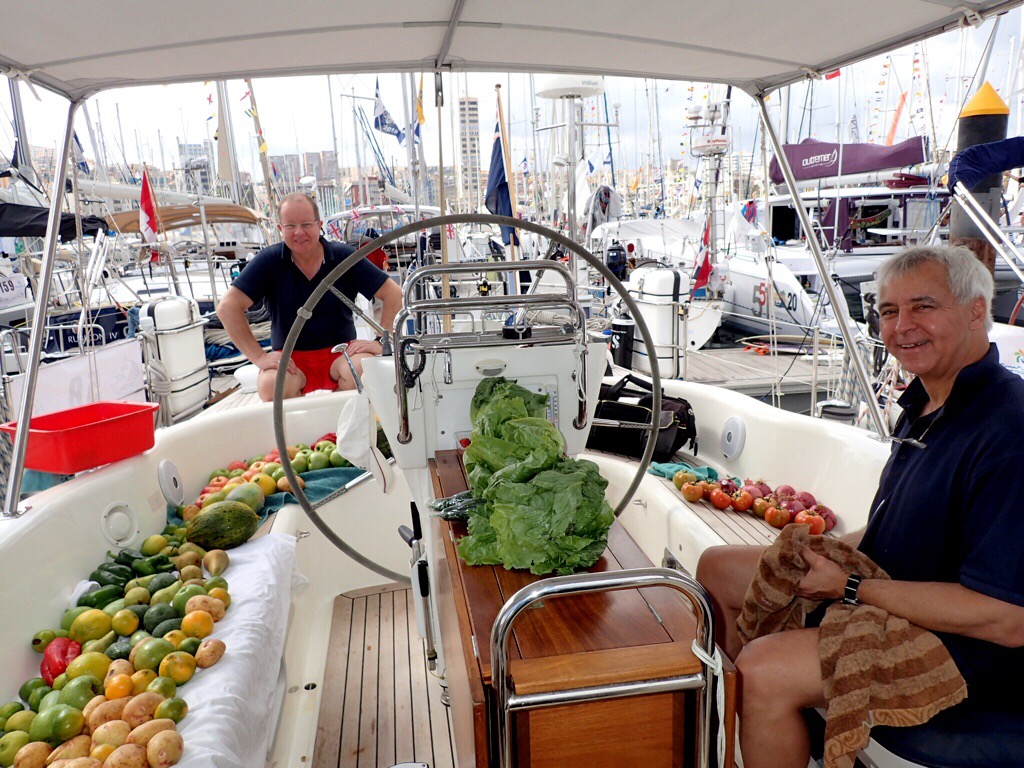
Our crew, Eric and Hartmut, have arrived so team Raya is now complete. Eric is a long time friend and Harmut an old work colleague, they have been signed up for almost a year and are both excited and working hard. All the fruit and veg arrived this afternoon and had to be washed to remove the chance of cockroach eggs being carried onboard. Rick and I returned from the skippers briefing to find the crew knee deep in apples and potatoes and Raya resembling a grocery store.

  
  Just part of the fruit and veg order 

Stowing all the food has been a challenge and I’m still not sure whether we have far too much or not enough. Both Eric and Hartmut appear to be big eaters so I rushed out and did another last minute shop. I have pre cooked half a dozen meals for the days when we don’t feel like cooking and have ingredients to knock up something exotic if we fancy it, we have tons of fruit, emergency tins and bags full of chocolate. It is possible our supplies won’t just get us to St Lucia but will get us right the way through Christmas too!

The forecast looks good as there is a stable high pressure over the Azores which has caused the trade winds to set in. The forecast is for NE winds F4-5, if that’s how the conditions are it will be perfect for us, our already heavy bulk, now full with food, fuel and water will need plenty of wind to get going.

Whilst at sea I will try to post a few blogs but as we will be sending via our satellite phone I won’t be able to send photos. If there is anything other than blue sea and more blue sea I’ll post the pictures when I reach St Lucia. Fingers crossed for a whale sighting.

Crikey we are in the Cannaries.

Thursday 16th September

I am woken by my alarm at 1am, every fibre of my body and mind wants to stay asleep but it’s my turn to be on watch and I force myself to get out of bed. Rick looks weary as I climb into the cockpit this is our third night at sea and we are feeling a bit tired. He briefs me, the wind has died so the engine is on and we just have the main sail out to keep the boat stablished. There are two targets on the AIS, both are over twenty miles away and running parallel to us, there are no other boat lights anywhere. Nothing immediate to worry about.

It always takes me a while to orientate when I come on deck, tonight it is very dark, the stars are incredible again but the sea is just black, no lights at all. However when I sit down I realize I am wrong, there is light, in fact it is as if we are sailing through stardust, I am mesmerised, our bow wave is sparkling. Dinoflagellates a form of plankton emit flashes of light when disturbed and we must be sailing through a dense patch of them because this is by far the best phosphorescence we have seen. They are also the cause of “red tides” where the sea is tinted red by their sheer numbers and we have indeed noticed a red tinge to the ocean at times.

We seem to be settling into a three hour watch pattern at night, just about long enough to get some sleep without it being too long on watch. We catch up with some rest during the day, letting each other nap as required. We keep an hourly log which is not only good sailing practice it helps break the nights and days into short chunks. I’m not thinking so much – help I’ve got two and a half hours of my watch still to go – it’s more – half an hour until the log needs writing. To help keep ourselves awake Rick drinks coffee, I walk on the spot in ten minute bursts or study the chart plotter – where are all the cargo ships going, what is the nearest city,  what is the depth here, how far are we from land etc… Tonight I watch the phosphorescence.

This wasn’t the only natural phenomena we have seen, at sunset yesterday we witnessed the elusive green flash. A trick of the light as the suns rays are refracted just as it drops beneath the horizon. We had heard about it, but rumor was, it was just an old sailors tale. We have watched the sunset on many clear days and seen nothing but today we both saw the last rays turn green for just a fraction of a second as the sun disappeared. The green flash does exist.

Friday 17th September

We have arrived in Lanzarote and we are feeling very pleased with ourselves. Over six hundred miles and four days at sea, just the two of us. It all still seems slightly unreal – crikey we are in the Canary Islands we are actually doing this sailing around the world stuff!

Me, sailing around the world

Thursday morning we hit something in the water, a thump and the boat shuddered, it shook us both. We are not sure what it was, Rick just saw a glimpse of a large red object disappear in our wake. He checked the bilges and all was fine, hopefully it sounded much worse than it actually was. Something to check next time we can dive under the boat.

That afternoon and evening produced the best and the worse of this passage. For a while we had perfect conditions, 10-14kt winds on the beam, boat speed around 7kts, nice temperature, blue, blue empty sea and Hugh Laurie playing the Blues loudly over the stereo, all was well with the world. This is what it’s all about, we cried, but as is the way with sailing no conditions last for long and before the day was out we were being punished for our smugness.

Perfect sailing conditions

The wind veered to the north until it was directly behind us, blowing between 20 and 30kts, no problem, the issue was with the swell that had increased substantially and was now hitting us on the side.  We had two main problems, firstly every time we rolled sideways the sails emptied, they flogged and we lost all our speed, we tried just the Genoa for a while but that made the rolling worse. We tried bearing up into the wind but that took us way off our course. We ended up with a reefed main and the engine on yet again. The second problem was trying to sleep, we tried lots of different positions, eventually, I found it best on the bed at ninety degrees, spread eagled on my back, Rick did better on the sofa but needless to say neither of us got much rest.

With the dawn things calmed down and we arrived in Marina Rubicon at 2pm exactly fours days after we had left Gibraltar. We radioed ahead to the marina office and were told to pull in at the reception dock at the entrance, it was not until we were almost along side that we noticed the dock was right in front of a bar and our arrival was the main lunchtime entertainment for the cliental just a few meters away. Luckily team Raya parked perfectly and our blushes were spared. And it was a great spot for the  “got here beer”.

Marina Rubicon is very nice, good facilities, plenty of restaurants, even a swimming pool. And phew, good Wifi! So we will stay a while to catch our breath and see a bit of Lanzarote.

Goodbye to the Balearics 

Wednesday 2nd September

We have started our journey back out of the Mediterranean, from now on we will be sailing westward all the way to New Zealand! 

I am writing this from the cockpit, motor sailing, we only have six knots of wind, three quarters of the way from Ibiza to Almerimar, where we intend to stop for a few days enroute to Gibraltar. The visibility is not brilliant so we can’t see the land which is about fifteen miles away, the sea is calm and there is not another boat in sight, it looks to all intense and purposes as if we are in an ocean already. This will be, at about forty hours, the longest double handed sail we have done so far, conditions have been benign and everything is going well with just nine or so hours left to go. One of my three forecasts are for the winds to freshen and to veer to the west, this will make things a bit more lively, so we are making as quick progress as possible while we can.

The Mckays, Jonny, Sheridan, Charlie and Daisy joined us in Andraitx last Wednesday and we spent, the six days they were with us, making a final visit to some of our favorites spots in Mallorca and Ibiza. We spent a night in our northern corner just outside the main port of Soller and finally got into the restaurant on the front we had been trying to eat at all summer and enjoyed steak cooked at the table Tappanyaki style. 

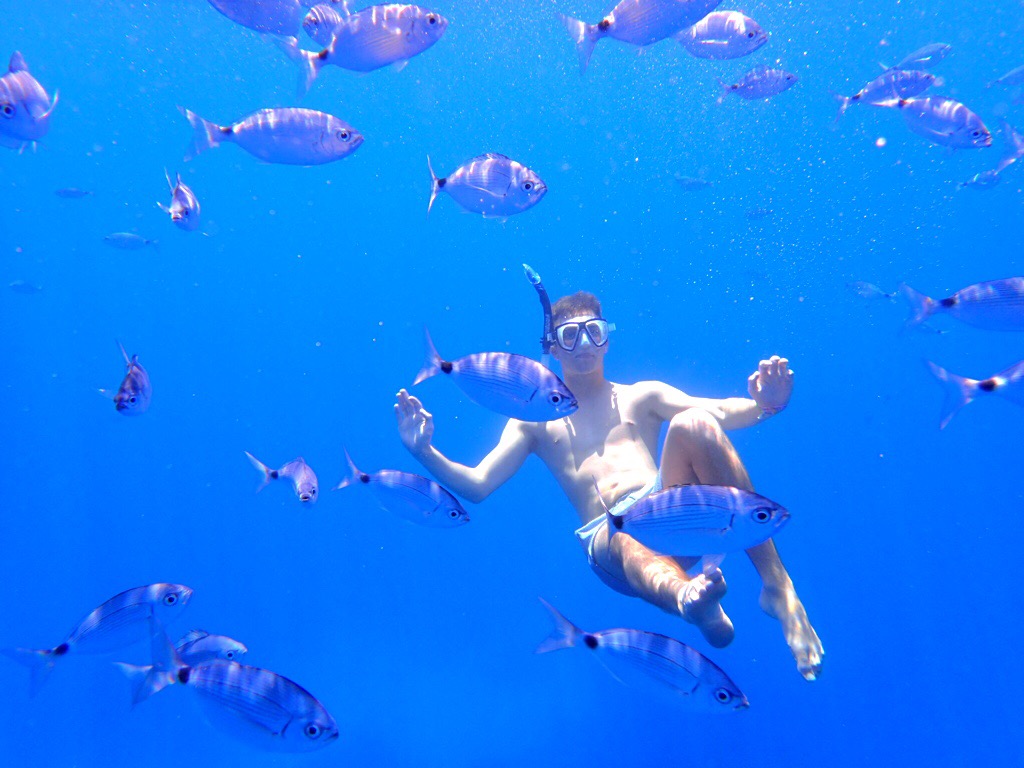
We anchored for a swim and lunch in Cala Foradada, where we swam for the last time in the crystal clear waters. The lack of fish in this part of the Mediterranean, in numbers and variety, has been rather shocking, so we felt lucky to see a few Pipe Fish, some yellow stripy Jacks and one small Parrot Fish. The overwhelming majority of fish are the Saddled Bream that we see everywhere and that are very enthusiastic eaters of our stale bread.  

Charlie feeding the Saddled Bream.

And then we turned west, towards Formentera and Ibiza. It was good to have some extra crew for the night crossing. Jonathan is an extremely experienced sailor and the root of our sailing ambitions, even Rick managed some sleep, feeling confident leaving Raya in his hands. It was quite a good trip, we managed to sail at least half of the way, there was quite an uncomfortable swell again but nobody suffered from sickness. For the kids it was their first night sail and I think they were surprised with how peaceful it feels and how light it was, bathed in a full moon. At one point Charlie was reading by the moonlight, in fact I was rather depressed by how poor my eye sight was compared to their young eyes, despite the thousands of pounds spent at the opticians, it’s a shame you can’t buy youth.

The anchorages in Formentera were thankfully less crowed than they were a month or so ago, but unfortunately Cala Sahona was full of small black jelly fish. We have seen an increasing number in the past week or so and both Sheridan and Rick have been stung. We are currently sailing just south of Cartagena and there has been a constant stream of a brown, ten inch diameter, variety passing the boat for the past two hours. That’s a lot of jelly fish!

Saturday evening we met up with friends of Jonny’s, Eric and Sally and their house guest Steve. An interesting bunch, we had a very pleasant supper. Eric has been visiting Cala Sahona since he was a child, as he has a family villa here, it was fascinating seeing the bay through his eyes realizing he’s completely different view of the place.

When we woke the next morning not only were the black jelly fish still all around us but we were getting a bit battered by the wind, so we took up the anchor and moved about three miles up the coast and anchored off Isla Espalmador. We were so glad we did, the island is joined to Formentera by a narrow, five mile long, low lying, sand spit and when we took the dingy ashore we discovered how beautiful it was. One side was a turquoise calm sea, full of yachts and super yachts at anchor, the other just 100ft away was exposed to the full brunt of the east wind and waves crashed into the beach. The spit is composed of flat low rocks and soft white sand, every rocky mound was completely covered with little towers of stones built by hundreds of visitors. Everybody seems to have a different tale for why people build them, but here, it felt very New Age and quite mystical. Despite a compelling urge, we resisted the temptation to build our own and instead played in the rough waves on the east side and then lolled in the cooling calm waters to the west.


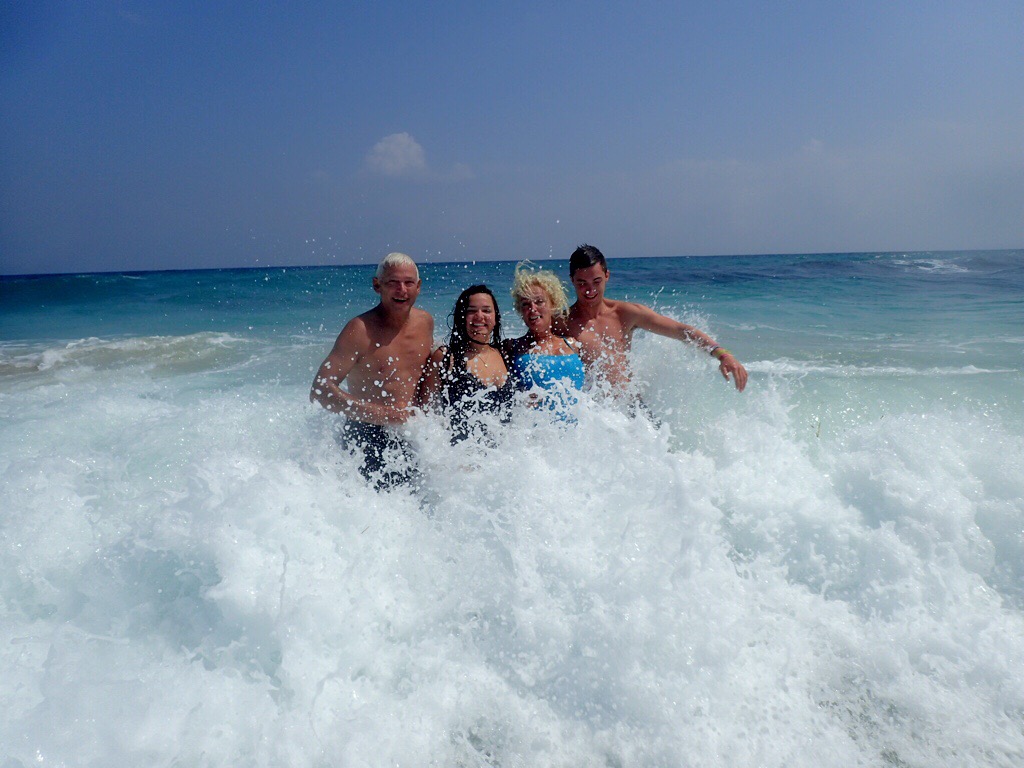
McKay family playing in the surf


Calm waters on the Eastern shore


For their penultimate night we paid a final visit to the anchorage at Cala D’Hort, eating at the nice cliff top restaurant and waking to views of Isla Vedra (Bali Hai) before setting off for Marina Santa Eulalia just north of Ibiza town. 

In the afternoon we took a taxi the fifteen minutes to Ibiza and walked, with much complaining from some members of our party, to the top of the old town. We walked through tunnels, up steep hills and even steeper steps to reach the picturesque square containing the Cathedral right at the top of the Citadel. The groaning was not improved by, at sunset, the arrival of a swarm of mosquitoes, suddenly the whole place was full of people scratching. Luckily we found an enterprising grocery store selling mossie spray and the evening became a bit more comfortable. We wandered into one of many restaurants lining the street on the edge of the old town and it turned out to be some of the best food we have eaten all summer, a fitting end to the Mckays stay.

We left Ibiza with black storm clouds in the distance and despite turning south to try and avoid it,we were soon engulfed by our first electrical storm. We rushed to protect one of the hand held radios and my iPad (which could act as a spare GPS if nessecary), putting them in the oven which we hoped, acting as a Faraday Cage, would keep them safe if we were hit by lightening. It was quite frightening as we watched a funnel form in the clouds and lightening bolts hit the sea. With the thunder cracking loudly all around, the torrential rain hit us and the visibility dropped to a few hundred feet. It only lasted half an hour or so but we were relieved to be finally sailing in sunshine again.

The rain front approaching

Thursday 3rd September

Well the expected high winds arrived five hours earlier than forecast and so the last quarter of our journey turned into a hairy twelve hours as Raya beat slowly right into the waves and wind. We arrived in Almerimar wet and tired, feeling that we had certainly passed the double handed, two night test. Thankful for our fantastic boat and her engine which ran without complaining for nearly forty five hours. 

Rain!

Monday we had a heavy downpour, unbelievably it is the first rain we have had since leaving three months ago (sorry UK friends I know you’ve just had a very wet day), it was quite a novelty. As the squall moved in, high winds swirled around the bay causing chaos as the anchor ballet fell to bits. Every boat in the crowded anchorage had a mind of its own and a wet half hour was spent fending off. The catamaran beside us was affected particularly badly , the poor guys onboard working hard not to hit us or the cliffs close on their other side. As we haven’t been in port for a while Raya was pleased for the fresh water soaking and in between guarding our flanks we gave her a good wash down. 

I am trying to build in a bit more excercise to my days, besides the casual swim to the beach or snorkeling, at anchor I am swimming circuits around the boat. This eliminates the risk from passing motorized mad people and depending on conditions, gives me a gentle or if it’s rough or the boat is swinging, a good work out. I am also doing a half hour of palates a few times a week. How often depends on it being calm enough to make it possible and quiet enough for me to feel comfortable waving my legs about on the very public bows of the boat. Wednesday morning was perfect, satin smooth sea and just a few boats spread well out in the large anchorage. As I looked about during my stretches, it occurred to me how the view from my mat, normally the sweaty reflection of myself and my classmates in the mirror of the fitness studio, has improved some what.

View from the pilates mat

After we dropped Eric and Roz Saturday we spent a couple of days hopping between bays along the south coast of Menorca we had a bit of wind and it was great to be sailing more than motoring. There were plenty of very beautiful and unspoilt coves that I’m sure are delightful out of season but in August they were heaving with yachts, it was just too crowded for us and so after one more night we moved on. Tuesday evening found us back in Cala Pinar – shaggy eagle bay, on the very northern tip of Mallorca, a convenient stopping point before our sail to the Spanish mainland the next day.

It’s now Thursday afternoon and we arrived early this morning in Sant Carles de la Rapita on the coast of mainland Spain where Raya will be coming out of the water for a couple of days. We are having three coats of anti-foul applied to the hull, a first step in the preparations for the bigger adventures to come. Hopefully it will keep us weed and banicle free until we reach New Zealand in just over a years time. Stella Maris our refit guys from the UK have a partnership here and have negotiated us a very good price, so it seemed worth the detour and we plan to take advantage of our location for a few non-boat days with a trip to Barcelona.

The twenty hour crossing from Mallorca, started with zero wind, a bit annoying as we had planned the crossing a day or two early to take advantage of the forecasted perfect sailing conditions. However as the sunset and just as we finished being scathing of meteorologists weather forecasting abilities the wind suddenly picked up and we were soon flying along in a F4 on a beam reach. 

Sunset enroute to the mainland

It was a very dark night and as I came on watch around 1am I felt completely disorientated, there was no moon and cloud obscured most of the stars and disappointingly the promised meteor shower. It took the lights of another boat in the distance, about an hour in, before I really felt comfortable that I was being an effective look out. Rick still has yet to master the art of sleeping during nights at sea, the weight of responsibility lying heavy on his shoulders, not to mention the heat below making for very sweaty conditions. 

So today is a rest day, tomorrow back to reality and top of the agenda is the cleaning of our rather smelly grey tanks, the tanks through which our waste water from the showers etc runs, delightful.

Across the Bay

Well the Bay of Biscay lived up to its reputation of being rough and stormy and the crew all still feel slightly weary but have an immense sense of achievement.

However before I tell the tale, a quick note on our AIS system for all our friends and family who follow our progress on various beacon apps, thank you all for the concerned calls, texts, posts etc we recieved. Our AIS transmits a VHF radio signal and therefore will only travel short distances, ours being situated on the top of our tall mast can be picked up by receivers for about a maximum of 50miles. So when our blip on the screen disappears this is not us sinking it us sailing out of range of the receivers that are mostly based on land. You will see large commercial vessels far out to sea as they relay their AIS through the internet, but we, I’m afraid, will disappear.

Last Sunday we left Plymouth promptly at 7am to catch the best of the tide for the start of our sail to A Coruna in Northern Spain, the route took us across the English Channel and then across the Bay of Biscay, we estimated it to be a three day passage. On board with us we had Ian an old friend who has sailed with us before but, like Rick and I, was a long passage virgin and Chris, a member of the Stella Maris team and experienced delivery skipper.


We had for days been watching the weather forecast and we were expecting to have NW winds for the first few hours, which would back to the SW as the first day went on. Our plan was to get as far west as possible while the wind was right and then turn southwards as the southwesterlies came in, hoping to be far enough west to skirt outside the Traffic Separation Zone that carries the big cargo ships around the headland at Ushant in France. However as we left Plymouth Sound the winds were persistently from the SW. Probably with our inexperience telling, but keen to get sailing and with the lure of the south pulling us, we headed for the inner passage at Ushant instead. We had a great day with the winds on our beam, Rick gaining confidence as captain with every mile. We set up our watch system to ensure the boat was manned 24 hours a day and that everybody got plenty of rest, we cooked our first hot meal onboard while sailing and relaxed. All was working well.

As we approached the Traffic Separation Zone noted in the log is “dodging tankers”, they were huge great things that bore down on us relentlessly as we moved between them, keeping watch on the screen and on the horizon became vital.

Eventually we had to turn westward to get past the Ile d’ Ouessant off the western most point of France and the motor came on. At first with the tide with us, we were steaming along with a speed over ground of around 8kts, but then the tide changed and we struggled for a frustrating few hours with not only tide but wind and waves against us, for hours we were hardly moving.

Unfortunately it wasn’t just the tide that began to change, as we entered Biscay, the 15-20kt winds that were expected, built to a steady 30kts peaking on Monday at nearer 35kts, we had a large swell layered with a choppy sea. We took photos but capturing the roughness of the sea escaped us, this great photo was taken by Chris just imagine a few huge waves in the background.

I came on watch with Chris at 10pm Sunday, it was a very dark night with no moon or stars and, with the boat rocking and rolling, despite taking pills I started to feel seasick. For me, from there on things only got worse. I managed to stand my watches for about another twelve hours but eventually had to give in and take to my bed where if I kept absolutely still with my eyes closed I could reduce my sickness.

The others battled through, Chris was a lifesaver with a seemingly iron stomach that meant he could keep everybody fed with the food I had prepared before we left. Ian was sick for a while but found his sea legs by the end of Monday and Rick was on a high as Raya shook off the conditions with ease. At no point did we ever feel worried, she just plowed through the waves happily at around 8kts, both main and genoa reefed. With, now finally, northerly winds we were able to head straight for A Coruna. Would we have had a calmer ride if we had stuck to the original plan and kept further out of the Bay, I guess we’ll never know, but what we do know is that Raya is not going to let us down, even if some of the crew do!

The entry into A Coruna in the dark at about 4am Wednesday morning, with the sea still very rough and a fleet of fishing boats leaving, was quite challenging and tested our navigation skills, but we made it in to the marina unscathed. On the radio we had been directed to an outer pontoon, in the darkness we couldn’t see that it was in fact covered in netting laid to discourage birds from landing. As it turned out it should have discouraged us as well, it was a bit like something out of the Keystone Cops as in turn each of us jumped off the boat, lines in hand and promptly tripped up. We did get her tied up, a little bruised and blooded but were quickly met by a very apologetic marineros who showed us to a better berth.

Despite their tiredness and the fact it was 6 o’clock in the morning the boys managed a couple of celebratory beers and then we all crashed into bed for a few hours of sleep in our now wonderfully still bunks.