On the Edge at Kenutu.

Wednesday 31st August 2016

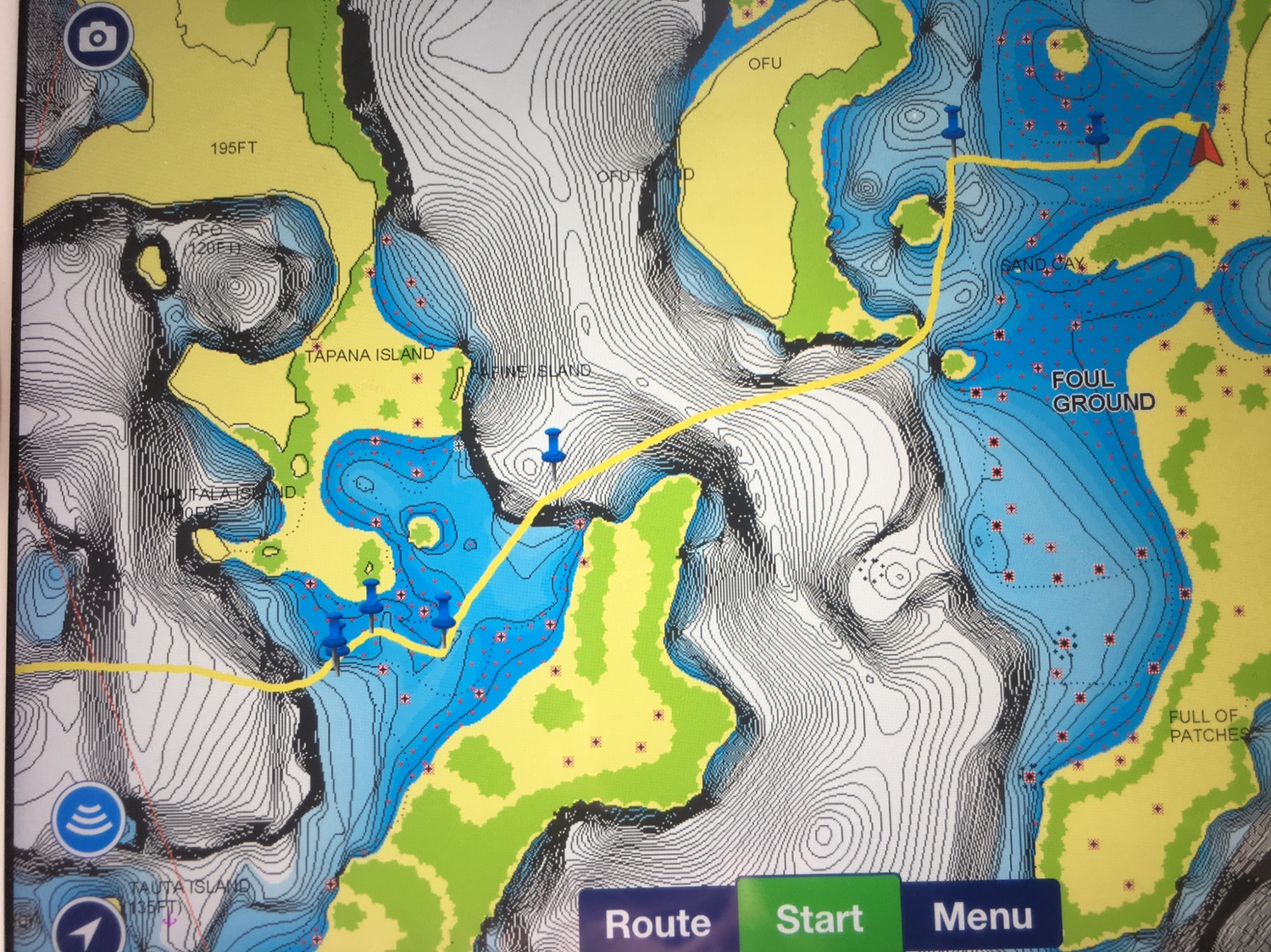
Throughout our travels we have been stunned and impressed by the accuracy of our Navionics charts, we have come to trust and rely on them. That is, until we reached Tonga, here we are beginning to find anomalies between the charts on the chart plotter, the charts on my iPad and real life. Last week approaching Vakaeitu the shallow area on the chart plotter turned out to be a small island, trees and all. The island was on my iPad chart but that chart had us anchored on the beach, things were obviously slightly askew. So it was with slight trepidation we ventured out Monday to a recommended anchorage at Kenutu island through a maze of shallows and reefs. We had been given waypoints that when plotted on the chart took us straight across areas marked as having only 1m depth and strewn with coral heads. Luckily the sun was shining brightly, the reefs were easy to see in the good light and the waypoints were spot on, we didn’t need to depend on our charts.


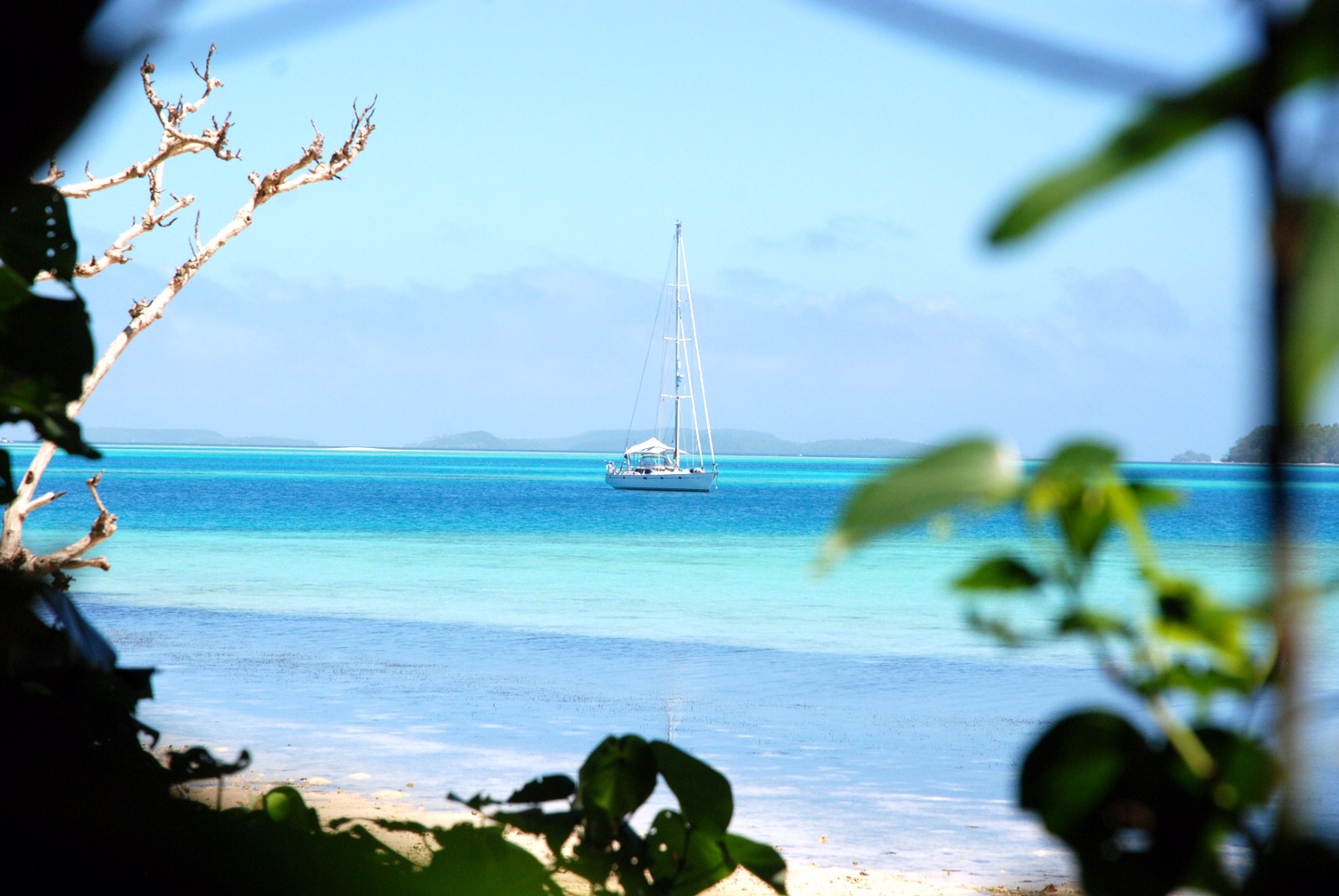
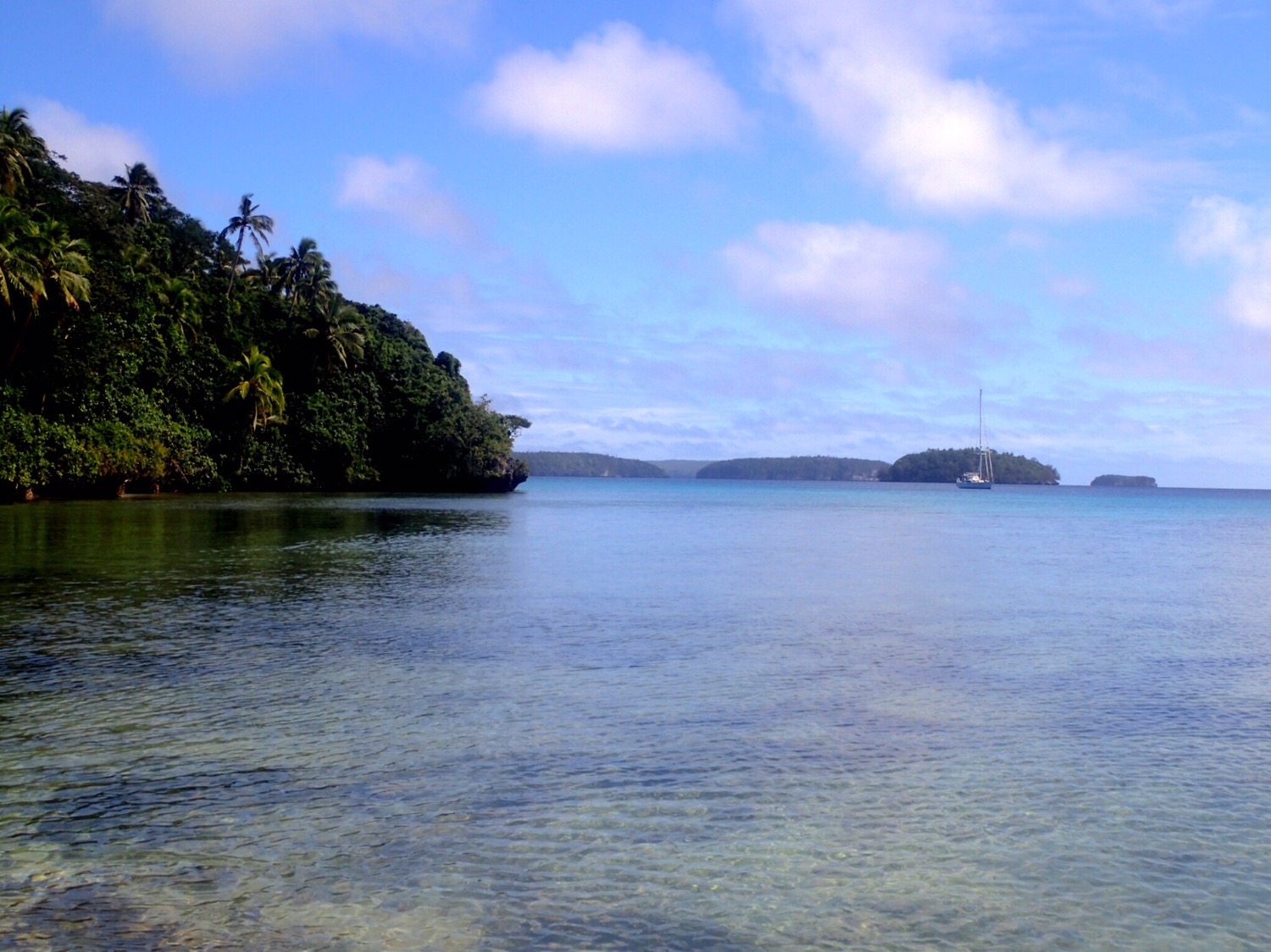
As payment for our efforts we dropped our anchor in one of the prettiest spots of our journey so far, surrounded by low wooded islands the basin is shallow resulting in a sea of the most wonderous range of blues. Low tide reveals white sand beaches and the pale turquoises that form over the many reefs. The calm water is full of small dark rays that leap high into the air and in the shallows, wading, slate grey, pacific reef herons stalk thier prey. Between the islets in front of us we have the magnificent sight of the surf crashing through the gap and onto the rocks. We sit reflecting yet again on how privileged we are to be in these incredible places.

Raya anchored off Kenutu Island

However as the tide comes in the swell creeps over the reef and the anchorage becomes a little rolly. In the fading light of the late afternoon, the sea turns grey and the turquoise of the shallows disappears. For some reason we both feel ill at ease. We are on the most easterly edge of Vava’u, with just the outer reef and a string of small islands standing between us and thousands of miles of Pacific Ocean. Whether our unsettled feelings are due to the odd movement of the boat, the constant roar of the ocean crashing onto the nearby islands, the closeness of the now unseen reefs or a combination of them all, we are unsure.

As the morning sun rises the next day we are back in our picture perfect bay and we go ashore to follow the short trail up and over the top of Kenutu. The contrast from the Pacific idyll on the leaward side couldn’t be more extreme, the cliffs drop 100ft straight into coves of clear blue sea, waves crashing over the rocks and ledges in spectacular fashion.

Rugged east coast of Tonga


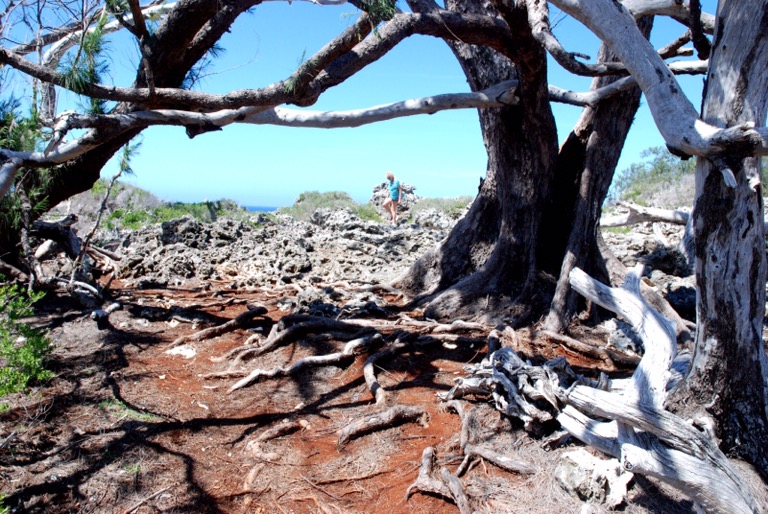
 The top of the cliff is a very different environment from the tropical forest we have just walked through. The trees and scrub only just hanging on to live in this exposed place. All around us are amazing gnarlly, bleached remnants of fallen branches, Rick caresses them wistfully, mentally whisking them back to his shed. The sharp ragged rock provides a precarious platform to view the coldrum of swell and spray below but with the wind in our hair we perch on the edge exhilarated of the sight below.

Bleached branches on top of the cliff

Unfortunately today our apprehension has returned, I sat writing this as lightening flashes and thunder claps all around us, I hate lightening especially when our mast is the highest thing around. We had planned to leave Kenutu today but negotiating our path out, even with our recorded track to follow, seems foolish. I think the sky is brightening, perhaps we will have our beautiful bay back in time for sun downers, we can leave tomorrow.

Vakaeitu – David’s Island 

Anchorage at Vakaeitu


Friday 26th August 2016 

I awoke Wednesday morning to an amusing sight. We are anchored off the beautiful island of Vakaeitu and the sun is finally shinning but fantastic as the view is, what tickled me this morning, was the sight of the husband and wife who live on the island wandering along the beach with the pet pig trotting along behind them. This pig thinks he’s just another one of the family dogs. Not only does he go for a walk each morning, he sits at the family’s feet as they work creating handicrafts and when you land on the island he runs up to you for a stroke. 

David, his wife and daughter live in a small house made from a wooden frame and corrugated iron panels, set just off the beach in the shade cast by the magnificent trees that grow all around.  They are the only inhabitants of the island that has been the family home for a hundred and fifty years, a clearing in the hill with a cross, marks his Grandfather and Great Grandfathers graves. David worked for the national Tongan airline but has recently moved back to the island and now lives a subsistence life growing and harvesting from the land and sea. They make handicrafts to sell and prepare a Tongan Feast for the yachties anchored in the bay. 

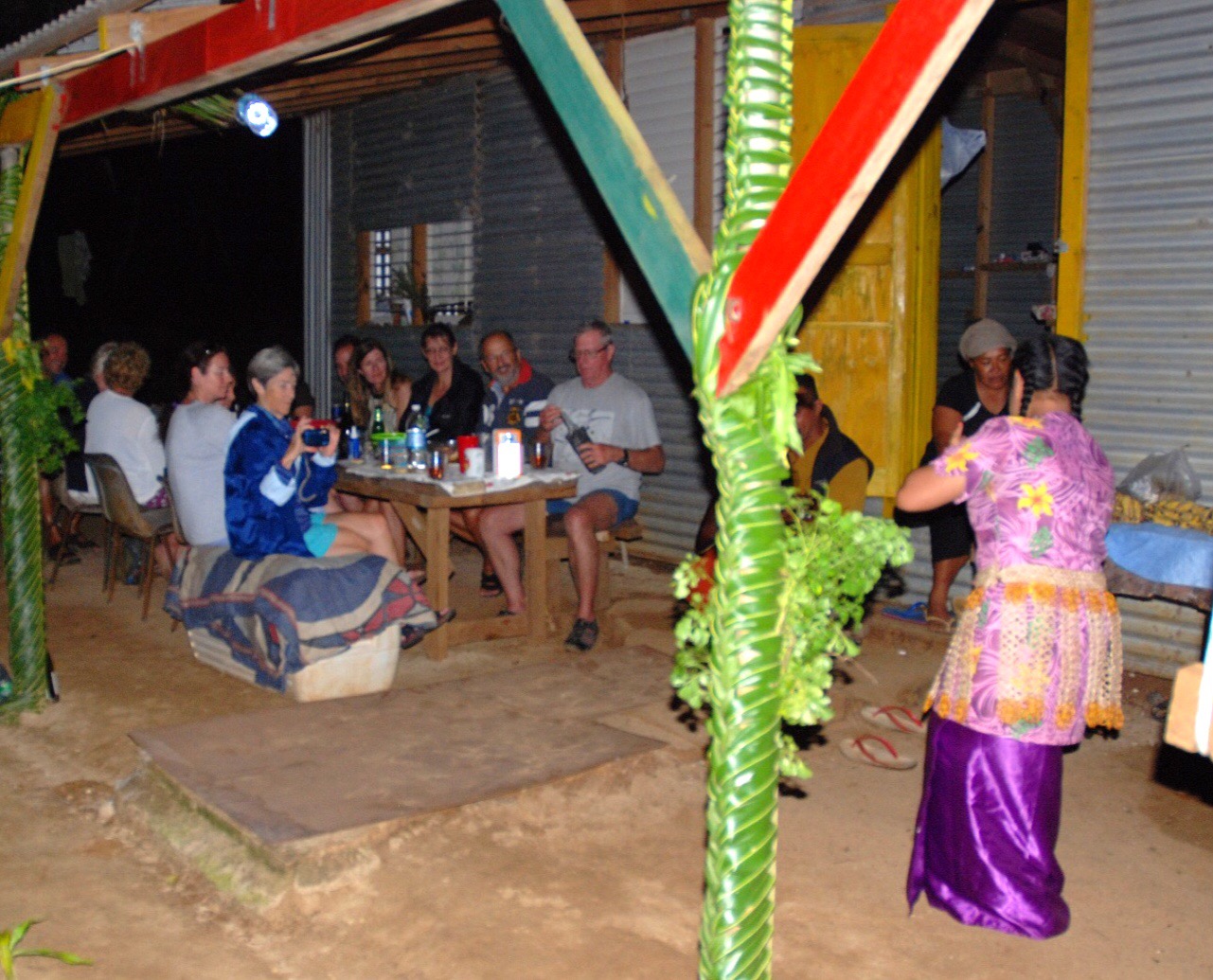
We joined one on Monday night and had great fun, despite the rather makeshift organisation, wonky chairs, disparate collection of plates and bowls and a selection of dogs and pigs around our feet. Along with the essential spit roast suckling pig his wife, an ex-chef, cooked a delicious fish curry, sweet and sour fish, a crab salad and a dozen other dishes. To accompany the food they entertained us with traditional songs, David played his guitar and his daughter, with a touch of teenage shyness, gave us a demonstration of Tongan dancing. At the end of the meal they made an appeal for any mechanics to look at their outboard that had broken down, without their small boat they are dependent on others to get off the island. Rick dingied accross to help Tony from s/y Cetacea have a look, they both concluded it was the carburettor and unfortunately needed more skill than they could provide but we did at least manage to charge his phone for them.

Vakaeitu is semicircular in shape and with the other islands in the group were once the edge of a volcanic crater, so we are completely surrounded by wooded islands and are protected from the brisk winds that have at last cleared out the rain. We spent our first days here windows wide open, everything from curtains to mattresses on deck, drying out the damp and cleaning away the mould that had suddenly appeared on items and spots through out the boat. 

With Raya fresh and clean we started to explore. The beach has a shallow band of rock and coral running right around it and with over a metre of tide, runs ashore have to be timed well to avoid either stranding our dingy high and dry or having to wade thigh deep to retrieve it. So yesterday at twelve, an hour before high tide, we anchored the dingy a few metres out and tied to a tree. Behind David’s house is a trail through the tropical forest, up over the ridge, to a stunning secluded beach on the SE coast of the island. The trail took us through a tangle of countless species of trees and shrubs, tropical bird song filtered down with the sunlight from the canopy above, tiny lizards with luminescent blue tails skitted through the thick leaf litter at our feet and bright burnt orange butterflies filled the air.  


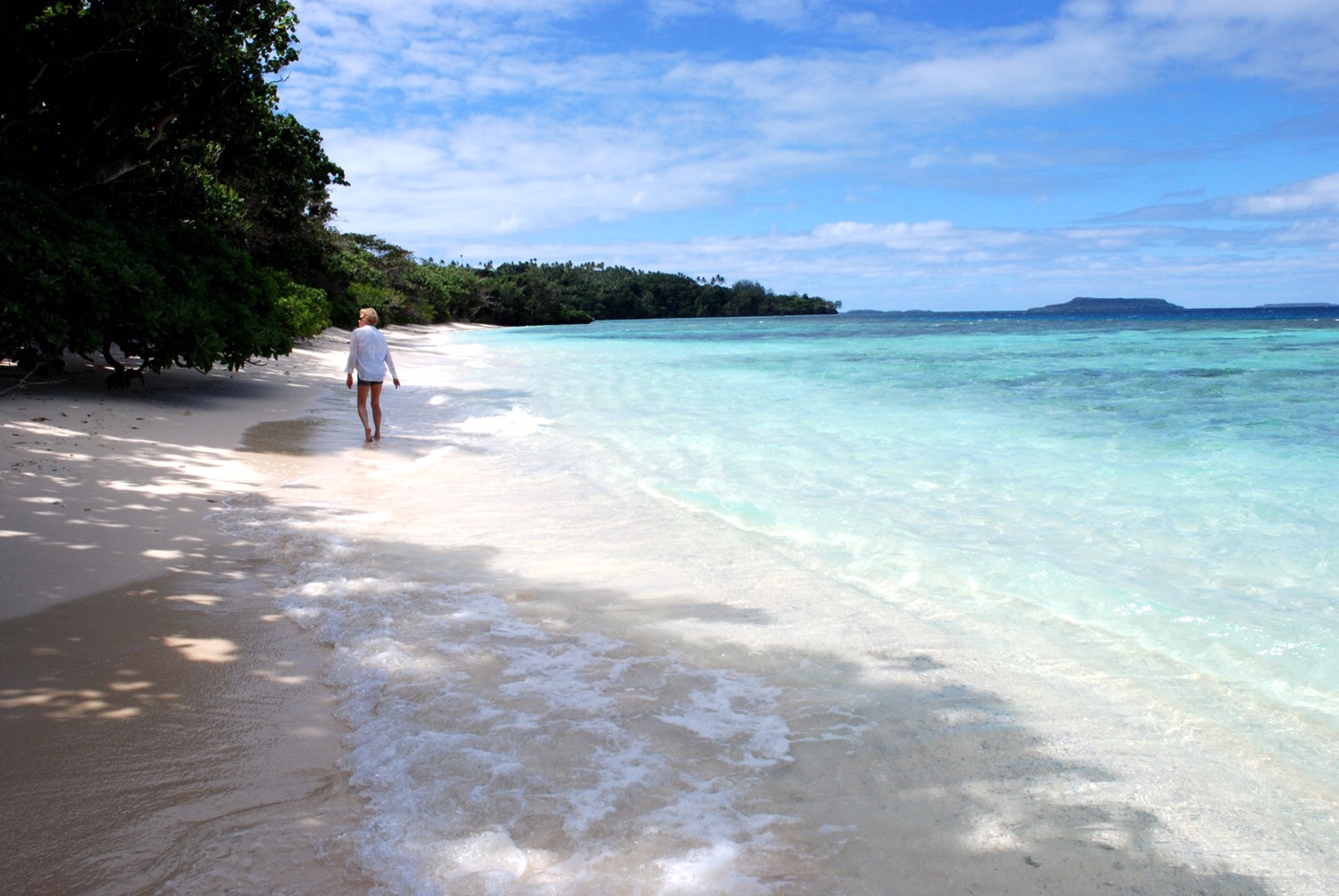
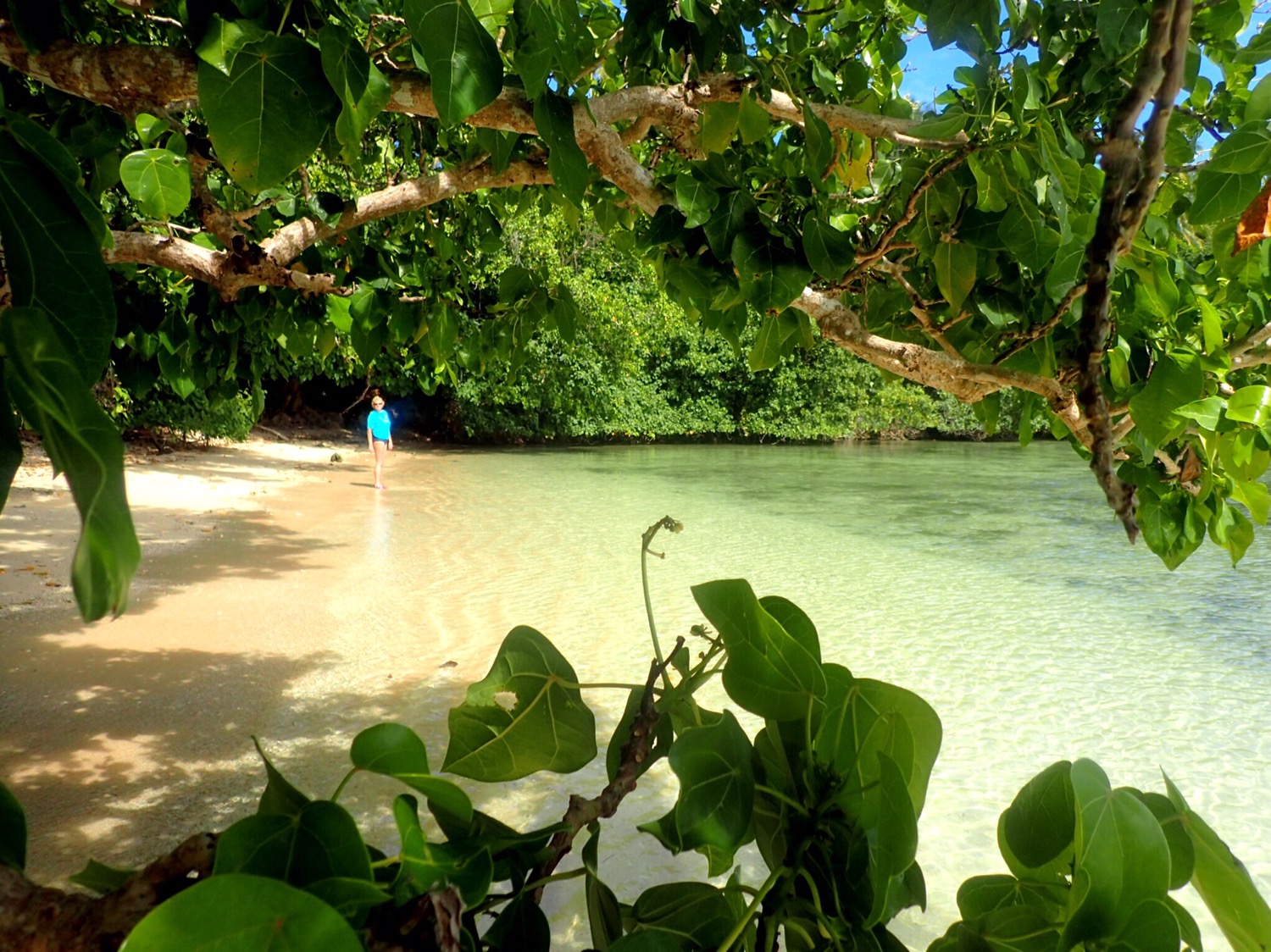
As we reached the crest of the hill we were hit by the cooling breeze from the southeasterly wind and carefully decended the steep muddy path down to the delightful beach below. The white sand was soft, our feet sinking deep as the waves lapped around our ankles, we regretted not bringing our snorkelling gear, reef stretched out from the rocks. 

On our return David was waiting for us with an opened coconut to quench our thirst. With sun back out the true Tonga is shinning through.

Stunning white beach on the SE coast

Tipping it Down in Tonga

Saturday 20th August 2016

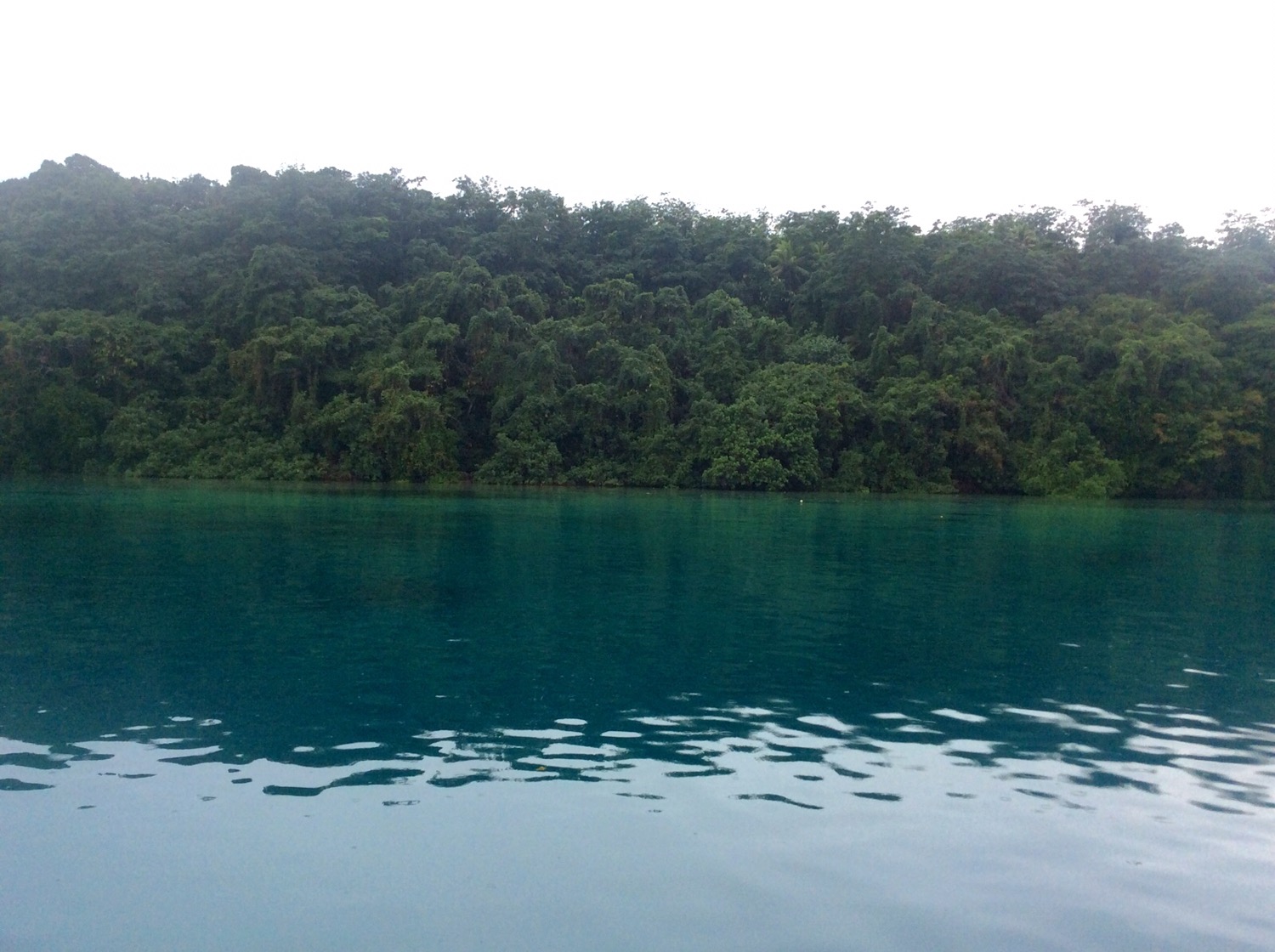
The sky was dark and heavy with clouds, the air enveloping us was totally windless, thick and damp, the water was a dark green mirror, Raya drifted aimlessly around her anchor chain, nothing else moved. It felt strangly like we existed within a bubble that had been dropped into a world that had stopped. We were anchored off Aisea beach, deep inside another of Vava’u’s convoluted inlets, we were the only boat. The quiet stillness continued into the evening and then suddenly the wind picked up, a cloud opened and the rain came down, the world outside had started up again.


Sailing around these islands with their associated coral reefs in bad light is not a good idea, so Tuesday we grabbed a brief thinning of the clouds to move from Port Maurelle a few miles around the corner for a change of view. I’m sure the view at Aisea Beach is normally beautiful, as I’m sure is the rest of Tonga but we unfortunately have had only short glimpses of this pacific paradise with the sun shining.

It is now Saturday and the rain is still tipping down. We thank our lucky stars that we are not just here on holiday, there has been little sunshine for two weeks, just rain and more rain. At least we have not be feeling up to doing very much, yes of course, I caught the cold too.

We did have one day of nice weather, keen to get off the boat despite feeling a bit fragile, we took the dingy out to snorkel and explore the cliffs around the area. The geology here results in amazing shoreline features, Vava’u is comprised of 60 low lying coral limestone islands, that sit on volcanic bedrock. Most of the shore is formed of steep wooded cliff faces that plunge straight down into the sea making for deep coastal waters, where there are no reefs it is often 50m deep right up to the shore. As the sea erodes the relatively soft limestone, over millennia a notch has appeared that runs all around the islands, it is punctuated with caves some of which run far under the cliffs. Close up the rock is heavily pitted and looks quite soft but is actually razor sharp, as we discovered trying to investigate under one of the many ledges, ouch!

The notch worn by the tide clearly visable in the cliffs at Port Maurelle.

 
Looking up through the woodland we spotted a colony of fruit bats hanging from the trees above us. Each bat is a good foot long with a much larger wing span, when flying they are rather spectacular and live up to their common name of flying foxes. Asleep however they resemble bits of decaying leather tangled in the branches.

Tongan Fruit Bats

On the rocks were a pair of white Black Naped Terns. We must have been a little too near to thier nest as they squawked loudly flapping their wings at us, refusing to move from their spot while we past by. Terns of various varieties have been entertaining us since we arrived in Polynesia, their flight is extremely graceful and often performed in perfect formation with a second or third bird.

Black Naped Terns standing guard

With no sign of a let up in the weather we returned to Neiafu, using the rainy days to stock back up with fresh food, so we can spend the sunny days that must arrive soon out at the more remote islands. We also went to immigration and extended our visa for a further two months which will take us to the end of October and our departure for New Zealand.

Bumping into friends we were persuaded to join them at the Thursday night quiz at the Bounty Bar, with considerable help from the two youngsters off the catamaran Do Over, our team was victorious. Our prize made us feel as if we were in the tropics even if the weather didn’t, free rum punches all round. 

Sniffing and Soggy in Port Maurelle.

Saturday 13th August 2016

It is a bit of a relief to see a patch of blue sky amongst the grey clouds this morning, we’ve had unsettled weather for about five days now, we are again being effected by the South Pacific convergence zone, that is running SE all the way from Northern Australia to the Southern Cook Island straight over Tonga. Yesterday it drizzled in true English style all day, the boat feels damp, the cockpit is soggy and Rick sits with a heavy cold  huddled in bed, head pounding and his nose streaming almost as fast as the rain outside.

We moved out of the harbour at Neiafu on Wednesday and are now anchored in a pretty cove just a few miles south, tucked behind a thin headland on the island of Kapa. Fangakima is also known as Port Maurelle, named after the first European to land in Vava’u in 1781. Maurelle and his crew anchored here and found a valuable source of fresh water in the, now overgrown, spring fed swamp nearby.

Anchored in Port Maurelle


The bay is currently crowded with yachts escaping the bad weather but when we arrived it was almost empty. We took the opportunity of a break in the clouds to take the dingy across to the deserted beach to stretch our legs, the sand was soft and washed clean by the tide, our foot prints the only break in its smooth surface. The beach and sides of the cove are backed by thick wooded slopes, amongst the palms, hibiscus, figs and many spindly unidentified trees were surprisingly large specimens with thick branches, hanging out over the water they cried out for a hammock or swing.

Far S end of the beach at Port Maurelle


Port Maurelle is also popular for a couple of snorkelling spots. At the furtherest point of the headland is Swallows Cave a large cave that you can swim into, we were taken there to round off our whale watching day. A roof of a hundred stalactites streaked with red and a floor of deep blue water full of huge shoals of tiny fish. Still in awe of the whales we had just seen and sharing it with another tour group, it’s full spender passed us by, we hope to give it another visit. The guide book also describes a good reef with a dramatic drop off on the north coast of the small nieghbouring island of A’Ai, so we need both the weather and Rick’s cold to improve.

As another black cloud darkens the sky I think comfort food is probably the order of the day, so to celebrate finding real potatoes at the market a few days ago I made a shepherds pie. We have discovered, especially when it’s just the two of us, it is great to have ready prepared food on passage so I make plenty and pop one in our now functioning freezer.


In the mean time I am trying my best to follow the Oympics, I’ve always been a big fan, not just of the swimming and athletics but the opportunity to enjoy so many other sports. No chance of video with my three bars of Tongan Digicel 3G so the best I can do is follow the BBC’s live text feed. Much as I am delighted by a trampolining silver it’s difficult to really appreciate it through the sticarto medium of written commentary. And hearing the exciting start to the heptathlon two hours after the event can’t compare to watching it live in the stadium four years ago.

Worry not however we’ve just found two old series of Dr Who that Rach put on to a hard drive for us a few years ago, so we have something to keep us occupied until the sun and Rick are ready to come out to play.

In With the Whales

Tuesday 9th August 2016

We woke this morning to the sound of  rain pounding on the hatch, it continues to pour, the sky is dark grey, but we have smiles on our faces, our spirits are still sky high from the incredible experience we had yesterday. 

We started our two ‘Vava’u tourist days’ attending the  Ene’lo botanical garden’s Sunday Tongan Feast. This comprised of spit roasted suckling pig, fish poached in coconut milk, chicken curry, corned beef wrapped in Tarrow leaves, salad and much more, we washed it down with a coconut rum cocktail served in the shell. All very delicious but our hearts weren’t in it, I had just drowned our camera by taking it for a swim with the battery cover loose. We have two underwater cameras, one that we thought was coming to the end of its life and a new one kindly brought out to Panama for us ( P.S. Peter and Jonko you still haven’t billed us for it!). The old one is still doing fine so we have been using whichever one comes to hand, guess which one I took swimming!

That evening we readied ourselves for a 7.20am start the next day, wetsuits, towels, suncream and fully charged batteries for our remaining cameras, we were hoping for some great shots, we were going swimming with the whales.

Well the shots aren’t brilliant, photography became a definite afterthought, we were far too busy and distracted by the amazing show going on around us. During the southern winter the humpback whales leave their feeding grounds in Antarctica and swim north to calf and mate in the warm seas of the Tropics, with its deep, calm, protected waters Tonga attracks thousands of whales each year. August and September is  height of the whale spotting season, all boats have to be licensed, it is strictly forbidden for you to approach whales in your own boat.

The Vaka Vave whale watch and swimming motor boat, crewed by Robert, Izzie, and Jay, picked up our friends from Nina and then us from Raya and the six of us sat excitedly as Izzie the Tongan guide gave us instructions and the plan for the day. We headed out to the best areas for spotting whales, everyones eyes peeled for any signs of whale like activity. We have all sailed from Europe and have spent many an hour staring out over miles of blue ocean, it was a familiar pastime.

This time however, within minutes of reaching Faihava passage we saw our first blow, two males were swimming a couple of hundred metres away. The boat slowed and Izzie assessed the situation, it is of course of prime importance not to distress the whales in any way, so it’s a waiting game to see what the whales are doing and let them decide if they are happy with the boats presence. These whales turned out to be on a mission they quickly dived. While we had been watching  them out of the front, Robert and Jay had spotted a much calmer female behind us. So we turned and slowly approached, suddenly the were three whales the two males had joined her. In fact they had come to impress her, we couldn’t tell if she was won over but we certainly were, they breached high out of the water, slapped there long slender fins and dived around her. 

Impressing the females with whale acrobatics

When the boat was close enough, in groups of four, we took it in turns to enter the water. We caught a fleeting glimpse as one dived below us, we returned to the boat and waited for the whales to resurface. The trick we learnt was to move quickly and try to follow Jay as closely as possible as he led the way. Second time in we did better, we couldn’t believe it, we were swimming with whales. They were so huge we rarely caught site of the whole animal, but with three in the water we were surrounded by whale bits. Then with a hardly visible flap of the tail they were gone, it had been astonishing but so brief, having wetted our appetites we wanted more.

We motored further south, seeing nothing for about half an hour, then over the hum of the engine we heard whale song. We took to the water and there 10m below us was a singing male, the sound under the water was incredible, haunting, you were immersed in the sound as if it was part of the ocean. He hung there for a minute or two before disappearing into depths. It was a breathtakingly beautiful moment.
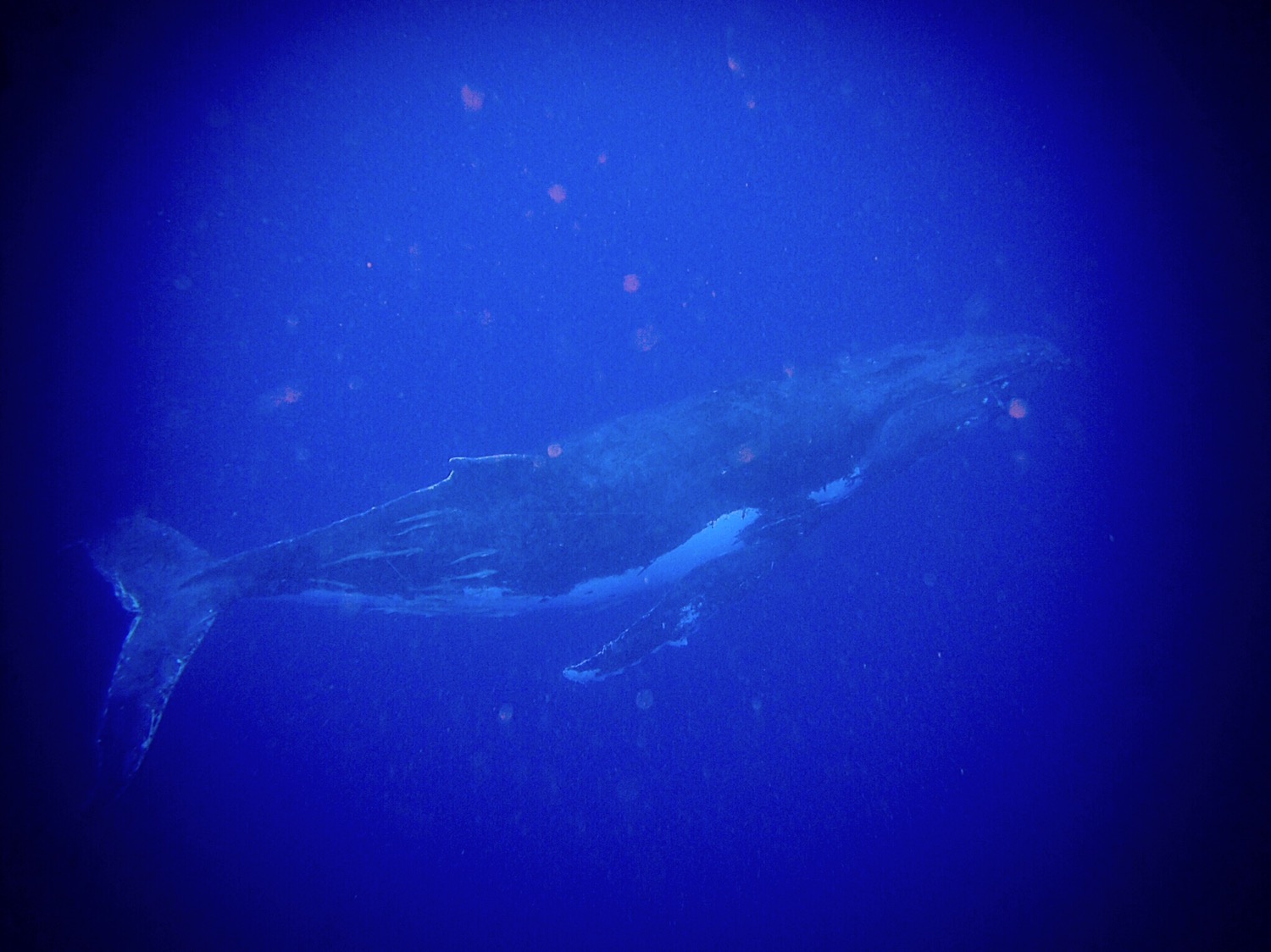
Magnificent humpback whale just 10m away


There was more to come however, our final few swims were with a large group, four males, a female and her calf and an adolescent that arrived on our beam and dived directly under the boat. They were extremely active and gave us a full display on the surface, it was difficult to know which way to look, as they breached, slapped their fins, rolled and dived. In the water we were completely surrounded by whales they were underneath us, in front and behind us. They were incredibly graceful and so obviously at one with their environment, one came so close I felt I could reach out and touch him, another swam below upside down, displaying his large white underside. No more than twenty meters away the female swam with her calf tight at her side. At around fifteen meters long and weighing twenty five tons they could have easily batted us out of the way, as one swam directly beneath us a moment of fear flashed through me as I contemplated him deciding to surface but they nonchalantly kept their distance.  
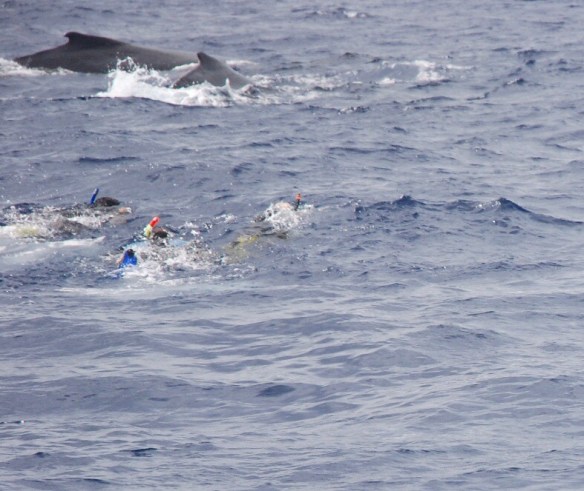
Jay, Lin and Steve snorkelling towards the mother and calf


We were in the water with them for about ten minutes before they moved away. Ten minutes of our lives we are extremely privileged to have experienced and that will never be forgotten, despite the lack of good photos.

The King Comes to Town

As we entered Faihava passage Rick spotted more whales, I rushed to the bows with the camera but they dived and were gone. The islands of Vava’u surrounded us, compared with French Polynesia they are relatively low and flat, but there are hundreds of them, some tiny, all topped with trees and encased in deep blue sea. We wound our way down a channel and motored through the narrow pass into the protected harbour of Neiafu.

Our first job was to check in at customs to formally enter Tonga. The concrete dock looked high and unforgiving, we did a circle as the two yachts already there squeezed up for us, Rick parked us perfectly as I rushed around lifting the fenders as high as I could to protect the rail. The wharf had deep grooves for the fenders to slip into and a lip perfectly placed to catch a yacht on the rising tide. Luckily the formalities were achieved quickly by the friendly officials and within an hour our passports were stamped, Raya had passed her health inspection, we had drawn out 500 Tongan Pa’anga and the yellow quarantine flag was lowered.

The customs inspectors informed us to make sure we attended Vava’u’s premier event of the year, to be held tomorrow, the Royal Horticultural Show, the King of Tonga, King George Tupou V, would be there to officially open it. The Tongan people dress conservatively and we were advised to ensure our knees and shoulders were covered. A ripple of panic spread through the cruising community as the normal uniform of shorts and T shirts was discarded.

Dressed in our Sunday best we walked the fifteen minutes to the high school playing fields. The show was delightful, a small version of a county show, with rows of stalls displaying fruit, vegetables, fish, and handicrafts. 

Islanders ware set out for the judges, the odd things strung out in the lower right picture are squid.

Food stalls BBQ chicken kebabs, hotdogs and other less recognizable fare, the cake stalls had cinnamon buns, coconut cake and drinks, people milled around the attractions and jostled for patches of shade, all waiting for the Kings arrival. About a half an hour late his cavalcade of jeeps and cars drove right into the centre of the show ground and escorted by a large entourage he took his place in his especially decorated small pavilion. The Tongan national anthem was played and a series of long speeches ensued. Flagging in the heat, after about the sixth one having not understood a word, we quietly slipped away back to the boat. 

We are hooked up to a sturdy mooring bouy in the middle of the mooring field close to town. It is very settled with land on all sides it feels like we are tied up on a lake. The surrounding hills are covered in trees out of which fly rather strange, large black birds. On closer inspection we notice they land oddly in the fruit trees, out come the binoculars, they are large fruit bats and the source of the high screeching we can hear.

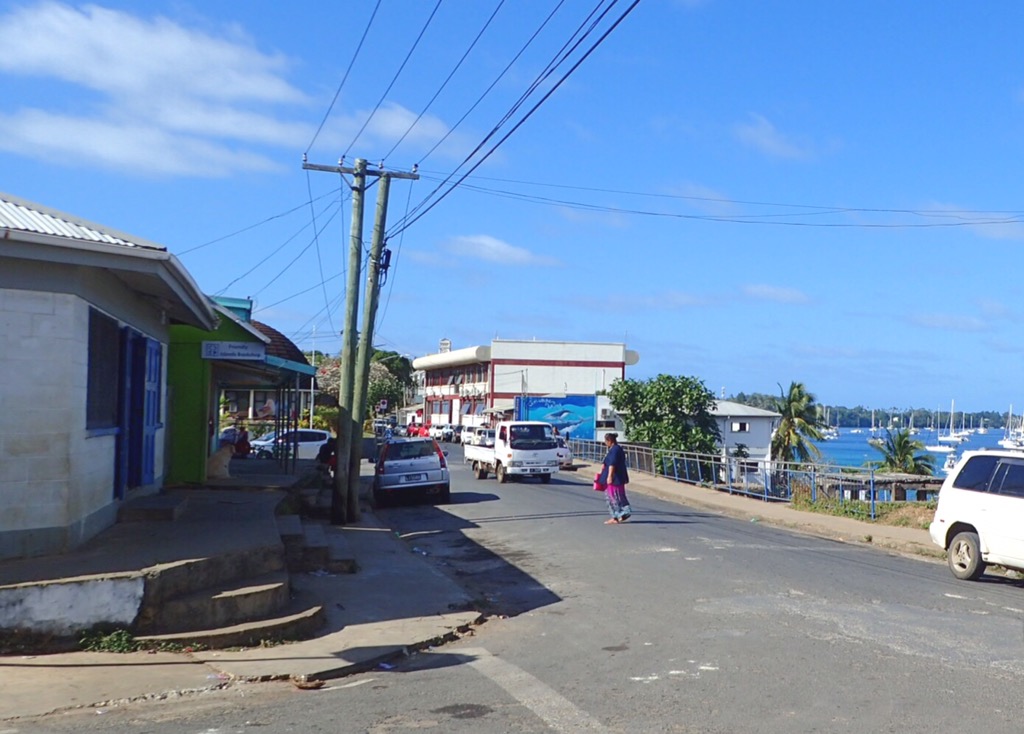
Town planning and health and safety have yet to reached Tonga. Visually at least it appears less sophisticated than French Polynesia and without the European influence feels a lot more ‘foreign’. It is an independent Kingdom, with a close relationship to New Zealand who help with defence and foreign affairs. The GDP struggles, the largest part of the countries income comes from money sent back from relatives abroad, the most profitable export crop is vanilla but world demand fluctuates wildly. The majority of buildings are made of concrete, all different shapes, sizes and colours and all occupying ground at different levels. They are accessed up short steep hills, down winding staircases and over uneven kerbs. Dogs and pigs wander the streets, cars often old and rickety pass by slowly.  There is a sense of higledypigeldyness. 

Main street in Neiafu, with the yachts moored in the bay


Having been weaned off Waitrose months ago the empty shelves of the small stores no longer horrify us, if we see something we may need we buy it there and then, menus are set once the shopping is completed and stand-in ingredients rule. Rick’s phone won’t connect to the local network and you have to pay for the local businesses to take away your rubbish. Strangly although as I said there are pigs in the streets, you see them in people’s garden and scavenging along the shore, pork is the ‘special’ on every restaurant menu but we can’t find any to buy. Smillarly there is the continuous chorus of cockerels wherever we go but no fresh chicken and rarely eggs. On the upside there are plenty of restaurants around and the fruit and veg market is quite well stocked, here in town we have expensive but reasonable internet and with few tourists the town focuses on being well set up to help the yachts and their crews.

We have plenty of time to enjoy Tonga so we have spent the past week slowly sorting ourselves out, Internet, laundry, charts etc… We have cleaned the boat and carried out routine maintenance and there has been a lot of socialising with the many friends, we have met along the way. 

This weekend we are going to play the tourist game, joining a Tongan feast on the beach and at great expense, going on a whale watch boat with the hope of swimming with the hump back whales, that as we have already seen, frequent these waters at this time of year. They come to enjoy the warm calm sea to rear their young and are apparently unphased by people swimming close by. We can’t wait.