Heading North

Saturday 21st February 2017

We are on our way back to the North Island, having had a fantastic time in the South but looking forward to getting back to Raya. Sitting on the Interislander Ferry I finally have time to catch up to date with the blog.

Wednesday as we drove through the  Hass Pass towards the West Coast the clouds thickened, the rain started and the biting sand flies came out. We pushed on, this was one of the longest drives of the trip and the conditions discouraged us from stopping more than necessary, even if the rain eased up as soon as we opened the door the pesky biting flies were on us in seconds.

The West Coast is a thin strip of land that runs nearly the whole length of the Island sandwiched between the Tasman Sea on one side and the Southern Alps on the other. Except for the odd glance we could see neither, the first part of the road was cosseted by high banks of ferns and moss covered rocks. If a couple of pixies had appeared from the undergrowth they would have seemed completely at home. Instead of pixies we passed a young Chinese couple, their car very much stuck in the ditch. We had had no phone signal for hours even in the small town of Hass where we had stopped briefly for lunch, we had past very few cars, so we put on our hero hats turned around and drove them the half hour back to town so they could organise a tow.

Finally we reached our lodge in Okarito, a wetland area famous for its bird life. Unfortunately, our rescue mission had meant we had missed the low tide that reveals the mud flats that attract the birds but the rain had stopped and I enjoyed a walk along the beach that was made up of the most wonderful pebbles. With the pale grey of the beach, the darker grey of the sea and the bleached white of the strewn driftwood, all bathed in the low hazy light of the early evening it was as if all the colour had been washed out of the world. The scene was surprisingly restful, if slightly stark.

The beach at Okarito

It has to be said that the lodge here was also rather stark. Little more than a metal clad wooden shack, it was nicely decorated in places but it was as if someone had stopped the process a third of the way through. The advertised ” wake up to wetland and forest views ” was only true if you happened to wake up stood peering out of the small corner window at the other end of the room. Luckily the bed was comfortable, the shower large and all was clean and tidy.

The next morning we continued our drive north on State Highway 6, stopping for a coffee with some old friends from Cranbrook who we had discovered would, bizarrely, be driving the same road, at the same time but south, as we have experienced before this is a small world. As the day wore on, the sun fought through the haze and the road became more exciting, climbing around headlines, dropping into valleys and often clinging to the very edge of the coast.
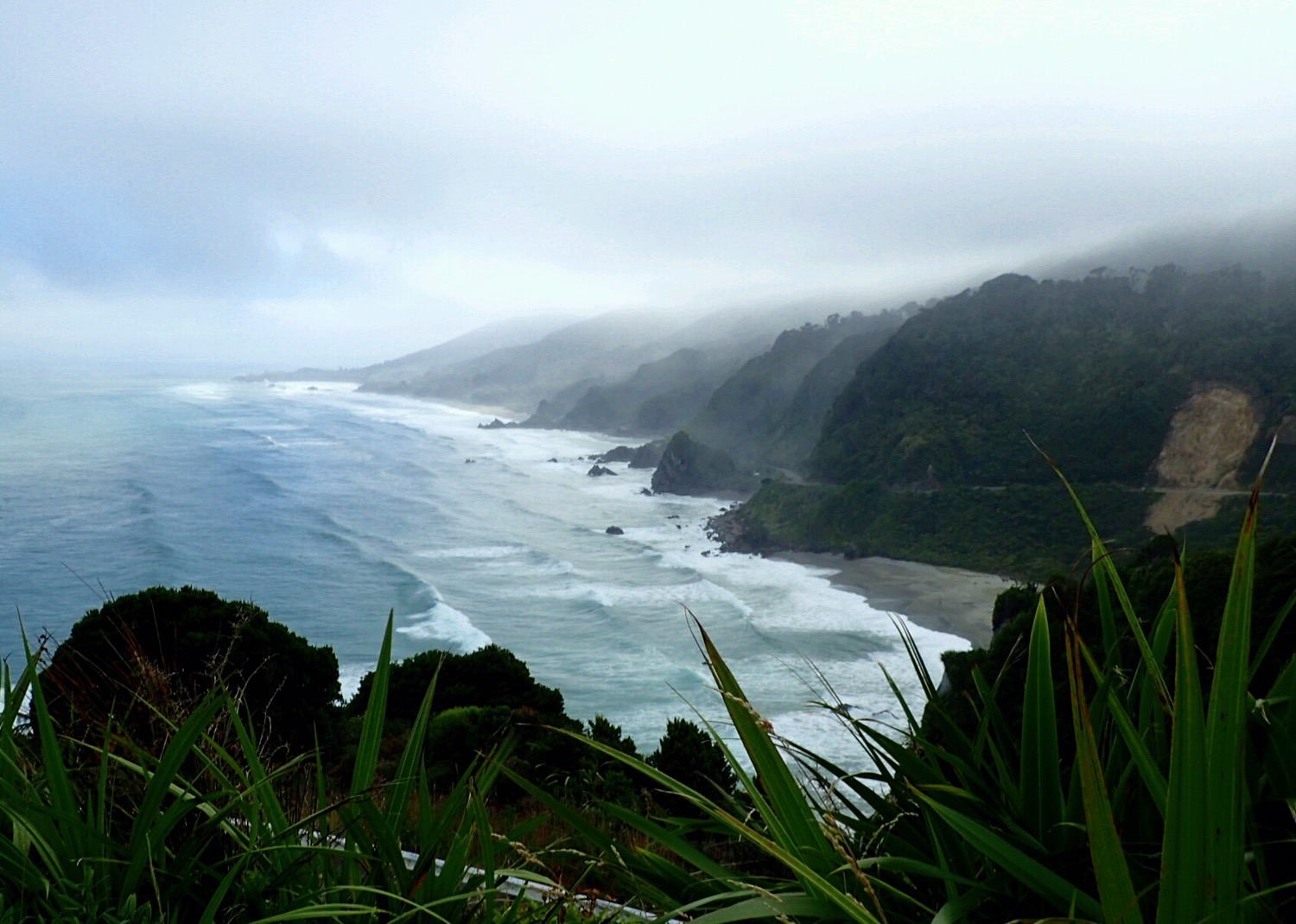
West Coast


We stopped to admire the Pancake rocks, a headland composed of layered sandstone and mudstone. The softer mudstone has corroded away more quickly than the sandstone leaving rocky stacks that look a bit like piles of pancakes
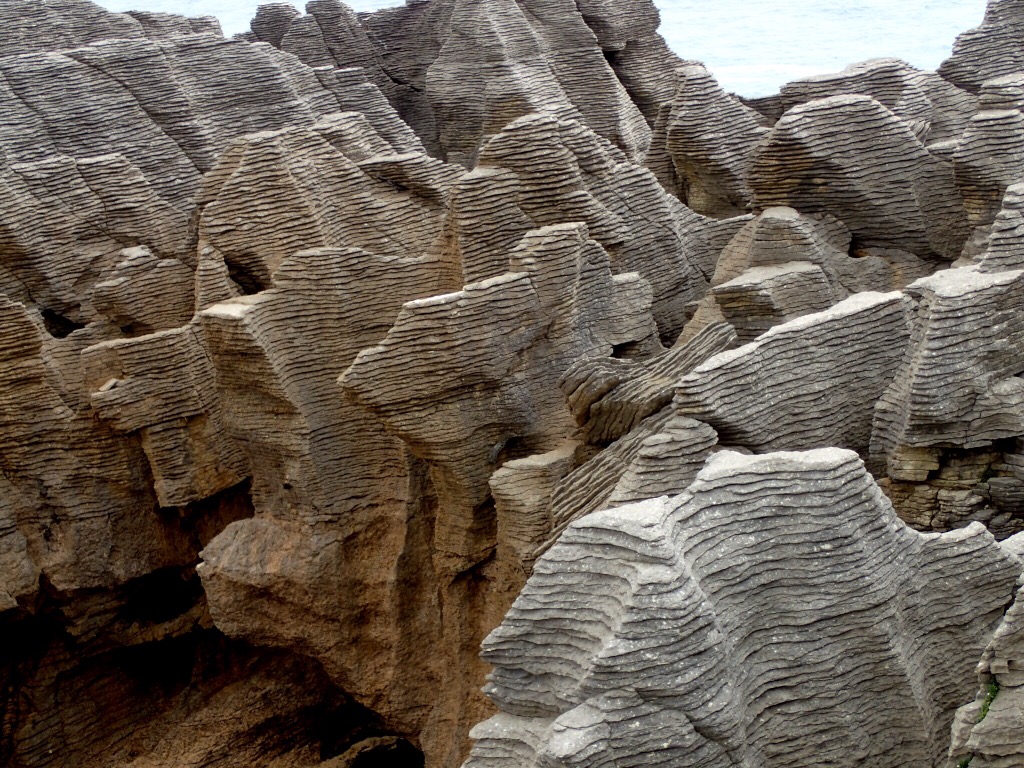
Pancake rocks

Finealy Thursday afternoon we reached Blenheim our final stop on the South Island. This is Marlborough wine country and you know you have arrived because suddenly every acre of suitable land is planted with vines, rows and rows and rows of them. 

Miles of vines in the Marlborough region.

 But before exploring the vineyards we headed out to the aviation museum. A large collection of restored and replica first and second world war planes. Another superb New Zealand museum, each aircraft was shown along side personal stories from the airmen who had flown them and many of them had been displayed like film sets with figures and props made by the Weta Cave Studios.

A portrayal of the capture of the WW1 flying ace The Red Baron, the plane is an exact replica.

Culture requirements ticked we head for the wine trail, each vineyard has a cellar door open for tasting and it is easy to drop into one after another, a bit like a posh pub crawl. Between the familiar names of Cloudy Bay and Stoneliegh are smaller boutique producers and it was these we selected to visit. We had a great few hours trying out everything from the  Sauvignon Blanc this area is famous for, through a few reds, half a dozen sparkling wines to my current favourite crisp dry Riesling. We were very restrained the car boarded the ferry only a couple of boxes of wine heavier than our crossing a few weeks ago.
Queenstown

Tuesday 21st February 2017

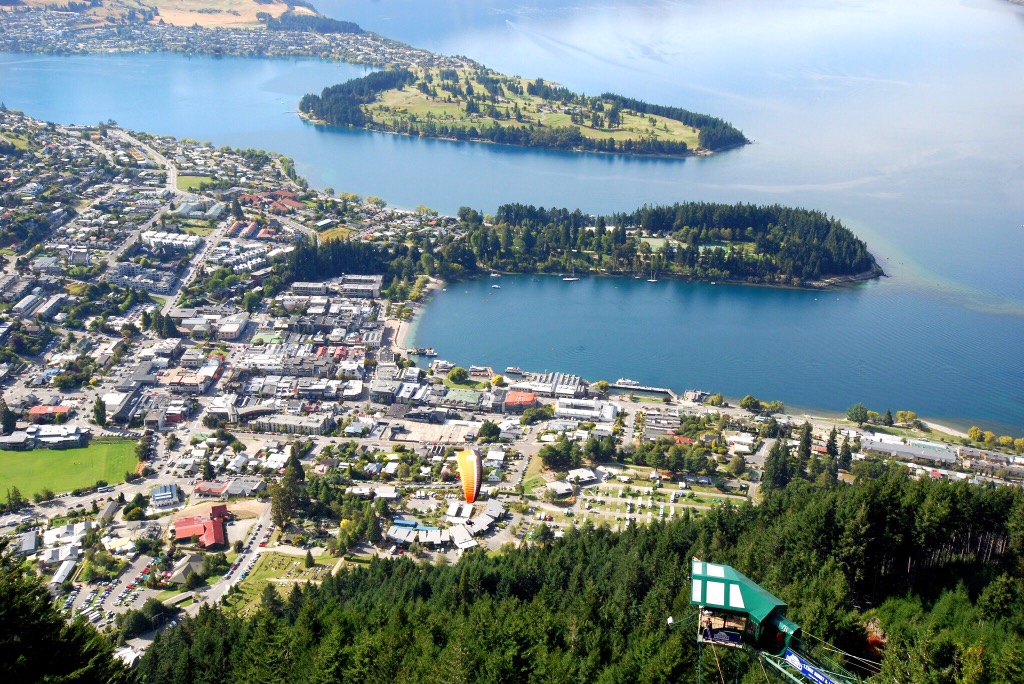
Queenstown, the birth place of bungy jumping, promotes itself as the adrenaline fuelled capital of the world. Sitting on yet another fantastic glacial lake, surrounded by high mountains this is a place bursting with high octane activities. Being way too old and sensible for such things we take the soft option of the gondola ride up to a 450m terrace high above the town, below us the area throbbed with exciting pursuits.

The surrounding rivers present opportunities to jet boat through cannons or raft down rapids. The lake offers trips in everything from a sedate vintage steamship, through parasailing to rides in mini submarines. Joining us on the Skytrain up the mountain were many looking for a more exciting decent, lines of cyclists helmeted with bikes strapped to there gondola pods take a steep mountain track back down to town, others leap shrieking from a precariously perched platform tethered to bungy ropes and swooping below us, using the thermals swirling around the cliffs, paragliders fly down to ground level. On the opposite bank of lake Wakatipu are the Remarkables a range of mountains full of walking tracks, that in winter turn into a huge ski field.

Queenstown from the Skyline terrace, with a paraglider below us and the green bungy platform to the right


Rick still coughing and not up to the planned walk in the hillside, we decided to drive the length of the lake to the small settlement of Glenorchy for lunch. The scenery in this area, as marvellous as ever, is the back drop to many a movie, most famously the Lord of the Rings. You can of course, this being Queenstown, take an off road tour in four wheel drive trucks or quad bikes, up into the hills to see the exact spots of each scene. However even from the road you can easily imagine Frodo and his retinue walking over the ridge and down into the valley.

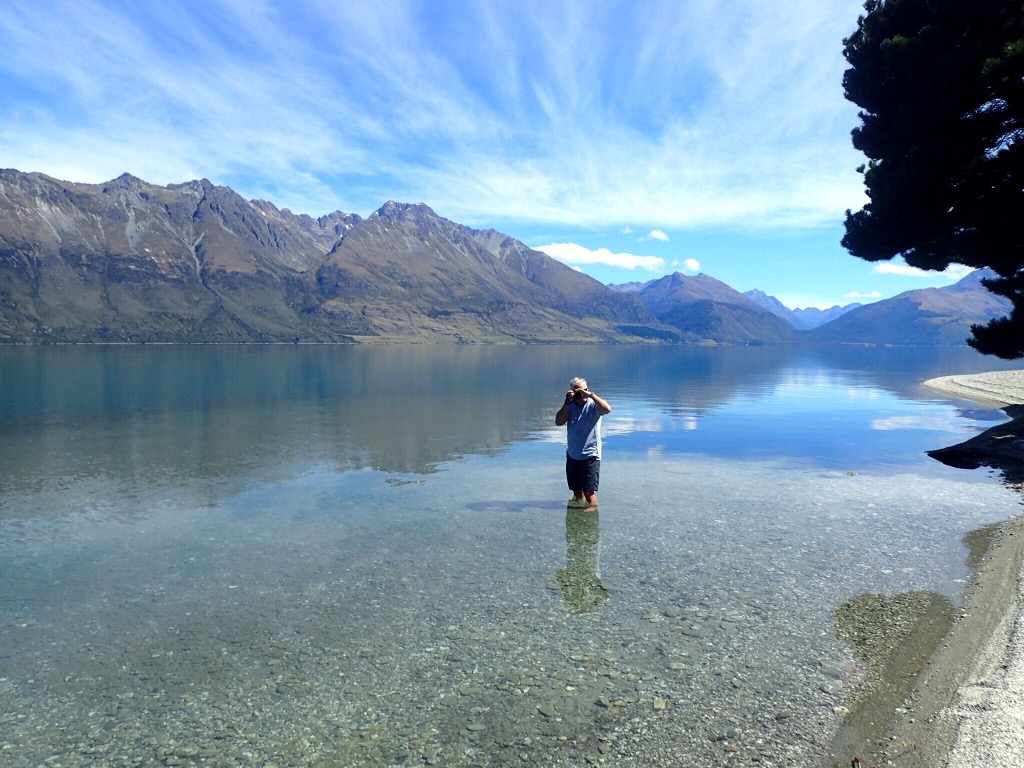
We are beginning to learn that these quiet small places don’t do sophistication, after a stroll around the wharf we rejected the slightly dubious cafe and in the only store bought snacks and ginger beer and drove out to find a quiet spot on the lake side. The place we found was a little bit of heaven.

Perfect lunch spot on the shore of Lake Wakatipu

Brimming with visitors we were surprised to discover we rather liked Queenstown. The coaches of tourists were well diluted with youngsters on gap years, sport enthusiasts and a generous smattering of more elderly couples. Sipping a drink, people watching in the sunshine, snippets seemingly of every language filled the air, everybody happy and tolerant of their fellow promenaders. The lake glittered in the evening sunlight, people relaxed on the grassy banks and music drifted from the bars.

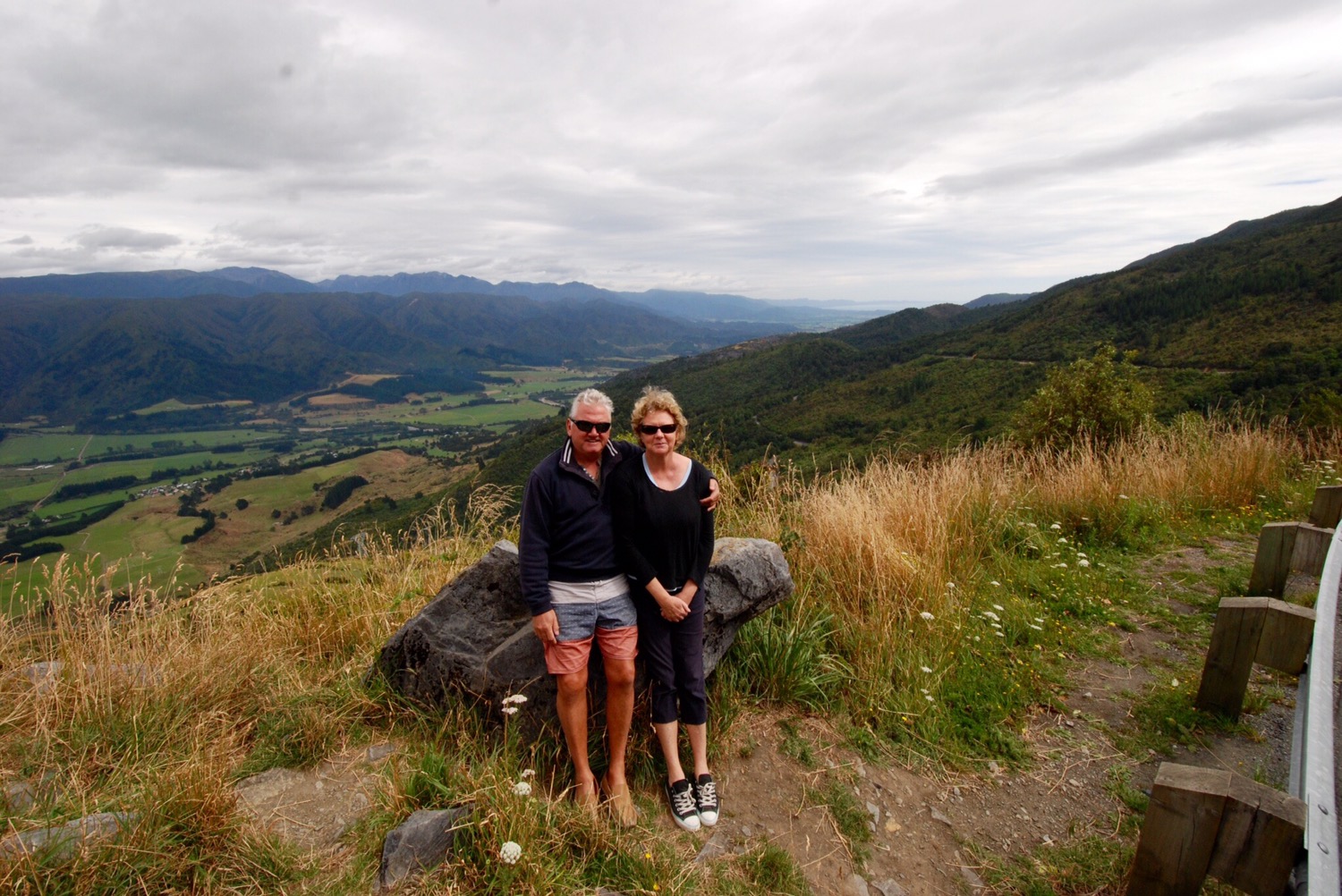
Tuesday we headed off on the long drive across the Haas Pass to the West coast, but Queenstown had one final surprise for us. About ten minutes out of town we turned on to the Crown Ridge road, this, we learn, is the highest main road in New Zealand, reaching an altitude of 1121m. As we approached we could see the hairpins zigzagging up the hill in front of us, surely this wasn’t our road but yes it was. We climbed and climbed until right at the top there was a pull off the road for an amazing photo before the 2hr decent to sea level.

View from the Crown Ridge road


Milford Sound

Saturday 18th February 2017

Majestic, superb, awe inspiring, just some of the discriptions of the road leading down to Milford Sound from Te Anau, “a destination in itself” screams another guide. Expectations sky high we set off Saturday morning in clear hot sunshine. We had been warned if we wanted to avoid the plethora of tour busses we should leave after eleven so we treated ourselves to a late breakfast, in my case, of a huge raspberry and cream cheese muffin, the New Zealander’s seem to like cheese in everything.
The route started along the picturesque shore of Te Anau lake at 65km long and 340m deep it is he largest of the Southern lakes and created, as all the lakes and deep U shaped valleys here, by the huge forces of ice age glaciers. Gradually climbing, the road turned away from the lake and we entered dense woodland. The trees high on each side of the road would suddenly clear to give spectacular views of snow capped mountains, wide valleys of tussock grass or fast running babbling brooks.
.

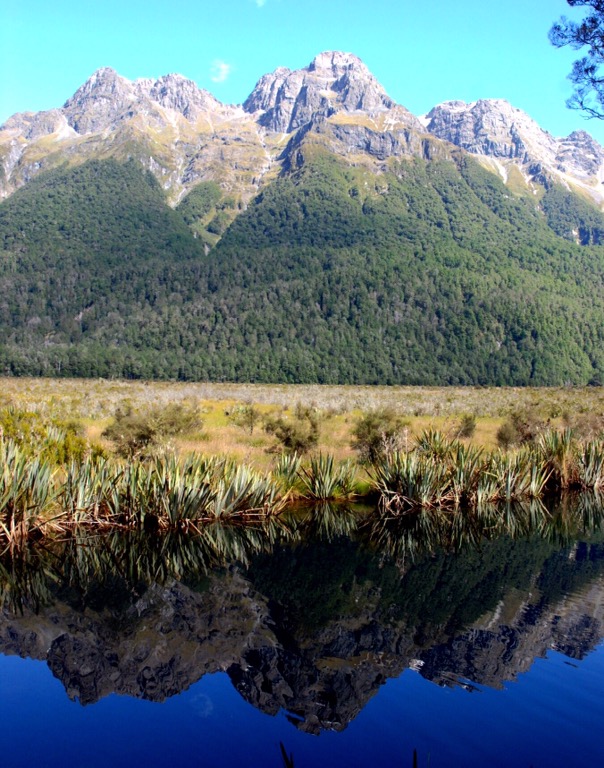
Perfect reflections at Mirror Lakes on the road to Milford Sound

As we climbed higher the trees thinned out and the sheer, bare mountain sides became streaked with waterfalls. To make Milford Sound accessible by road, in the 1960’s, Homer tunnel was carved through the bedrock, a single lane of tarmac takes you through the dark, dripping centre of the mountain. You emerge into an immense gully, walls of stone guide you the steep, final ten miles down to the coast.

The road down towards Milford Sound.

Then as you round the final bend you are greeted by – carparks, three large bustling carparks full with cars and camper vans, the view of the Sound somewhat diminished in the background. But like everything here, there is no need to worry, it’s all organised, take a few steps down the well thought out walkway and there is the iconic view of Mitre Peak that Milford Sound is famous for.

Iconic Mitre Peak


The only way to see the Sound properly is from the water so we signed up for one of the many cruises. We wound our way out through the narrow opening, dominatining cliffs two thousands meters high either side of us, eventually out into the Tasman sea. From outside the overlapping peaks completely hide the entrance and Captain Cook, unusually, missed the opening twice as he charted the area. It wasnt discovered by a European until 1823 when a sealer, searching for shelter from a storm, sailed inside, naming it after his home town of Milford Haven in Wales.

Apparently it rains here two out of three days so to be cruising in bright sunshine was a rarity, the furs seals basked enjoying the warmth on ledges above the water, looking tiny against the enormity of their backdrop. The humans just gawped in wonder at the scenery around them.

The narrow Pass into Milford Sound

And we still had the two hour majestic, superb and awe inspiring drive back to our hotel in Te Anua.

Otago and Southland

Friday 17th February 2017

We continue our zigzag across the South Island leaving the high Mackenzie country to head back to sea level at Dunedin and then return to the Southern Alps further south at Te Anua. As always there is plenty of interest and variety to keep us entertained as each day we pass another three or four hours in the car.

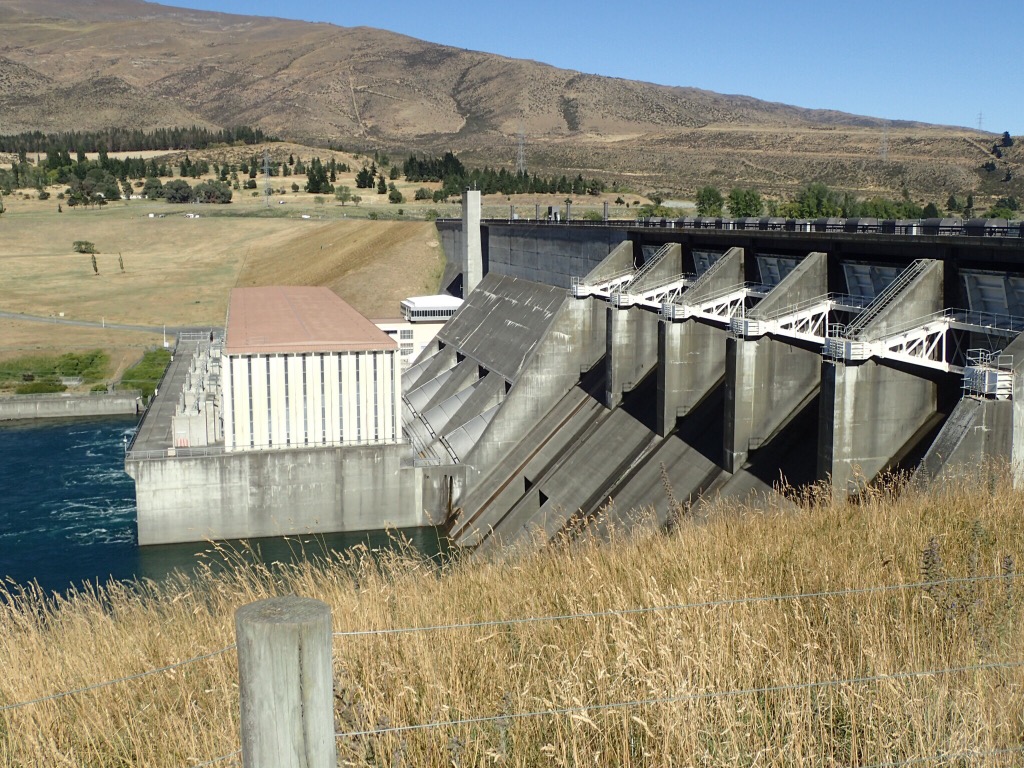
The hydro electric power developments of the upper Waitaki River provide a significant amount of New Zealand’s power. As we descended from the mountains towards the coast the dammed lakes run parallel to the road. Theses dams run out from the large lakes at the foot of Mount Cook where we were yesterday up in the mountains, the stored power is awesome and evident as the water thunders from one dam to the next.

Hydroelectric dam near Otetamata

After nearly a week inland the smell of the sea hits us strongly, we gravitated to the water front of Oamaru to stretch our legs and find an interesting stop for lunch. Oamaru is a pleasant seaside town with more than it’s fair share of the stone buildings that are so rare in New Zealand. Mostly built towards the end of the nineteenth century from the pale, local sandstone, they give the town a more familiar look to our European eyes and a sense of permanence that many of the other towns we have been through don’t seem to have. 

Unique cafe for a spot of lunch on the beach at Oamaru


When researching accommodation for each nights stay, it was usually a compromise between convenience, price and availability but in Dunedin I spotted the place I should pick immediately – Roslyn Apartments, sitting in the hill suburb of Roslyn Village looking down on Dunedin. They weren’t our most luxurious stop but did the job, unfortunately the owners weren’t impressed enough with the coincidence to give us a discount. A discount we could do with, news from the boatyard is good in that they aren’t finding any unexpected problems but, as is always the way with boats, the costs are turning out to be way above what we expected. Rick sits studying the jobs list looking for savings, what can wait, what could we do ourselves?

Our main reason for coming to Dunedin was to see the Albatross colony, the only mainland colony in the world. Ever since we glimpsed them soaring above us as we sailed towards New Zealand last October, I’ve been keen to see them a little more closely. You can see the nests and watch them from land but we were advised you get a better experience from the sea, so we bit the bullet and took a tour, an hour long boat trip around the end of the Otago peninsula where the birds nest. It didn’t disappoint we were surrounded by half a dozen different types of Albatross including the large Southern Royal Albotros with its 3m wing span.

Southern Royal Albatross


On the peninsula, a haven for coastal wildlife, we also spotted fur seals and plenty of other birds including the aptly named Royal spoonbill, spotted cormorants and white faced heron. 

Loving the sea birds as always.


Today we left Dunedin to head fo Te Anua, we had a choice of roads, the main state highway or the scenic route. Rick has a cold and is feeling a bit under the weather so we decided on the easier and faster option. This took us across a large stretch of farmland. Amongst the odd field of crops were fields of sheep, cows and more sheep. We spotted fields of horses, even fields of deer and one field of geese and of course more and more fields of sheep. We passed signs advertising shearing equipment for rent, merino wool clothing straight from the farm, livestock veterinary services and the rather brutally named Southkill Abattoir 

Gradually the hills steepened and we caught glances of snow capped mountains. Another day, another stunning lake.

Lake Te Anua

Into the Mountains

Tuesday 14th February 2017

As I said in my last post, seemingly at every turn in New Zealand there is an amazing vista 

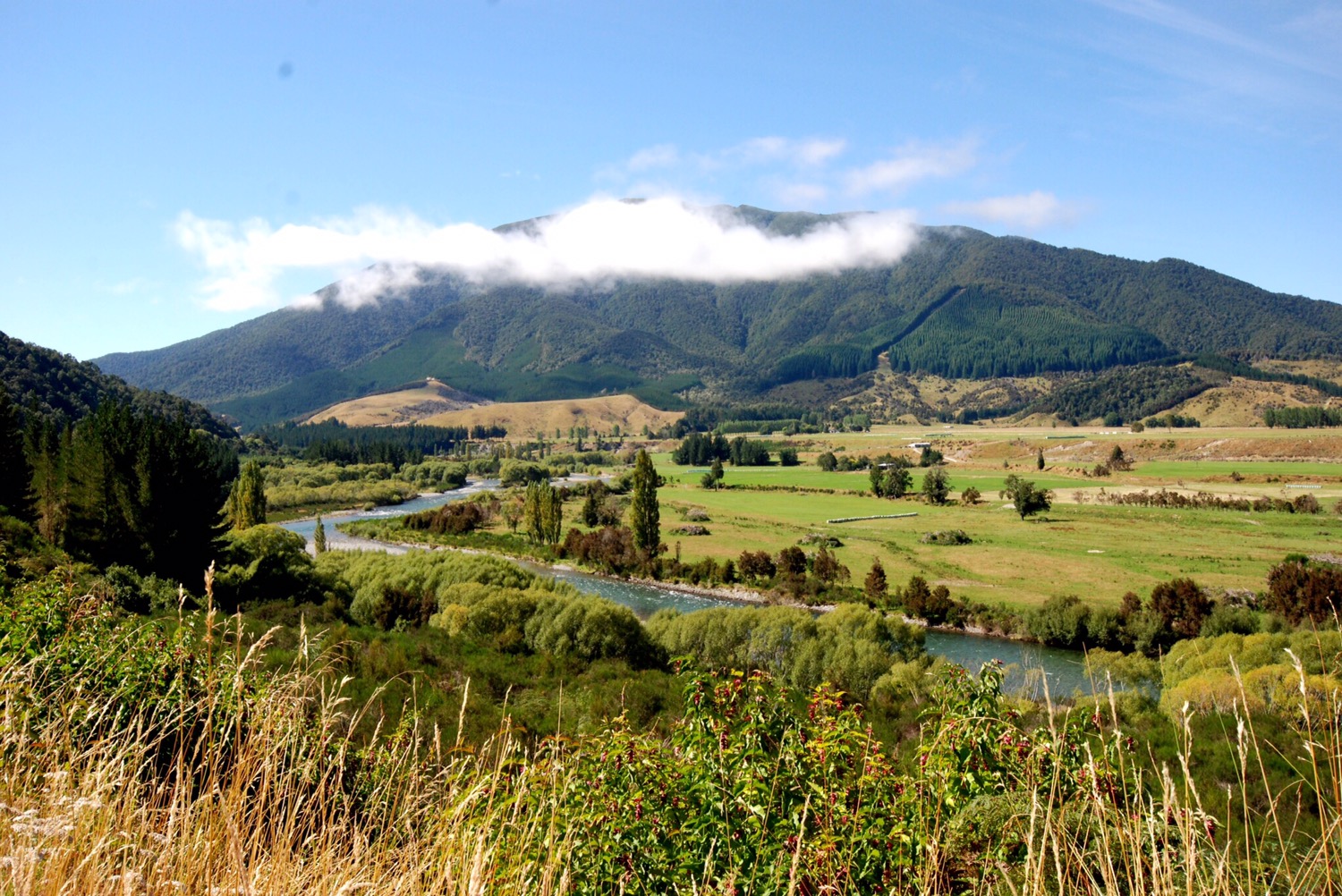
Buller River

And some are especially amazing 

Driving over Arthurs Pass

But today we came over the brow of a hill and swept around a bend to the view to challenge all views.

Southern Alps

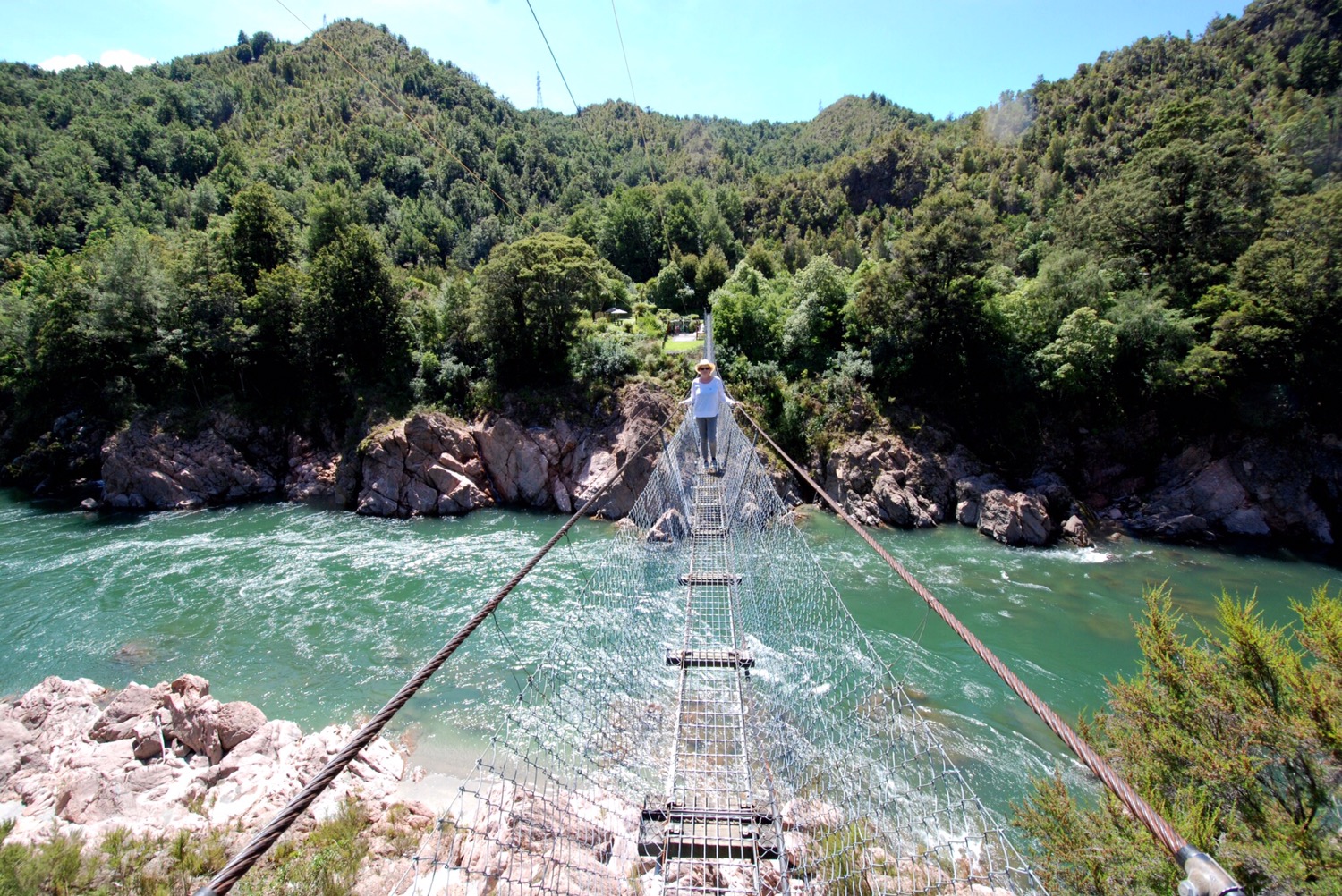
We set off Saturday morning south towards Murchison and on to Brunner Lake. This is logging country and the steep hillsides are lined with pines, areas of cut trees scar the otherwise rich scenery. Cutting through the hills are deep canyons worn by fast flowing rivers, impressive even at this time of year, the vast dry river beds indicated how powerful they must be during times of high rainfall. The Buller is one such mighty river and like the rest of the area has a history of gold prospecting, early in the twentieth century a daring plan was implemented to build a bridge to reach the untouched potentially gold rich rocks on the opposite bank. The longest swingbridge in New Zealand it’s modern version is a tourist attraction.

Swing Bridge at Murchison

We woke the next morning to drizzle and temperatures of just 11 C. We were crossing the Southern Alps driving through Arthur’s Pass and as we approached the mountains loomed threateningly through the gloom. Somehow the scenery still delivered, the pines had been replaced now by native mountain beech, the tops of the mountain above the tree line was of sheer grey rock and the valleys rough browning grassland. The road climbed steeply to its highest point of 920m before dropping down more slowly towards the east coast following wide winding river valleys. 

As we descended the weather began to improve and we decided to stop off to explore the huge sandstone boulders at Castle Hill. Reminiscent of Stonehenge, these were natural artefacts of the areas mountain building past. Up close they were much bigger than we appreciated, they were great fun to clamber round and very photogenic.

Boulders at Castle Hill

As the weather had dissuaded us from stopping at the top of Authurs Pass we had a bit of extra time and decided to take a detour into Christchurch. We were surprised to see the centre of town is still in ruins from the large earthquake that hit the city six years ago. It was sad to see the extensive damage and continued deterioration of the Cathedral and surrounding old buildings, it appears that wrangling between the Church and the City council has led to years of inaction.

Ruins of Christchurch Cathedral


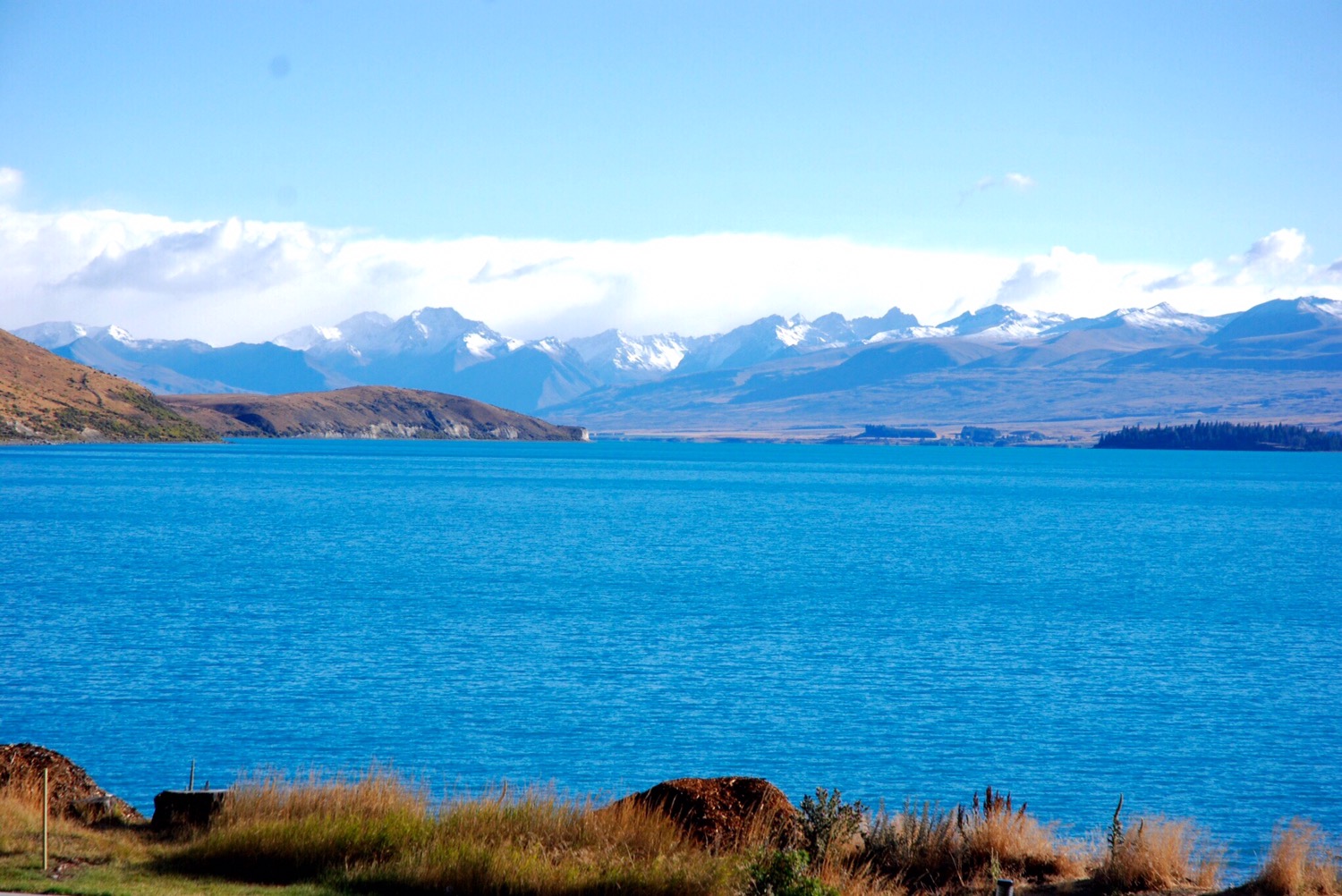
We have spent the last two days back in the Southern Alps and sorry to repeat myself but the scenery is just incredible. High plains of varied grasses and gorse like shrubs, backed by snow capped mountains, the tallest of which is Mount Cook at 3754m and punctuated by large lakes created by the damming for hydroelectric power of the many rivers flowing out of the mountains. If that wasn’t enough theses lakes are a remarkable blue, a result of ‘rock flour’ – finely ground particles of rock brought down by the glaciers and suspended in the melt water. After the clouds of yesterday we woke to a view of Lake Tekapo with Mount Cook in the distance.

Lake Tekapo


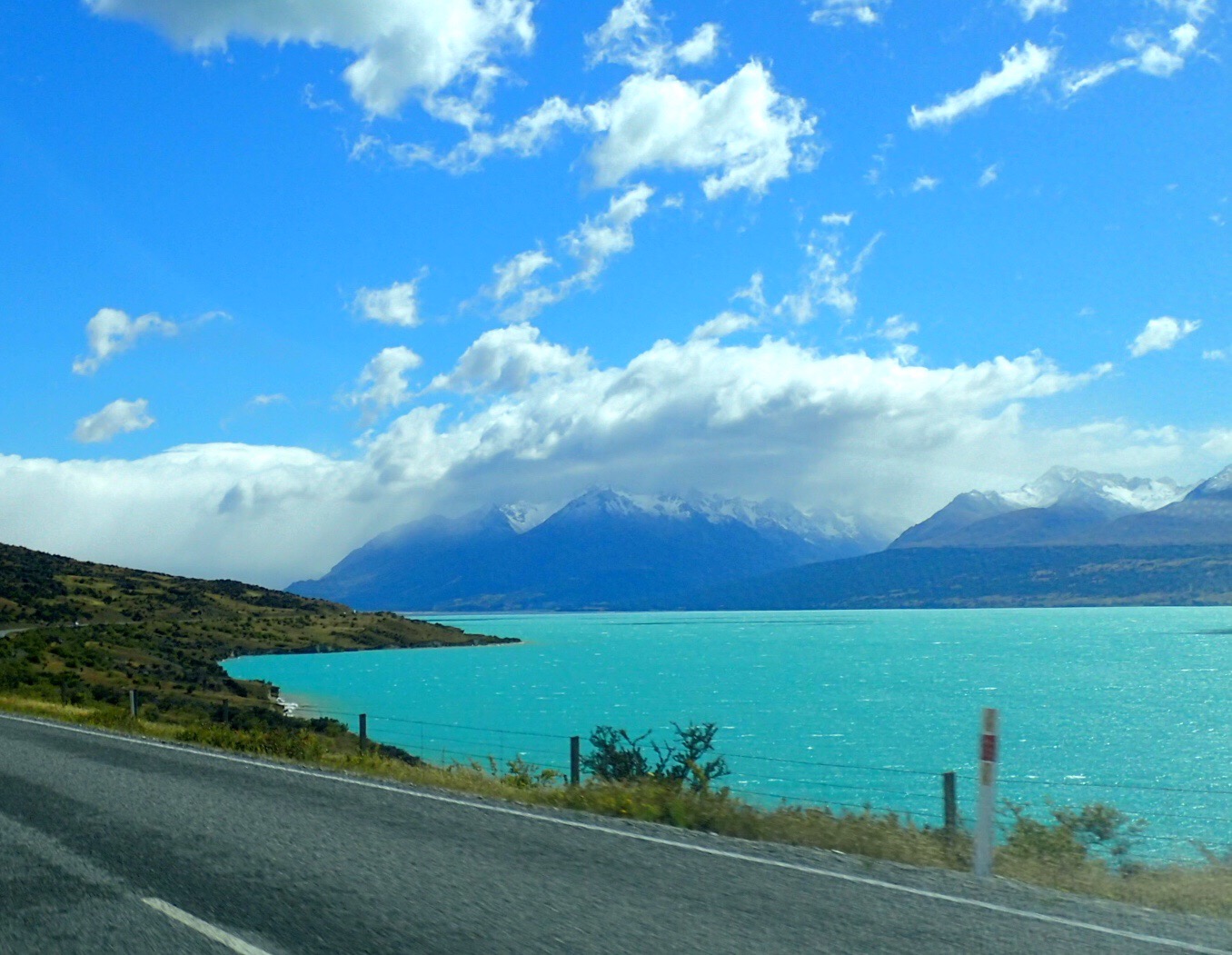
Todays plan was to walk right up in the mountains. We drove around another ridiculously turquoise lake, Lake Pukaki, oohing and aahing as the peaks came closer and closer, up to the base of Mount Cook. 

Approaching Mount Cook


The weather in the mountains is very unpredictable, we had a glorious morning, chilly but bright and sunny, in the thirty minutes it took us to walk towards the Glacial lake that feeds the Tasman River, however, the clouds had descended and the rain started. We took a few pictures of the icebergs that break from the glaciers in summer, zipped up our waterproof jackets and headed back to the car. Much fitter and braver people than us walk for days on the tracks that crisscross these mountains, wet and cold we felt like we had experienced a miniscucle bit of their adventures.

Icebergs from Tasman Glacier

North Shore of the South Island

Saturday 11th February 2017

The roads in New Zealand, so far, have been fabulous, not only are they in good condition, they are almost always empty and there are a continuous succession of wow moments around every corner.

We started our exploration of the South Island taking the Queen Charlotte drive, a scenic route along the coastline of the Marlborough Sounds affording magnificent views of this stunning area.

View from the Cullen Point lookout


We stopped at one of the many lay-bys and took a short walk along a track through rough bush, it led to a lookout over an inner arm of the Mahau sound. The water was calm and tranquil and a deep green turquoise, reflecting the surrounding hills. The trees were so full of cicadas that their singing was almost deafening, this summer chorus is common throughout New Zealand but unlike where we have come across them before, with the singing starting as the sun goes down, here they sing day and night.

From the hills of Marlborough we dropped down into the lowlands around the city of Nelson, replacing the heavily wooded slopes with farmland. Acres of vines, hops and espalier trained fruit trees lined the road of this obviously fertile area. We ate a very pleasant late lunch in the shadow of the quirky wooden Nelson Cathedral and then made our way to our accommodation for the next two nights on a small island just off Motueka.

Transport to The Beach Retreat


It was a very peaceful spot, with glorious evening sun warming our supper table and bird song accompanying our breakfasts. Less welcome visitors were a cheeky rat that blatantly scurried across the terrace to clear the crumbs from under our table and the sanflies that seem to be everywhere in New Zealand and keep us coated with deet day and night.

Again in pursuit of the less crowded spots, Friday morning we set off for Wharariki beach on the far northern tip of the South Island. The route took us over Takaka hill winding steeply to a height of 860m, an incredible road of sharp hair pin bends, precipices and expansive views.

The Tasman valley from the top of Takaka Hill


After two hours of driving we turned up a dusty gravel track, six kilometres and one very dirty car later we arrived at the car park and prepared for the half hour trek to the beach and what a world class beach we found. Miles of white sand washed by the Tasman sea, caves, arches, rock pools, even a few fur seals lounging on the rocks. The only thing missing was the sunshine but this wasn’t a beach for sunbathing it was a place to explore and we spent a great couple of hours paddling, clambering and delving into caves.

Wonderful Wharariki Beach


Sadly just a few miles away on the other side of Farewell Spit four hundred pilot whales had stranded themselves on the sand. Being so close we did wonder if we should drive over to try and help but decided the last thing the experts needed was more inexperienced onlookers so we stayed clear.

Today we head South and into the mountains, we are expecting more dramatic drives to come.

Rotorua and Wellington 

Wednesday 8th February 2017

We entered Rotorua feeling a little jaded, it had been a long day, but our apartment was nice and we had the prospect of the Polynesian spa that sat on the lake front, to look forward to. Rotorua town didn’t tick the boxes for us, very new, obviously built with tourism in mind, it lacked soul. Our spirits dropped further as we entered the spa, the foyer was crowed with people and was rather tacky, the feeling of uncleanliness not enhanced by the sulphur smell emanating from the volcanic hot pools. We hastily paid to upgrade to the ‘luxury ‘ experience but luxury wasn’t really what came to mind. The pools were hot and would have been relaxing had they not been so full of people, the lake views were minimal and the closeness of the swalking seagulls slightly disconcerting . We stayed for half an hour put the expense down to experience and rapidly retreated back to our apartment. The tourists in Rotorua seemed to be mostly Chinese, viewing New Zealand in tour buses, we planned our next day around where we thought the tour buses might not venture.

The main attraction of Rotorua is its geothermal activity, most of the parks feature geysers that go off in the mornings, so hoping to do what everyone else wasn’t, first thing we headed for the Redwood forest. We were treated to a relatively empty walk through the trees but this wasn’t an ordinary walk, here they have strung an elevated walkway 12m up through the mighty Redwood pines. Way above us we had the spreading green canopy of the redwoods, below we had the forest floor covered in shrubs and ferns and at eye level we had the incredible, fiborous bark of the massive Redwood trunks and the vivid green tops of the black tree ferns.

Suspended tree walk at the Redwood Forest, Rotorua

Each platform and walkway is suspended by cables and straps around the largest of the trees, no nails or other destructive methods have been used in its construction. Rick took mental notes, the design of his next tree house taking shape in his mind. Surprisingly these huge trees, unlike their Calfornian cousins that take thousands of years to reach their large size, are fast growing and only a hundred years old, planted  by the growing demand for timber at the turn of the century.

Next we moved on to Orakei Korako, a geothermal park 70k from Rotorua and hopefully not teeming with people. The drive itself was worth the trip, the day was clear and sunny and the landscape etched by its volcanic history, fascinated us. In between the large ranges of hills were areas full of steep sided perfectly conical hillocks, we speculated without conclusion how they may have been formed.

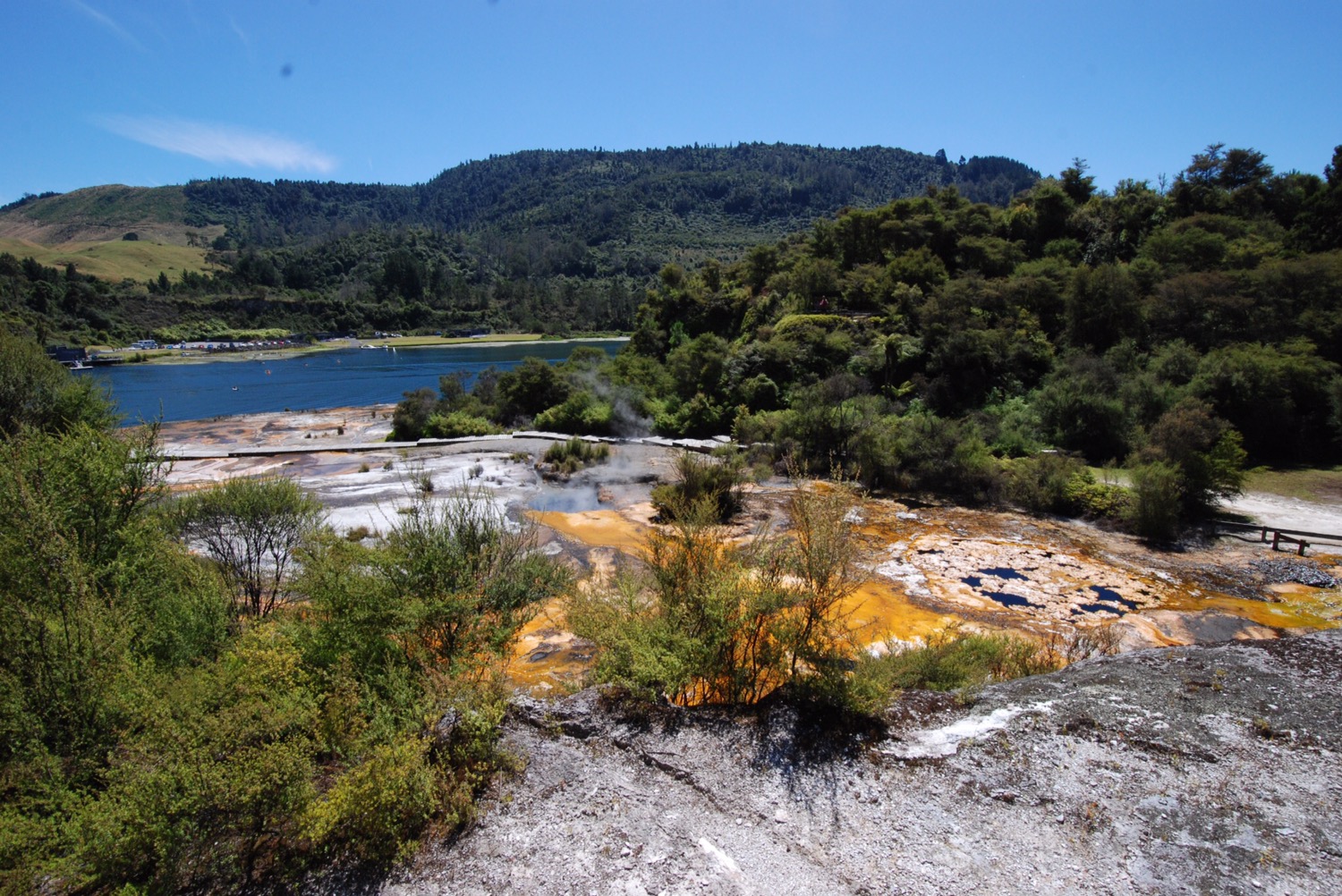
We drove into a half empty car park and let out a silent cheer. In front of us was a tranquil lake, created in the valley by the damming of the Waikato river, all around were lush forested hills and on the opposite bank was the white silica terrace. The silica terrace has formed over thousands of years by chemically saturated, hot ground water gushing to the surface and running into the valley, it sat like a scar in the otherwise picture perfect setting.

Silica terrace running down to he Orakei lake

Brightly coloured, heat resistant algae amazingly live in the very hot water

The afternoon had become hot and the walk around the terraces, bubbling pools and native bush was often steep but it was very much worth the effort. A fascinating afternoon to end a great day.

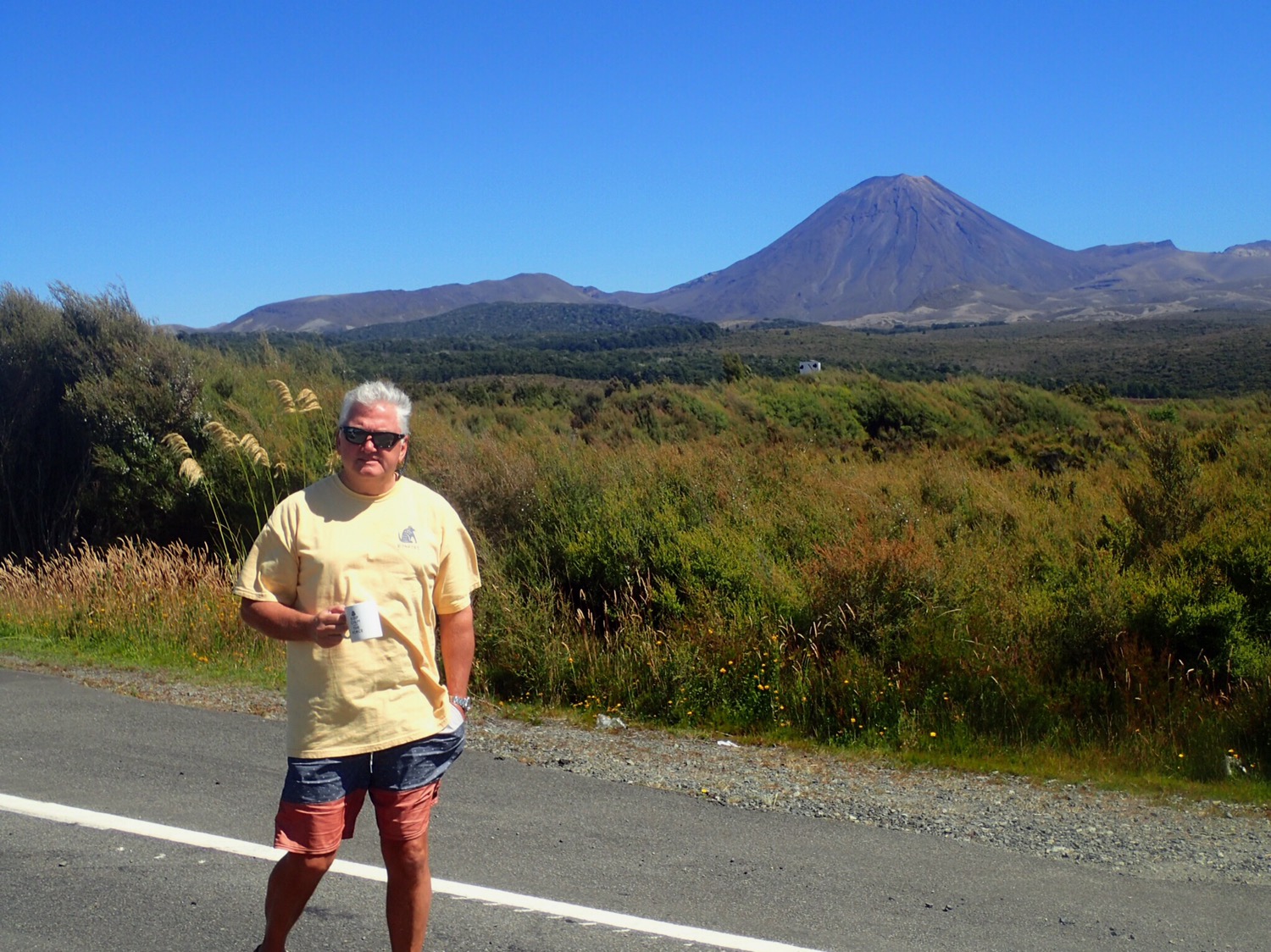
Monday morning we headed south for Wellington on the very bottom of the North Island and a six hour drive. The volcanic experience peaks, literally, as you past Tongariro park. The tallest of the three mountains, Ruapehu, incongruously in the near 30 degree heat of the plain, is still topped with snow, while Ngauruhoe, that at times still vents super heated gases, is the perfect image of a volcano

We found a side road and stopped for today’s cup of tea with a view.

Ngaunuhoe volcano

Unfortunately as we approached Wellington the weather began to close in and we entered Wellington in the drizzle, the wind had turned to the south and the temperatures dropped ten degrees. We got the impression that it was probably a handsome city with its long waterfront area and pretty Victorian terrace houses perched in the surrounding hills but it was difficult to be sure through the dank gloom.

A good indoor attraction was what was needed and we weren’t disappointed by the To Papa museum. It has to be the best museum we have ever visited. Full of colourful, informative exhibitions covering New Zealand’s geography, wildlife and social history., we spent four hours with our sore feet the only sign we had been there so long. The most absorbing section was a special exhibition about New Zealand’s role in the disaster that was the battle for Gallipoli in the First World War. The story was incredibly well told, concentrating on personal accounts from the time and illustrated by actual artefacts and unbelievable larger than life models of the individuals whose narrative we were following. Created by the Weta Caves Studio that produced the special effects for the Lord of the Rings and Hobbit movies the detail was amazing from the accuracy of the clothing to the hairs and wrinkles on the hands and faces. An extremely moving experience that really bought home the futility of many of the First World War battles, in fact the futility of all battles in all wars.

Model from the Gallipoli exhibition – Gunner Corporal Friday Hawkins and Private Rikihana Carkeek

Today we have arrived in Picton in the South Island after the ferry ride across from Wellington, unfortunately the weather is still bad so there wasn’t much chance to appreciate the scenery as we came in. Forecast to improve tomorrow, fingers crossed.

Up the River

Saturday 4th February 2017

Motoring up a narrow river was certainly novel for us after over a year of the open sea. We had one eye on the fantastic landscape that slipped closely by either side of us, while the other was firmly and anxiously on the depth gauge.

Motoring down the Mahurangi River

Wednesday morning we said a final farewell to Gulf Harbour. It hadn’t been our favourite spot, we seemed to have been plagued by cold SW winds for most of our stay that had whistled into the cockpit and kept us often huddled below and our berths location would have been a complete disaster without the use of Ricks sister’s car. But having been there since the middle of November it had come to feel like home, our boating neighbours have been great as always, full of friendly advice and generous with offers of help, it has been useful to be relatively close to a big city and all that brings with it and of course was a safe and secure spot to leave Raya while we were back in the UK.

And it did feel great to be out at sea again especially as the day was bright, warm and sunny. There was little wind and what there was, was not in a great direction but we were unworried, we had decided to use the two hour trip as a sea trial for the newly refurbished engine. It certainly sounded great, smooth and quiet – hooray.

Robertson’s yard, where Raya will be for the next few weeks, have a mooring bouy at the entrance to the Mahurangi river, we picked it up and relaxed. Conrad would be joining us tomorrow to pilot us the final few miles up the river on the midday tide. We were surrounded by rolling hills, holiday homes were scattered through the woodland, each with fantastic views, many with inviting seating areas and steep steps leading down to rickety jetties. Flocks of White Fronted Terns fed on the obviously plentiful fish and Australasian Gannets, looking rather like large, white, ungainly ducks, drifted by contentedly on the tide.

For us this same tide was at first rather disconcerting. When at anchor or on a mooring buoy in the absence of any significant current, the normal situation for us in a bay or nontidal harbour, the boat swings to windward, so we are use to the wind coming over the bows. However being in a river estuary with significant tides the currents are strong, so along with all the other boats we swung with the cycles of the tides, it felt odd to have the wind often hitting us on the beam.

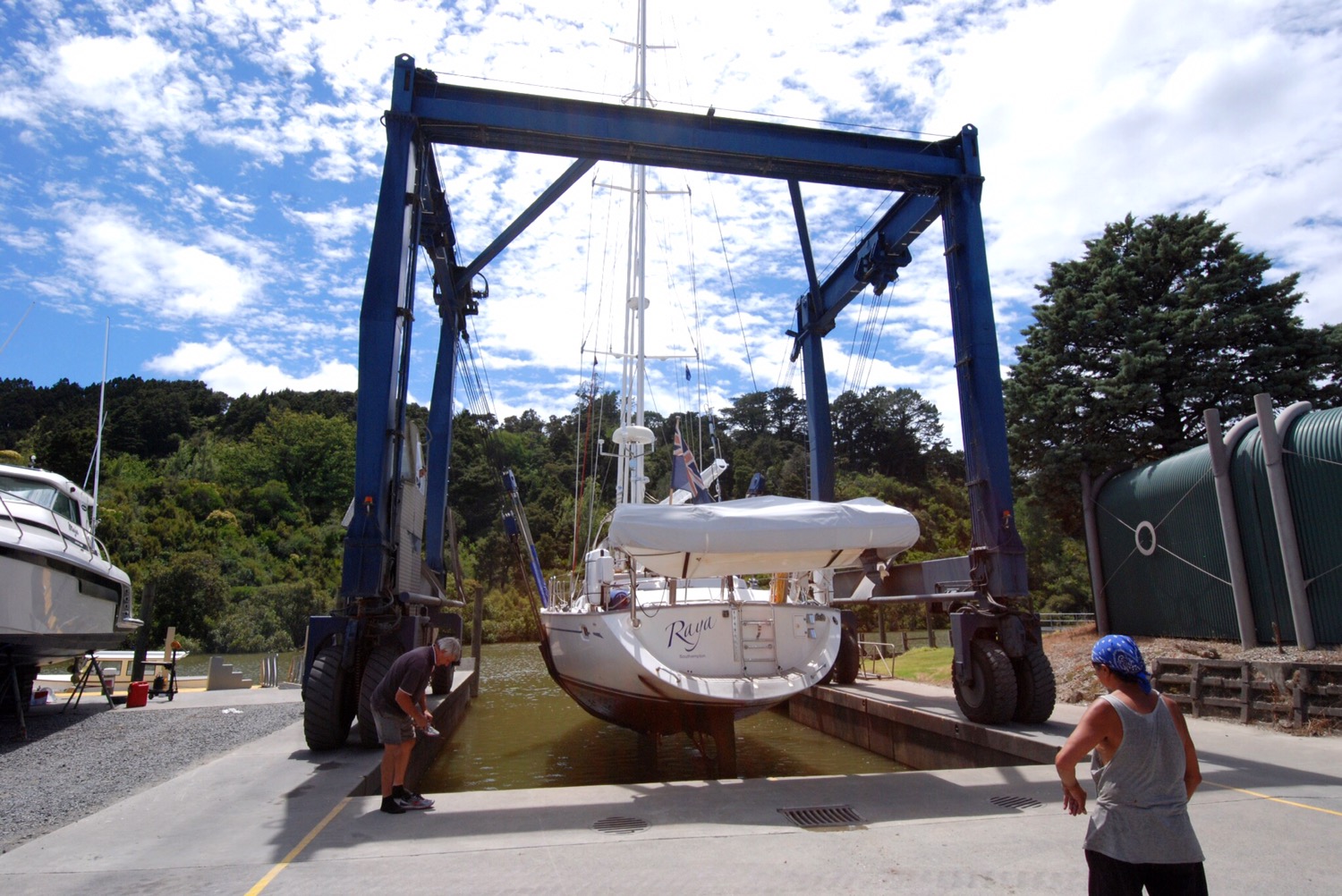
At 11.30 the next day Conrad was dropped at the boat and took the helm. We motored up the rapidly narrowing river surrounded by reedbeds and now hidden by the high water, lethal mud banks. At its shallowest the depth gauge read only 0.3m under our keel. We held our breath anxiously but Conrad confidently pushed on winding down the narrow central channel. With a sigh of relief we arrived at the boatyard and Raya was safely lifted from the water and chocked securely ready to be cleaned, antifouled and polished.

Raya being hauled out at Robertson’s Boatyard

Rick spent the next morning discussing a myriad of other jobs to be done, amongst other things hopefully  we will return to a working fridge and freezer, a regalvanised anchor and chain, replaced seals on a leaky electric winch motor and staysail furler, a couple of new stopcocks and a retuned rig.

Shuddering at the potential cost and a little worried about leaving while all this is going on, we packed our bags and waved goodbye. We have a busy three weeks ahead, first stop Rotorua.

Enroute to Rotorua, a cup of tea with a view.