Cocos Keeling

Thursday 27th September 2018

Coral garden Cocos Keeling

Sitting atop a sea mount rising from the sea bed 5000m below, Cocos Keeling is 600nm SE of Java and over thousand miles NW of Australia, it is the very definition of the middle of nowhere. Two stunning coral atolls comprising of 27 white sand islands, topped with palm trees and of course surrounded by turquoise seas.

The anchorage off Direction Island

For such a remote spot we have discovered it has a lively history. The inside of the Southern Atoll has provided, in the aptly named Refuge Bay, protection for passing ships for centuries and we in that long tradition are anchored in its lagoon off Direction Island. It was first put on the map by a whaler from the Scottish Clunies-Ross family, who in the early 19th century settled here, bringing in hundreds of Malay workers with whom he set up a successful coconut plantation.

At the beginning of the 20th century things began to change. As telegraph communications become more important, in 1901 a cable was laid from Perth in Australia to a repeater station on Direction Island and then on to Singapore and Mauritius providing a link from Australia to London. With the coming of the World Wars the islands strategic position became even more clear to the Australian government and in the 1950s, it would appear rather underhandedly, the Governor of the the time John Clunies-Ross was accused of practicing slavery, shamed and bankrupted. Cocos Keeling became part of Australia.

Oceana House the grand family home still stands on Home Island. After years of neglect it was bought by an Australian couple Avril and Lloyd and just in time its expansive teak panelling, wooden floors and ornate terraces are beginning to be restored.

Home island, a very wet 2nm dingy ride away from the anchorage, has that sleepy island feel that we have found in many isolated ocean islands. It is home to the majority of the Muslim Malay population and with only short distances to travel in their small town they get around slightly incongruously in golf buggies. There is a small museum, a supermarket, island administrative buildings and a brand new cyclone shelter. But our destination is almost always, the pavilion, here overlooking the beach and lagoon is an internet hotspot, every couple of days we sit, dripping from the journey, catching up with our emails and downloading the weather.

Connecting with the rest of the world

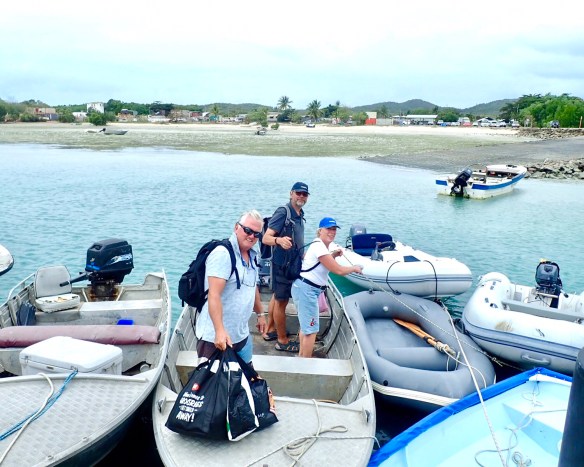
West Island, that forms a large part of the western lagoon edge, houses most of the Australian residents, a further supermarket, a cafe and the airport. Saturday our friend Richard was flying in from the UK to join us on the leg to Mauritius and Reunion. With the demise of our Bimini and sprayhood earlier in the year, we also had a large box of replacement canvas work, very efficiently supplied by Dolphin sails in the U.K. to pick up. Add on the fact that fresh groceries had arrived on the island that day, which I with seemingly the rest of the population, rushed to snap up before stocks dwindled, meant it was three very ladened sailors that made the convoluted trek back to Raya. First step was to take a shuttle bus from the town to the ferry dock, then it required two ferry crossings from West Island to Home Island, one for people and one for cargo and then being too loaded down for the dingy, we had to arrange a water taxi back to the boat. It took a while but we made it and Richard is unpacked, the new sprayhood up and the fridge full.

As we wait for the rather windy weather to calm down before we head off on the two week passage to Mauritius, we have been enjoying this rather special place. As well as learning about the islands history we have been following trails through land thick with palm trees, socialising with the World ARC boats that have gradually being filling the anchorage and snorkelling ‘The Rip’.

The Rip is a channel cutting through the coral at the end of Direction Island, the current runs at about 3kts and it is full of large grouper, trevally and white tip sharks, all enjoying the fast flow of nutrients. The coral walls either side provide overhangs, crevasses and bommies crowded with smaller fish. The dingy firmly in tow it made for a great, if rather quick, drift snorkel.

Inhabitants of the Rip

Today the wind is stronger than ever, the fetch across the lagoon forming white horses, we have put on our swimmers to make the crossing to the pavilion and are temporary connected to the world.
No Pain, No Gain

Thursday 20th Sept 2018

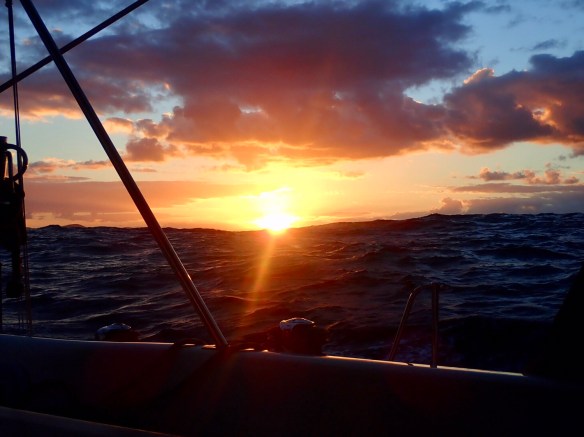
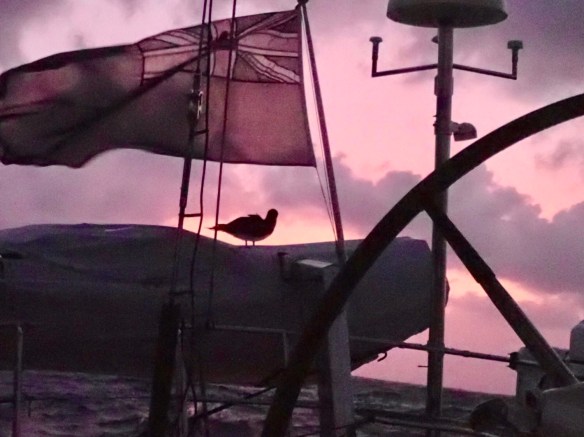
Hanging on, precariously against the messy seas and high winds, a masked booby taking a rest from the buffeting of these gusty conditions, perches on our dingy. I, in a similar state, sit huddled in the corner of the cockpit, his presence breaking the monotony of my night watch. The predawn sky gradually lightens to reveal another day of rough seas. The best thing that can be said about our passage from Lombok to Cocos Keeling is that it’s been fast, we covered the 1141nm in just a few hours over 6 days.

Masked Bobbie resting on the dingy

You would think that after 25,000nm, the milestone we reached a few days ago, that we would be better at reading weather forecasts and that we would realise that 12kts really means 8kts ie not enough to sail by, which is what we had for the first two days and that 20kts actually means well over 30kts, producing the rough seas that plagued us for the rest of the journey.

It’s not that these rough seas were scary, even as large waves loom over us, Raya copes with these conditions as if they are all in a days work but it is really uncomfortable. Eating and other essential tasks become difficult and sleeping is near on impossible. On our off watches we roam the boat, steadying ourselves between handrails, dragging a quilt, trying to find the best place to sleep in the current conditions. Some times diagonally across the main bed works, or perhaps wedged into a bunk bed with a lea cloth or maybe the best spot is in a nest of pillows on the sofa. Often there isn’t anywhere that works and it’s just a matter of closing your eyes and trying to get what rest you can.

The captain clinging on while he catches up on some sleep
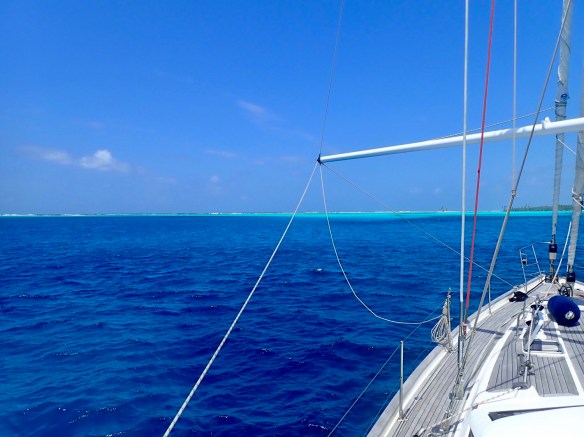
The big waves also brought us less welcome visitors. Flying fish flew on to the deck and into the cockpit in shoals, their frantic flapping leaving scales all over the place and making them impossible to pick up and throw back into the sea. One hit Rick square on the head, others bounced off the Bimini which must amazingly be 4 or 5m above their watery home, while others we found caught in the halyards on the mast.

We left Marina del Ray last Thursday for an anchorage away from the islands and pearl farms that surround Gili Gede to make for an easier get away the next day. We wanted to tackle the strait between Lombok and Bali in the lighter, early morning, breezes. It was still a challenge to avoid the worst of the overfalls but the 5kt current whisked us quickly out from Indonesia into the Indian Ocean.

The Indian Ocean, we really are on our way home now. With only seven or so weeks left before the cyclone season hits this area and with nearly 5000nm to cover we will for the first time on this trip be sailing for as much as we are at anchor. As we watched the turbulent water around us, discussed whether it was worth fighting the elements to make a cup of tea or sat through a chilly, drizzly night, the prospect of weeks at sea didn’t really appeal.

However this morning the sea had calmed a little and with just 10nm to go we spotted the last of the Oyster rally fleet leaving the atoll of the South Keeling Islands. Our spirits rose as we chatted on the radio to our friends on True Blue who gave us their top tips for enjoying our stay. And as we rounded Direction Island and entered the lagoon we were greeted with clear, calm, turquoise seas and three small black tip sharks. We were promptly checked in by the friendly Cocos Keeling police, washed our salt covered decks and drank our ‘got here beer’. This life’s not so bad, as they say, no pain, no gain.

Motoring in to the lagoon off Direction Island
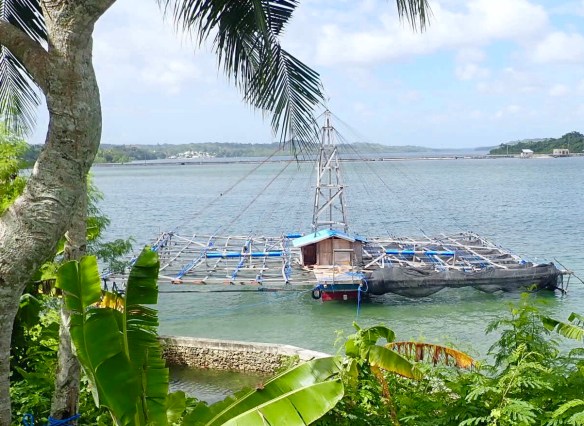
Dèbut in Debut

Wednesday 25th July 2018

It has been a long time since the Call to Prayer has acted as our alarm clock, we have arrived in Debut, Indonesia and sit anchored in sight of three mosques. The Call here is much more tuneful than we remember from our time in the Middle East and adds to the exotic atmosphere we have immediately felt.

It is a beautiful day, the light is soft, the bay calm and in the cool morning air we sit, for what seems like the first time in months, without being battered by high winds.

It was, after eight months, strange to be leaving Australia. But we didn’t have much time to dwell on the matter, with the wind behind us, Raya was in her element, we flew out of the Torres Strait and into the Arafura Sea. After the first day it was rather rolly, with often flogging sails, in a lumpy sea but it was good to reacquaint ourselves with the challenges of longer passages after day sailing for so long.

Small dolphins joined us a couple of times to play at the bows and with the moon setting in the early hours we had the best of both worlds, half the night was moonlit, the other full of stars. We had been warned that their would be a lot of fishing activity, especially at night and to keep far offshore where possible. Huge, unlit, fishing rigs can be very nasty if you don’t spot them in time.

Bamboo and wood fishing rig tied up in Debut

Luckily we didn’t knowingly come close to one, we did however nearly get caught in one of the large nets that are trailed up to a mile behind small fishing boats, their ends only marked by tiny flashing lights. Others were not so lucky we know of at least three boats that got caught.

On Sunday, as dusk fell, we began to realise we were surrounded by brightly lit boats. These delightfully, rustic craft, amazingly anchored in over 40m, shine lights down into the ocean to attract and then catch squid. In the growing darkness an intense glow appeared on the horizon, we checked the chart more than once for a possible city but the shore was over 30 miles away and from what we could see was sparsely inhabited. As we came closer we concluded it was in fact a city, a city of hundreds of squid boats.

Fishing boat city

We arrived in a Debut, after working hard to slow the boat and time our entry, at around 9am on Monday morning. The route into the port was unmarked and uncharted. Luckily we had come prepared, marking the chart with waypoints I had taken from satellite images of the reefs while we still had internet in Australia.

Once anchored safely we managed to celebrate with a ‘got here’ before a continuous stream of officials began arriving at the boat. They arrived by traditional long boat, their approach announced by the lawn mower putt putt of their engines.

Quarantine offers arriving by long boat

It has taken us two days to process all the paperwork, fight through the confusion surrounding the data and phone systems and equip ourselves with, at 10,000 Indonesian Rupiah equal to only 50p, literally millions in local currency.

We did get the time to wander around a few of the streets close to the dock. The colours here are vivid, the prettily painted houses and brightly coloured flowers are all backed by lush greenery and the blue of the sea.

Main street down to the wharf at Debut

This is only the second year the rally has started their Indonesian travels in Debut and the sailors on the yachts are pretty much the only outsiders that ever come here. The town is in festival mode, friendly faces excitedly gathering at the dock offering to help us in anyway they can. And in this world where the smart phone is king, everyone is desperate to have a selfie with the visitors.

Tomorrow the official celebrations start, local dancers will greet us, there is a trip to a fishing village and dignitaries all the way from Jakarta are hosting a welcome dinner.

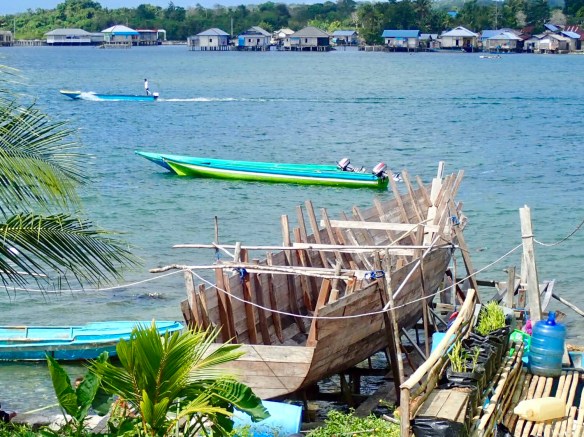
Loved this local wooden boat in construction at the bottom of the garden.

End of Oz

Tuesday 17th July 2018

We have arrived at Thursday Island at the very most northern point of Australia. Towards the end of the week we will check out at customs and head for Indonesia, our Australian East Coast adventure completed.

You can find our track at http://my.yb.tl/sailrayatracking/

The anchorage at TI, as Thursday Island is known, is rather bumpy, so the fleet of the sail2Indonesia rally have congregated a mile or so southeast off Horn Island. As soon as we stepped ashore we knew we were back to Island life. The dodgy dock was crowded, the roads and pavements were full of pot holes and the supermarket, well let’s just say we need to reset our expectations.

Getting the shopping into the dingy was a bit of a challenge for us and the guys on Alexandra.
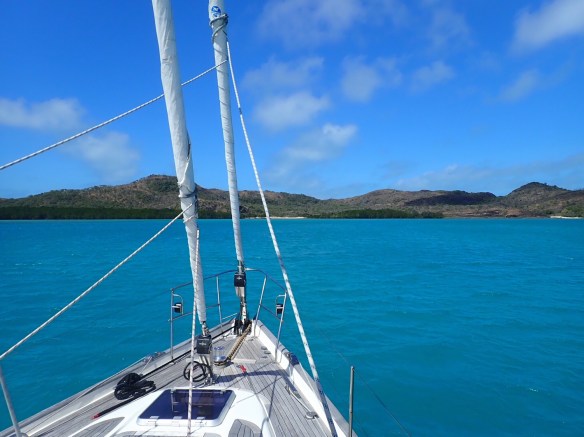
The last few days of sailing up the coast continued to be good, although with the ever narrowing shipping channels winding their way through the reefs and islands, a good look out was required at all times and with the frequent changes of direction, sail changes made for a busy trip.

On the first night we stopped at a recommended anchorage off Morris Island. Just a tiny speck on the chart and not much bigger in real life, we were doubtful that it could give us any protection and prepared ourselves mentally to sail on through the night. Little more than a long sand spit about half a kilometre long, with just one palm tree and a bit of scrub there was no let up in the SE wind but surrounded by a large reef the swell disappeared, so we dropped anchor and got some rest. We had caught a large Spanish Mackerel in the morning but all plans of sharing a fish supper with our fellow cruisers was quashed, the wind deterring us from lowering our dinghies.

The next day, Wednesday, we set off on the 24hr sail up to Adolphus Island, just off of Cape York it was a good launching point to time our arrival through the tide driven currents of the Torres Straight.

Anchored in splendid isolation in Blackwood Bay, Adolphus Island
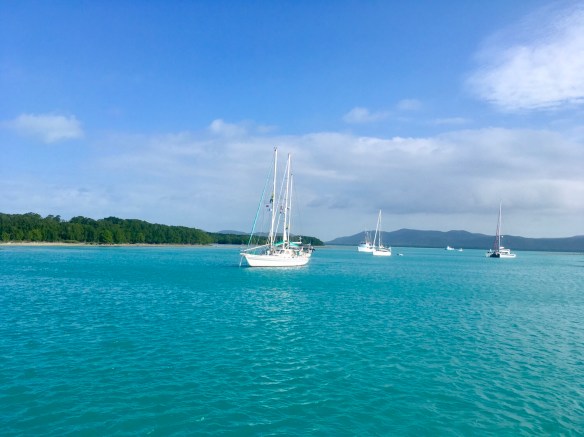
We still had no internet so I still had no Navionics on my iPad, I was dependant on the guys on True Blue and Matt on his computer in the U.K. to work out the tide times for us. With their help Raya was whisked along by a 3kt current into the anchorage at Horn Island.

Anchored with the rally fleet off Horn Island

The promise of a bigger supermarket and a couple of restaurants, meant yesterday we took the ferry to Thursday Island. It’s a great system with the ferry Captain also being the bus driver. Once the ferry docks, everyone moves to a mini bus and is dropped around the small town and island as required. To return, you just call for the bus who picks you up and delivers you back to the ferry. With the security of the driver of both being the same person you know the ferry can’t leave without you.

Being only 10 degrees South of the equator we are deffinatly back in the tropics and we had to remind ourselves to slow down in the humid heat. With only one main street and the sea front, we easily found our way around and although bigger and a bit smarter than Horn Island, it still felt a very long way away from the Australia we had left behind in Cairns.

Harry the local croc lounging on the banks of the anchorage

In Captain Cooks Footsteps

( After nearly a week we finally have a couple of bars of 3G, see delayed post below. )

Flinders Islands

Monday 9th July 2018

We are anchored with three other boats off an incredibly beautiful, remote group of islands, the Flinders Islands. As far as we can tell there are no other people or buildings for a hundred or so miles in any direction, just a little band of yachts sheltering from the brisk winds as they sail north to set off for Indonesia. We did get a visit from the Australian border forces plane however, requesting over the radio the registration and cruising route from each of the boats, security seems tight on these northern extremes of the Australian Coast.

We know all the boats here, cruisers we have met all through our trip, so it’s very sociable and as there isn’t a phone or internet signal, invaluable, as we swap notes on weather and tides from our various satellite and long range radio connections. I am feeling particularly information bereft as my trusty and much used Navionics App for some reason will not allow me to use my downloaded maps offline. I am missing it’s clear presentation and tidal and current data, but there seems nothing I can do without a network connection.

The sun did, mostly, come out for our last day in Cairns and we set off for Lizard Island some 140nm north in good winds and blue skies. We had rigged the pole for the downwind trip and it felt so good to have the engine off for the whole journey. It did rain a bit during the night but generally it was a very pleasant sail.

Downwind sail rig whisking us at 8kts northwards

Mrs Watson’s Bay on the north east coast of Lizard was full of boats, with, finally, a functioning island resort sitting to one-side. The beach is of fine white sand and the water clear, a track leads up to the highest point of the island about 350m above us. This lookout is famous as the spot where Captain Cook, having already gone aground just off Cape Tribulation, climbed to try to find a channel through the hundreds of reefs to open sea. Due to his meticulous note keeping, his trip up the Australian Coast is well documented and celebrated at many of the stops we have made, plaques and statues abound as each community claims their connections to the great man.

It would have been easy to spend a couple days, unfortunately Lizard Island has a reputation for bullets of wind, extreme gusts that scream between the hills and straight into the anchorage. With winds building we needed to find a more protected spot, we only had time for a quick walk, the next morning before sunrise we headed to the Flinders Islands in the lea of Cape Melville.

The Barrier Reef runs for over a thousand miles parallel to the mainland, creating a passage all the way up the Queensland coast. This may have trapped Captain Cook but produces a low swell haven for us, the sailing over the last couple of days has been amongst the best we have experienced in Australia.

Flinders Island also has a history from Cooks time, fresh water springs, during the rainy season, bubble up between the boulders at the far end of the beach to the west of Aapa Spit. They have provided precious fresh water for thousands of years to the indigenous visitors and more recently to the British ships that were charting this coast. Graffiti left by the sailors still adorns the rocks nearby.

200 yr old graffiti, no luck deciphering it however
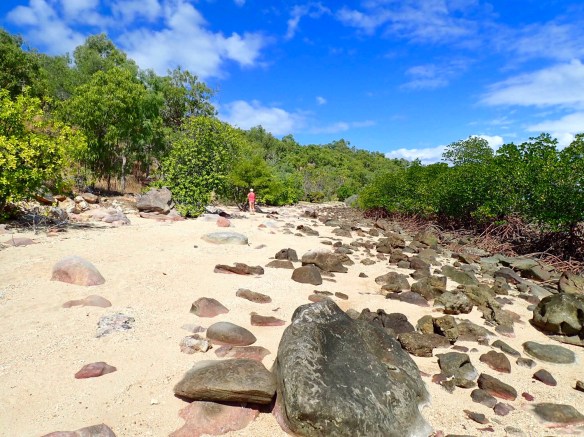
It made for a pleasant walk down a sandy corridor with the mangroves that line the shoreline on one side and the rust coloured boulders and cliffs on the other.

Graffiti walk on Flinders Island

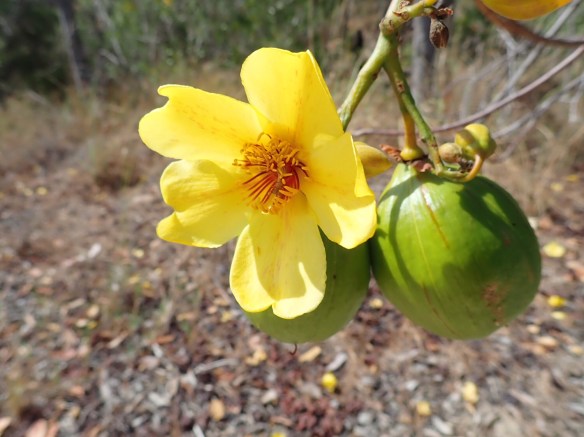
Pretty yellow flowers and bright green fruit hung from what otherwise looked, being devoid of a single leaf, like dead trees and creeping along the sand were the purple pink flowers of bind weed. We could hear a few birds but the island appeared strangely free from animal life.

Beautiful flowering trees

We had spotted more activity in the water, seeing turtles and what we thought might be dugongs, in our pole light off the stern, one evening we saw a sea snake, the boat next to us saw a strange white coloured shark and the mangroves looked like a perfect home for crocodiles. Despite the welcome increase in temperature our travels north have found, nobody has seemed game for a swim.

Salties, Showers and Swashbuckling

Sunday 1st July 2018

We don’t really feel we are seeing Cairns at its best, unbelievably it is still raining. We dash around, heads down, trying to get from one place to another without becoming too wet.

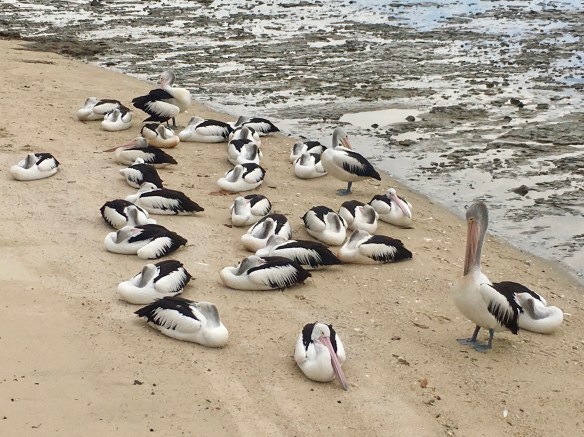
Today, to escape cabin fever, I risked the drizzle and went out to stretch my legs on the waterfront boardwalk. When we arrived last week, we had one day of sunshine, this area was teaming with people, visitors and local families wandered along the paths entertained by buskers and street performers, today the paths were almost deserted. The attractive artificial lagoon sat empty and forlorn, a few groups of backpacking kids huddled under trees damp and dazed from the previous nights revelries, rain coated Chinese tourists shelter under umbrellas putting on a brave face determinedly continuing to snap photos, even the pelicans seem to have had enough of the weather.

Pelicans on a rainy Cairns beach

Despite the rain we carried on with our plans to hire a car. Tuesday we used it for a last scout around the chandleries and for a final stock up on provisions for our trip to Indonesia. Every locker onboard now groans with goodies.

Wednesday we treated ourselves to a day out, driving up the coast to Mossman Gorge and the Daintree River. The coast road sweeps dramatically around bays and over headlands but the normally blue sea looked green and murky under the grey skies and the beaches damp and windswept in the drizzle.

On the upside the weather had kept many people away, so our visit to Mossman Gorge was relatively uncrowded. The gorge sits in the southern end of the Daintree Forest, one of the Worlds oldest continuing forests. Having escaped ice ages and volcanic destruction it is thought to have been around for 135 million years. A few of the plants are of ancient origin and found uniquely in this area.

The atmosphere inside the forest is extremely humid, creating a marvellous earthy scent, the sound of cascading water and an intense green surrounds you. Despite all evidence to the contrary this is the dry season and the Mossman River flowed gently through the boulders, tumbling over small waterfalls. All around however, signs and markers warned of the rivers potential power, after torrential summer downpours it becomes a dangerous raging torrent whisking away everything in its path and frequently breaking its banks.

Mossman River

In the afternoon we travelled further north to a much more tranquil River, the Daintree. We had a river trip booked for 4pm in one of the smaller tourist boats. Boatman Daintree River Tours run trips at dawn and dusk when the birds and animals are more easily spotted along the banks. Unfortunately so dismal were the conditions I think most of the wildlife were sitting sheltering inside the densely forested banks looking out at us instead. However our prime objective was to see a crocodile and luckily Scarface, a large male, was obligingly sitting on his favourite patch of low tide sand.

At 4 1/2 m Scarface is possibly the largest Salty on the river

Being a small craft we were able to meander up narrower creeks, Murray our extremely knowledgable guide filling the void left by the lack of animals with fascinating information about the passing trees and shrubs. Who knew that the mangroves here survive their tidal salty homes by growing vertical aerial roots that act a bit like snorkels helping with the uptake of oxygen as the tide ebbs and floods. To cope with the excess salt, as well as filtering as much salt as possible through their roots, they sacrifice a proportion of their leaves to gather salt, the leaves turn brown and drop off taking the salt with them.

Aerial roots of the Mangrove trees

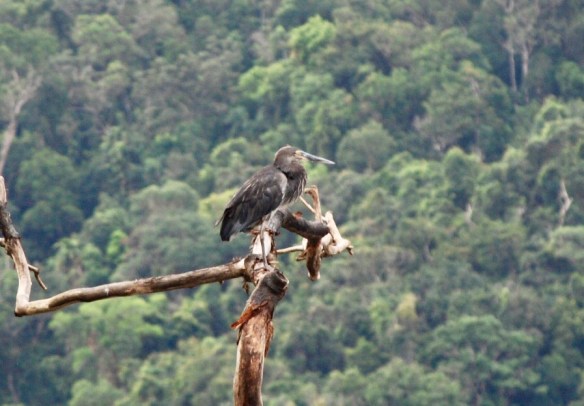
As we rejoined the river, Murray spotted a giant billed heron flying near by. A secretive bird, a sighting is much sort after by the birding community, which explained the excitement from our fellow passenger who set his camera, bedecked with a huge telephoto lens, into action. The heron settled on a nearby tree and we moved in for a closer look, to our surprise it let out a croaky growl, a sound as far away from bird song as you could imagine. Over a meter tall they spear fish in the shallows but have been known to eat small snakes and even baby crocodiles.

A rather damp and ruffled giant billed heron
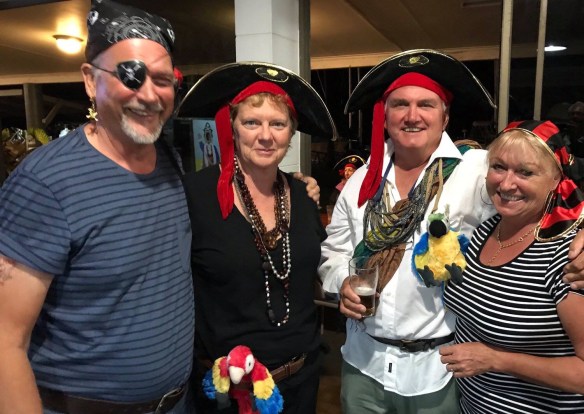
Back at the marina it was time for the Indonesian Rally briefing, the blue sea and skies of our destinations, looking even more alluring against the backdrop of rain out of the window. The presentation was followed by a pirates party and the Indonesian Rally participants were joined in the Cairns Yacht Squadron bar by the crews from the Oyster Rally. Feeling rather betwixt and between, we wandered from one group to another and had a very enjoyable evening.

Swashbuckling with Oyster friends Heather and Bob

There are signs in the forecast for less rain next week, we plan to leave Thursday, it would be nice to see Cairns in the sunshine before we go..

Fast Forward to Cairns

Sunday 24th June 2018

All us girls know that dark chocolate with a nice class of red wine is a sublime combination but enjoying them with the backdrop of a burnt sienna sky, the black silhouettes of a mountainous coast and Venus twinkling above, while anchored off a small island in calm seas, well that makes for a very special moment. Regrettably with the highs come the lows, a few hours later, in the depths of the night, the wind changed, a lively fetch developed, sleeping was difficult and life onboard became much less appealing.

Looking back at the mainland from Orpheus Island.

We had picked up the pace slightly to arrive at the Marlin Marina in Cairns a few days earlier than planned. Our Bimini has started to collapse, any small pressure on it is causing it to split. Rick had put on a couple of patches to try and make it last a bit longer but we have a new rip and another area threatening to give way at any moment. As our main protection from the sun, it’s an essential piece of kit, so we took the decision to try and get a new one made in Cairns.

So for the 150 miles, from Magnetic Island, we decided to continue with day sails but instead of sailing one day, then enjoying the island the next, we are just stopping to sleep each night. Our first stopover in Pioneer Bay on Orpheus Island turned out to be not only bouncy but chilly too. We read that Tuesday night it fell to 6C in Townsville, less than 60 miles to the South of us, the coldest night they’d had since 1995!

Consequently it was a cold start to our next stage and we were very pleased, as the morning progressed, for the sun to start warming us up.

Warming up in the sunshine as we continue to sail north

It’s a very striking coastline, with the high mountains of the Great Dividing Range dropping dramatically down to the sea. A lot of the land here is managed by Aboriginal communities and for the past couple of weeks we have seen numerous controlled fires in the hills. A method used for thousands of years, it clears the land of scrub encouraging a variety of grasses to grow, this in turn attracts Kangeroos a traditional food source. It turns out however that this ancient knowledge of when and where to burn is also invaluable in discouraging wild fires and increasing diversity of all the flora and fauna in the area.

Our next anchorage was in Brammo Bay on the NE corner of Dunk Island. Yet another deserted resort sat perched on the beach, one more victim of cyclone damage and lack of investment. There is however still a regular ferry service bringing day trippers and campers from the mainland to enjoy the beautiful beaches and trails that crisscross the island.

Thursday after ten hours of motor sailing we arrived in Cairns. The Bimini is on order and as this will be our last marina for quite a few months, preparations for the onward trip to Indonesia are in full swing. Unfortunately the weather has turned cloudy and wet, dodging showers has been the order of the day.

Street art in the rain, at the Lagoon on the Cairns waterfront

And we are not alone, the Oyster World Rally is gradually arriving, Raya’s sister vessels surround us.

Oyster World Rally arrive in Cairns

Island Hopping Northwards

Monday 18th June 2018

Splendid Isolation of Bona Bay

This past week we have been slowly making our way northwards between the Whitsundays and Townsville. We have managed to find quiet anchorages inside the deeply indented mainland and off the dramatic coastal islands that are close enough together to avoid tiring one night passages. Magnificent giant boulders still feature all along the coast, some so precariously balanced they look as if just a small puff of wind would send them tumbling down the hillside. Luckily the weather has been very calm, the lack of wind often producing exquisite, undulating, glassy seas.

Windless days and glassy seas

As we sail we are continuously reminded of just how huge Australia is, with towns and small communities dotted sparsely amongst the miles of empty countryside. Our first stop, just ten miles north of Airlie Beach was one such place, in the large eastern lobe of Double Bay we were surrounded on three sides by a vast uninhabited forest, with only the one other yacht anchored deeper into the bay and the couple of bars of 3G evidence we were only a few miles from civilisation.

We moved on to Bona Bay, in the lea of Gloucester Island, a resort was located a couple of miles south on the mainland but again we sat in splendid isolation. There was a great beach here and the low tide revealed a large expanse of sand and a huge field of pebbles.

Pebble beach at Bona Bay

Thursday found us, after another calm passage, tucked behind the daunting mass of Cape Upstart in Shark Bay. The whole 4 mile length of the bay was lined, behind the trees, with shacks, rough and ready telegraph poles running an electric supply to each. However there was no sign of any occupants.

The water in these bays is murky and in combination with its name we are not tempted in, but again we enjoyed exploring the beaches. Getting ashore at low tide, with a rocky boundary proved difficult but after a bit of searching we spotted a small creek cutting through the sand and guessed correctly that there would be a sand spit at its end to beach the dingy. We wandered up the creeks length to where it disappeared into the mangroves, but the pressence of biting sandflies (or was it the muddy banked possible crocodile country) put us off exploring further.

A small creek entering Shark Bay

Returning to the dingy we took advantage of the flat sea to go out of the bay and around the head of the Cape. Normally pounded by ocean swell it was a rare treat to be able to explore around the massive rocks and crevasses that drop down steeply into clear water and visit the small beaches tucked away near the Capes end.

Enjoying the calm waters, exploring in the dingy.

We now find ourselves in Horseshoe Bay on the north side of Magnetic Island. Named, as many of the places are here, by Captain Cook as he sailed up this same coast in 1770, due to the effect the island had on their compasses. We kept a keen eye on ours as we approached but didn’t have any similar issues. However the journey was marred, not by us getting misdirected but by the loss of two of Ricks favourite fishing lures. The first was taken by what must have been a very big fish, who bending the rod almost double, pulled out most of the 200m of line on the reel before chomping through it to get free. The second loss was more irritating. A small fast tinny crewed by a couple of local idiots drove straight towards us and despite my best efforts jumping up and down miming the fact we were trolling a line out the stern of the boat, they crossed behind us way too close taking our hook, lure and line with them.

Magnetic Island being just off the coast of Townsville and a tourist destination, is much busier than our last few stops, however that does mean bars, restaurants and a grocery store. It also has a few trails, one of which leads a short way through the forest to a lagoon apparently home to a range of different birds. Unfortunately all we found along the path, was yet more large spiders, a flighty kangaroo who made us jump out of our skins as he bounded through the undergrowth and a very boggy end as the trail petered out, the lagoon sitting tantalisingly close just through the trees.

A trail to nowhere

Tomorrow we continue our island hopping, arriving in Cairns at the end of the week. Where hopefully we will find our passports stamped with our Indonesian visas and the rally information packs. The next adventure begins.

Waves, Caves and a Million Eyes

Saturday 9th June 2018

We are lounging in the cockpit trying to take a bit of downtime. We are berthed in the very swish Abel Point Marina in Airlie Beach and all around us is a hive of activity, we feel rather lazy. The boats either side of us are being cleaned and polished to within an inch of their lives, a continuous stream of people are being shepherded along our pontoon on to the various day trip crafts moored at the end, a fun run is taking place on the harbour boardwalk and behind us a small army of crew members work flat out on the 230ft Super Yacht Felix, keeping it in a perpetual state of perfection and readiness.

Super Yacht Felix , they had been polishing the hull all day
Yesterday we had waved Eric and Roz off to the airport, pleased that for the past week the sun had come out and the wind dropped enough for them to experience some of the high moments that a cruising life can provide.

Sunday we continued our journey around Hook Island arriving in Stonehaven Anchorage in time for lunch. There were a few more boats here but we easily found a mooring buoy even if it did mean sharing the musical tastes of our neighbours. We escaped ashore, again clambering around the amazing boulders, Rick climbing high and back into the island.

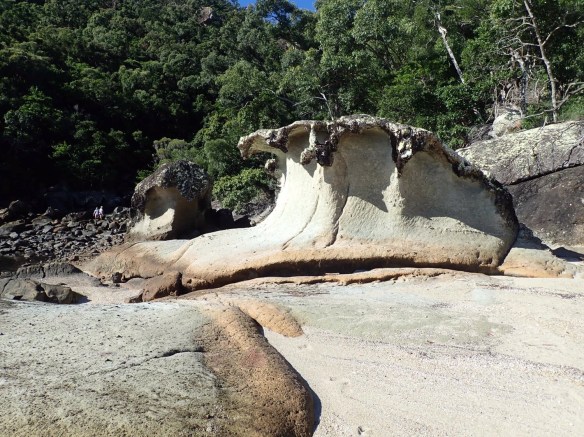
The volcanic past of these islands is evident everywhere in the rocks. Some are obviously solidified lava, dark in colour they are pocked with air holes and full of stones and debris picked up as the molten flow ran down the hillside. Many are striped with Ferrous reds and oranges, others having been eroded by the sea reminded us of giant apple cores or, as in the case below, giant waves frozen in time.

The rocks at Stonehaven Beach

Luckily the partying crew next door allowed us a quiet night and early the next morning, in our continuing search for good snorkelling, we moved the short distance out to tiny Langford Island. We were again greeted by a dozen or so bat fish but sadly even from the boat we could see that most of the coral was gone, we debated whether it was worth going in to investigate further. The arrival of a dozen jet skis made our decision easy, we moved on to Blue Pearl Bay on Hayman Island.

Another beautiful bay lined with stunning rocks we took the dingy out to enjoy them close up. Castle rock that forms a small headland is a renowned snorkelling spot but yet again most of the coral was gone. Despite this we did have an interesting snorkel, a few patches of coral on the shore side of the boulders, presumably protected from Debbie’s onslaught, survive, small reef fish clinging on in what remains of their home. There were plenty of larger fish too, including a large grouper and a generous amount of parrot fish. Nearer the shoreside rocks we came across a massive shoal of schooling three inch long silver fish. It’s amazing swimming through the mass of beady eyes all intently watching, a million individuals that swoop back and forward in unison, all the time somehow managing to avoid touching you.

Our next stop was, for contrast, deep inside the 2.5nm long Nara inlet, at only half a km wide we were encased by the high green hills.We couldn’t have wanted for a more tranquil spot, in fact Rick took advantage of the calm conditions, and the extra hands onboard, to drop the main sail and inspect the inmast furler.
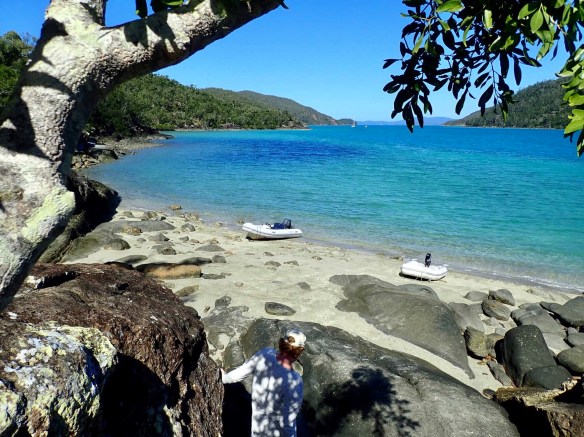
Looking down the length of Nara Inlet

At the end of the inlet, off a small pretty beach, a track leads up to a cave that contains aboriginal paintings possibly 2000yrs old. Artefacts found in the cave floor show that it has been used for at least that long by the Ngaro people who have lived in the area for at around 9000 years. On the side of the track and on the platform outside the cave information boards explain the details and the importance of the simple designs and the stories that accompanied them to spread the history and culture of their people.

Aboriginal cave paintings in Nara Inlet.
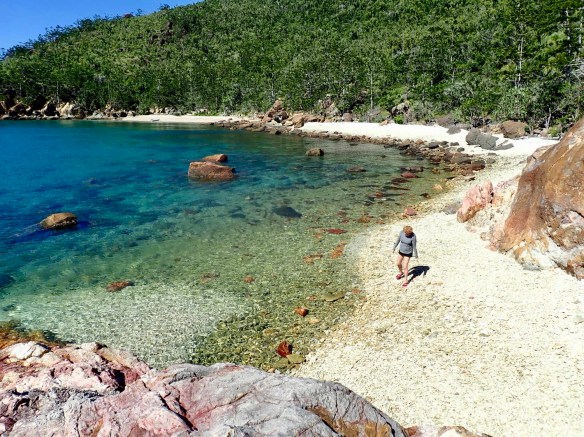
After a final night back in Cid Harbour, we headed to Airlie Beach and the Abel Point Marina. The wind was, for a change, in the perfect direction, so Eric and Roz took turns at the helm sailing us across the Whitsunday passage on a broad reach at nearly nine knots. A fitting finale to an all too brief return to these lovey Islands.

Fossicking in Debbie’s Wake

Saturday 2nd June 2018

Fossicking is a word we have heard and read frequently while in Australia. Probably derived from the same word in Cornish, where it’s definition is, recreational prospecting for precious metals, stones and fossils. In Australia and New Zealand it has been extended to mean rummaging outside for more or less anything. Unfortunately the great fossicking available, especially on the northern beaches of the Whitsundays, is yet another example of the devastation caused by Cyclone Debbie as it ripped through the area last year. The coral that should be brightly coloured and full of a diverse range of sea life, filling the bays, sits bleached, high and dry washed up onto the beaches.

Cateran Bay on Border Island continued to be delightfully calm, the guide informed us that there was good snorkelling and it had a great beach for fossicking, we took the dingy ashore to investigate. We found a beautiful bay of sand, colourful rocks and yes plenty of coral fragments and shells to rummage through.

Fossicking on Cateran Beach

Our largest find was a huge giant clam shell and the most intricate a delicate but lethal looking crab claw.

Fossicking Prizes

With so much of the coral washed up onto the beach the snorkelling didn’t quite live up to the cruising guides build up, but was pleasant enough, with, once you eyes became attuned to the rather murky water, plenty of fish swimming around the few remaining patches of coral and large boulders. Late afternoon back onboard Raya we spotted two manta rays that had come into the bay to feed. They didn’t come quite close enough for us to jump in with them but we enjoyed the show of their swooping silhouettes just under the water and their wing tips tantalisingly breaking the surface.

Friday we moved on. It was another rough ride as we motored up and over the top of Hook Island and into Butterfly Bay. Extending far into the hillsides, it was obviously protected somewhat from the ravages of the cyclone, the coral here was much healthier and varied. Amongst the many soft corals were stag horn corals, brain corals, plate corals, even some cabbage coral, not so many fish but we did find a huge live giant clam that was nearly as big as me.

The beach was similar to Cateran, full of colourful, volcanic boulders, we spent a great hour or so clambering about enjoying the splendid scenery around us.

Clambering on the rocks in Butterfly Bay

Taking advantage of the increasingly settled weather the next day we moved on to the more exposed Luncheon Bay and the effects of the cyclone where depressingly obvious. The beach was meters deep in coral fragments and the scene underwater stripped back to bare rock.

Beach at Luncheon Bay buried under tons of coral fragments.

In an attempt to keep the interest of the visitors the tourist boats are feeding the fish. Before we had even picked up a one of the public mooring buoys in the bay we were surrounded by bat fish, shaped like angel fish, these eighteen inch giants jostled for our attention in the bright sunlight.

As we snorkelled along the bare rocks, large shoals of fish crowded around us looking for food and as we returned to the boat the bat fish were waiting, snapping up the bread we fed them.

Large bat fish in Luncheon Bay

We left the bay hoping that it wouldn’t be too long before some coral managed to find a way to reestablish itself and return the shoreline to what must have been a magnificent reef.

Evading the Elements

Wednesday 31st May 2018

Late Friday as we stood shivering on a dark night, soaked to the skin, with the wind howling, lightening flashing and thunder crashing all around us, we hoped this was a final fling for the bad weather we’d had for the past fortnight. After hours of heavy rain with the dingy slowly filling we had to face the enevitable drenching to raise it before it was completely submerged.

Although in the marina we have unusually been using the dingy to get around. Being on an outer pontoon the dingy dock at the supermarket and the ferry wharf at the airport are much more convenient than using our feet. And, joining Raya by dingy is far more exciting than catching a taxi, our friends Eric and Roz were arriving in the morning. Having flown half way around the World, leaving the glourious English spring sunshine behind them, this cool, wet and windy period was not what we had wanted them to be greeted with.

Unfortunately the elements continued to be unsettled for the next few days, brusque, cool winds and frequent showers keeping our eyes skyward watching for breaks in the clouds because as soon as the sunshine did break through, it was lovely. We enjoyed a stroll on the beach, a sunny lunch or two at the resort and a few walks.

Roz admiring the view

On the high tide Tuesday we filled up at the fuel dock and left the marina. As we rounded the northern end of the island, losing its protection, we motored straight into washing machine seas. Luckily it was only an hour or so before we entered the Solway Passage, here were much smaller waves but the water was lively in other ways. As the tide rushed through its narrow gap, a strong current helped us reach over 10kts of boat speed. As other streams of water joined the system, strange calm patches amongst areas of overalls and ominous whirls pools formed. A bit scary to look at but not really a problem for Raya to pass through.

We headed to the famous Whitehaven beach. On our first visit to this beach, over thirty years ago, this expanse of fine white sand blew us away, the many photos we still have keeping our memories fresh. This time, with our level of beach appreciation somewhat higher and with the advent of the day tripper, it didn’t seem quite so special. However as we walked away from the crowds and five miles of white sand, with grains so fine they squeaked beneath our feet, spread out before us, it’s beauty was more evident. A ray darted from our path in the shallows, helicopters and seaplanes buzzed over our heads and now protected from the wind the late afternoon sun felt pleasantly warm and on our faces.

Five miles of white sand on Whitehaven Beach

At the top of the beach a ghostly barrier of bleached and broken trees marked the start of the interior woodland, presumably damaged by the onslaught of Cyclone Debbie last year, they appear to have been bulldozed off the beach to maintain the picture perfect vista that has become the ‘poster boy’ image of the Whitsundays.

Piles of dead trees lined the top of the beach

With yet another blast of wind forecast today we have moved on. We poked our nose into Tongue Bay but again it was quite crowded, the freshening winds were gusting down the hill in front of us and despite looking protected on the chart a swell was creeping around the headland.

We sailed on and have found a beautiful spot in Cateran Bay on the north shore of Border Island. The sky is finally cloudless and we have, currently at least, evaded the wind and swell, two beaches and a snorkelling spot beckon.

Anchored in Cateran Bay, Border Island

Cid and Hamilton

Friday 25th May 2018

As we rounded Hughes Point in Cid Harbour and motored into Sawmill Bay, suddenly and for the first time in six days, the wind dropped. The stillness and quiet was wonderful, even the sun was making an appearance.

Anchor down in calm Sawmill Bay, Cid Harbour

The calm conditions were fickle however, any slight change in direction of the wind allowed it to edge around the peaks and down the valleys hitting us with lively gusts and sporadically longer periods of blustery weather. But the sun stayed with us and our surroundings were beautiful.

Beautiful Cid Harbour

With the sea finally flat enough we dropped the dingy and headed for the beach. A short 1.5km trail led over the hill to Dugong inlet. Starting with a set of ramshackle steps at the northern end of the beach it led up into the wooded shoreline. Large Hoop Pines and tall White Cheesewoods dominated the rainforest canopy above us and bright orange fungi, growing on decaying fallen branches decorated the floor. Butterflies fluttered in the air and tiny lizards skittered across the path.

As we began to descend down the other side of the hill the bird song and the rustling from the forest floor, the sounds that had accompanied us for the first half of the walk, gave way to the incongruous thump of Rap music. On Dugong beach a group of young backpackers were enjoying a few days camping. After a brief stroll on the sand we left them to their partying and returned back to quiet of Sawmill Bay.

There is another trail from this beach, leading up to the Whitsunday Peak but with an estimated 4hrs to complete the 5km distance we guessed it was a little steep for us.

Bright orange fungi grow on the wood that litters the forest floor.
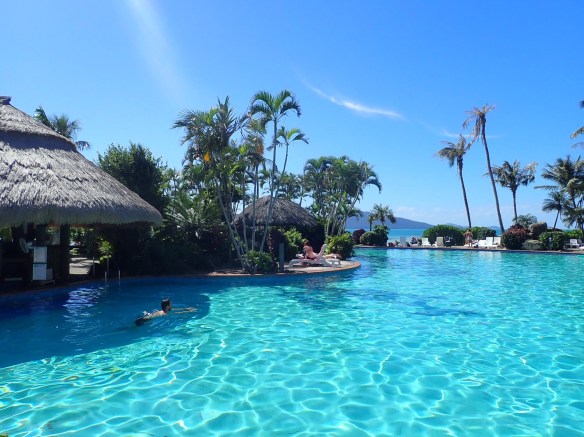
Tuesday it was time to move on to Hamilton Island Marina to prepare for the arrival of our friends. This required us to sail south for a change, heading straight into the 25kts of wind, luckily it was only 5miles away. As we poked our nose out from the protection of Whitsunday Island the wind hit us like a brick wall and the choppy sea crashed over our bows, we were glad of Raya’s 30tons and hefty engine. As soon as we cleared the headland we tucked into the coast as close as possible and an hour later were happily tied up in our berth.

We have been enjoying the restaurants, drank Mojitos by a pretty but rather chilly pool and browsed the resort shops. The atypical weather persists but there is a glimmer of hope with an improvement in the forecast for next week. We are looking forward to sharing a sunny exploration of more of the islands and even a bit of snorkelling, so fingers crossed.

Main pool at Hamilton Island Resort

Windy Return to the Whitsundays

Friday 18th June 2018

Thirty one years ago we made our first trip to Australia and for part of that holiday, with a friend, we chartered a bareboat in the Whitsunday Islands. Our first sailing holiday it remains in our memories as a very special time and ever since we started our sail north up the Australian Coast we have been eagerly awaiting our return. However the cool 30kt winds, messy seas and rain that greeted us was not what quite how we remembered things.

Cold wet arrival in the Whitsundays.

After leaving Mackay our first stop was the twin islands of Keswick and St Bees, in the far south of the group, both islands are surrounded by reportedly excellent diving and snorkelling spots. After an uncomfortable few hours sail we headed for what we hoped would be an anchorage sheltered from the wind. There was slight protection but it was really bouncy, we moved around to the channel between the two islands only to discover the tide racing at about three knots and the wind still howling. Conditions were not going to be good for snorkelling even if we did put up with the bad conditions in the anchorages we decided to move on. A couple of hours later and ten miles north we were much more comfortably anchored off Bampton Island.

A combination of a drop in visitors after the 2008 economic downturn and a procession of destructive cyclones has taken its toll on the Whitsunday Resorts and many stand empty and disintegrating. Bampton Island Resort was like a ghost town, ragged tape and boards blocking entry beyond the beach. One villa was obviously occupied by squatters or perhaps a caretaker but they didn’t come out to talk. It was a beautiful spot but with just the occasional yacht passing through it must be a lonely existence.

Derelict Bampton Island Resort

Decaying alongside the villas, was an aircraft runway, a once lovely beachside pool and a small overgrown fresh water lake. As we stood absorbing the desolation here we got the feeling of being watched. We were, and our observer was a large kangaroo well camouflaged in the long grass, Seemingly unperturbed by our presence he stood about 100m away just staring. Could they have had a small zoo here, he looked healthy enough, we hoped he wasn’t alone on the island.

Kangeroo watching our every move

With no let up in the weather and the threat of rain Wednesday we moved on. After studying the chart and cruising guide the next sheltered spot was in the lee of Shaw Island. A few other yachts sat hunkered down in the bay but the island itself appeared uninhabited. The only sign of life were a group of buildings on the opposite shore, on Lindeman Island, as darkness fell no lights came on, no boats had been and gone, this was obviously another deserted resort.

I’m sure in better conditions it would be lovely here occasionally the sun broke through turning the slate grey sea to turquoise and the dull hills bright green but the wind was relentless, the water too choppy and the showers too frequent for us to be tempted to launch the dingy to explore. We read, cooked, played games, watched movies while the weather continued to bash us. Another high pressure ridge is stuck sitting over the North Queensland coast and however many times I look hopefully at the forecast, the winds appear to be here to stay for quite a while yet.

A ray of sunshine creeps through the clouds highlighting Yellow Rock off Shaw Island
Carving Out Three Years

Sunday 13th May 2018

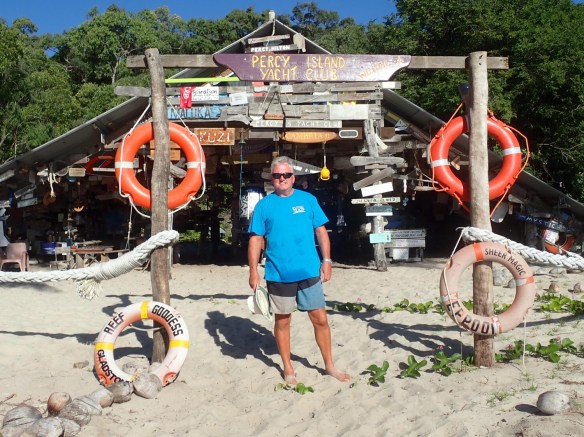
Middle Percy Island, confusingly north of not just South but also Northeast Percy Islands, has a long history as a safe anchorage for cruisers heading north up the Australian East Coast. An A frame hut, complete with BBQ facilities and tables and chairs, sits at the back of the beach in West Bay and stands testament to the friendly welcome extended by the Island to visiting yachts. Absolutely every available space on the walls, ceiling and rafters is home to momentos left by previous sailors.

Every inch of Percy Island Yacht Club is covered in mementos from passing yachts.

Having had a good look around we returned to Raya, Rick itching to add a board to the collection, me unfortunately itching from the dozen or so sandfly bites I had accumulated. Delighting in having an excuse to work with wood instead of engines and plumbing for a while, he quickly produced a fitting record of Raya’s visit. It was especially poignant as we hung it in the A frame on Thursday 10th May, exactly three years since we let go the lines and left the dock in Southampton.

Marking our stay in West Bay

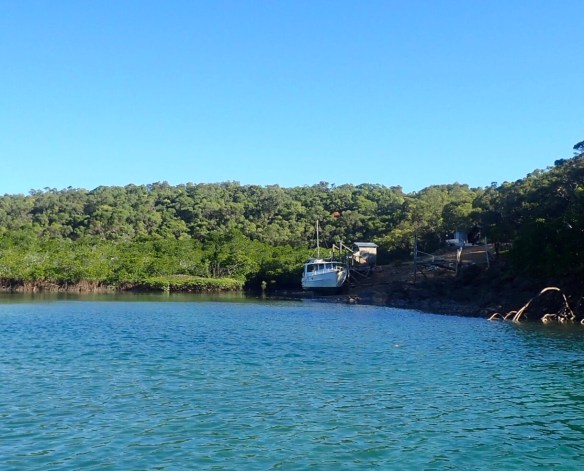
Another interesting feature of West Bay is its secluded lagoon. Only accessible by shallow draft boats at high tide, it sits hidden amongst the rocky shoreline a completely protected haven for those boats that can get in and then take the ground at low tide. We took the dingy in and found not only a catamaran happily sitting on the sand but also a working boat precariously tired to a dock. Part of the Barrier Reef National Park, the Island is managed by it’s only inhabitants, the occupants of the homestead sitting up amongst the wooded hills. The boat is their connection with the rest of the world and the lagoon offers perfect protection from all extremes of weather.

Homestead transport hidden within the protection of the West Bay Lagoon.

The Homestead is attempting to be as self sufficient as possible, raising goats and chickens, growing their own fruit and vegetables, producing honey and generating their own power. If they have any excess produce they are happy to sell it to yachties. We started off on the track that lead across the island towards the house but about halfway, not really needing any supplies, we got lured down a more intriguing, smaller path. The ground around us was covered in ferns and scrubby hebes and the canopy above our heads full of squawking crows, through the trees could be glimpsed inviting blue sea. Our intrepid adventure however, was easily stopped by a large web stretching across the path, it’s brightly coloured creator very much at home and only millimetres from Ricks head.

Giant Golden Orb spider

Early Friday morning, we headed to Mackay. The large tidal range here, at over 6m during spring tide, doesn’t just enable boats to enter secluded lagoons, it also means there are strong currents helping or hindering each passage and anchoring requires some mathematical juggling. In the marina even the provisioning needs to be timed with the tide, full trolleys and steep ramps don’t go together well. Still after three years each new place surprises us with its own unique challenges.

Pontoon ramp at low tide

Soldier Crab Creek

Tuesday 8th May 2018

Light blue soldier crab

After a couple of days of high winds and torrential rain, this morning we could see blue skies between the clouds and the barometer had fallen slightly. A firm ridge of high pressure has passed over the Queensland coast and we have sort shelter in Island Head Creek.

We enjoyed our couple of days off Second Beach on pretty Great Keppel Island, a popular spot, there were quite a few boats dotted around, however when we chose to go ashore the beach stretched out pristine and empty. With only a small surge coming in we decided to try out the new dingy anchoring system Rick had been working on in his head to stop the dingy continually being caught in the surf. Attaching a long second line to the head of the anchor Rick balanced it on the bow, he pushing the dingy as far off shore as he could and particularly beyond the breaking waves, and then tugged the line pulling the anchor into the water. The long line was then secured around a rock high up on the beach ready for us to retrieve the dingy on our return, hopefully without getting wet.

With half an eye firmly on the dingy we headed for the rocks at the end of the beach. It was nice to stretch our legs, the nearby islands complimenting the view. As we walked along the tide line we marvelled at how amazingly clean the beaches are in this part of Queensland. And the dingy stayed exactly where we had left it bobbing quietly and dry beyond the surf.

Rock climbing Second Beach, Keppel Island

Notorious for the swell that creeps into the bay in anything but calm conditions we knew that this was not going to be a good place to be for the weather coming in on Sunday. So early Saturday morning found us heading 60nm north to Island Head Creek. We had visions of returning to murky water and muddy banks, we couldn’t have been more wrong. It was a stunning spot, blue water, sand banks and high, craggy, green hills surrounded us.

The quiet was absolute, despite the numerous different types of birds we could spot through the binoculars. Great egrets and other waders searched for food in the shallows, large flocks of terns and gangs of pelicans rested on the sand flats, an osprey harried a group of gulls for their catch and a couple of oyster catchers, easily identified by their bright red beaks, pecked at the sand. We could see absolutely no sign of human activity, no huts, no other boats, no radio masts, no phone signal or internet, and as the sunset, no artificial lights not even the loom of a nearby town. Gradually the stars appeared, first in the still orange of the western sky Venus emerged, then in the east Jupiter began to shine brightly. As the darkness further encased us a remarkable dome of stars filled the blackness above, so close you could almost reach up and touch them.

Unfortunately the weather wasn’t going to allow us to appreciate the beauty of this splendid isolation for long. Sunday morning brought strong winds and heavy showers, a complete rainbow formed so close I couldn’t actually photograph the whole thing.

A complete rainbow arched across the creek

Gradually the winds built and the silence was replaced by the howl of gust through the rigging and the slap of waves on the hull. As Sunday moved into Monday sustained torrential rain joined in the mix and continued throughout the day. A few other boats came in to take refuge, the rain obscuring them and the high hills around us.

Although we were in a safe spot, the anchor holding tight, bad weather is always tiring. We decided to stay here another day to regroup, allow the ocean swell outside to reduce and give ourselves the opportunity to go ashore.

Sand banks Island Head Creek

Island Head Creek is in a military training zone, walking on the beach is apparently tolerated but going any further inland is forbidden, we headed for the expansive sand banks adjacent to us. It was a strange place, think, small desert dropped into a river delta. The birds, alerted by our engine, disappeared as we approached and at first sight the sand banks appeared deserted. Then I spotted a tiny crab, his shell a vivid lilac blue. As I beckon Rick over, I realised the entire bank was alive, there were a million of them scurrying beneath our feet.

Armies of light blue soldier crabs marching up the beach

This really had been a perfect anchorage, protecting us from the weather, charming us with its scenery and delighting us with its inhabitants. Unfortunately with no phone signal here or I suspect at our next destination, Middle Percy Island, this blog will have to await publication a few more days.

Rosslyn Bay

Thursday 3rd May 2018

We have spent the last week at the friendly Keppel Bay Marina in the appropriately named Rosslyn Bay Harbour. I did suggest that the name similarity deserved a discount but none was forthcoming. A discount would have been welcome, as we approach the popular cruising area of the Whitsundays, marina fees are creeping up and in this part of the world staying anywhere other than a marina is often not an option.

The island anchorages are sometimes protected from the wind but it is very difficult to find anywhere that escapes the Pacific swell. This swell also plagues the mainland beaches. Add in the difficulties of crossing bars to enter the few creeks and rivers, the struggle of finding somewhere to get ashore that has access to services and the problems we have with everywhere being rather shallow for our 2.4m draft and marinas have become our safe havens.

Life in a marina is not all bad, especially one as nice as Keppel Bay. At 3am last Friday morning, as we motored away from Lady Musgrave, we crossed latitude 23.50 S, the Tropic of Capricorn. Arriving in the marina a few hours later we rejected the traditional ‘got here beer’ for a slap up ‘got here breakfast’ at the cafe and it really did feel like we’d arrived in the tropics. The birds all appeared to have gained a new set of colourful feathers and exotic voices and bright tropical flowers lined the waterfront path. Even the air felt and smelt differently.

Looking out from Double Head across the marina to a Rosslyn Bay

To add to its charms the marina also has a nearby beach, a few local walking trails and a courtesy car for short provisioning trips to Yeppoon and a visit to the farmers market. This far away from the big cities and hordes of tourists, gone were the containers of olives and feta marinated a dozen different ways, there were no stalls of artisan bread and displays of rather dubious local art were conspicuous by their absence. Yeppoon’s Saturday market, the local town’s farmers market, had just local farmers selling cheap and seasonal fruit and veg.

Yeppoon in fact had all the facilities we needed including a very helpful post office where Wednesday we very reluctantly posted of our passports, to go in with our visa applications to the Indonesian Consul.

Looming over the marina and the nearby beach, is Double Head. Through the bush and ferns are two steep, but luckily short, paths to follow. One took me up to a look out with in one direction a great view out to sea and the surrounding islands, in the other across a crevasse, an exposed 60 million year old geological phenomena. Fan Rock was created by magma escaping through weak spots in the earths surface, the molten lava slowly cooled from the outside inwards, causing the rock to crack into hexagonal tubes that fan out from its centre producing a structure that looks almost manmade.

Fan Rock

As we have travelled north my walks have become increasingly deserted and on occasion I have begun to feel slightly vulnerable. Vulnerable to what I’m unsure, wandering muggers, deadly spiders, rambling rapists, venomous snakes,? What I was not expecting, as I rejoined the steps down from the look out, was to be accosted by a band of Jehovah Witnesses smiling and eagerly thrusting out their pamphlets towards me. Who exactly they thought they would find to convert on this lonely hill was a mystery but they were always going to draw a blank with me.

Deserted Kemp Beach

With a few days of calm weather in prospect, today we have moved out to Keppel Island. There is a bit of swell rocking Raya to and fro, lines of squally rain track across us and there is only minimal phone signal. However in between downpours the water is blue, on the pretty islands around us, numerous beaches beckon and the forecast is for plenty of sun tomorrow.

Turquoise Lady Musgrave Lagoon

Friday 27th April 2018

Raya anchored in Lady Musgrave Lagoon

The turquoise that is produced by shallow, clear water, over white sand, under a tropical sun, is bewitchingly beautiful and after spending the summer in the coastal waters, rivers and creeks of Eastern Australia, Tuesday entering the lagoon off Lady Musgrave Island on the southern tip of the Barrier Reef, felt like coming home.

It had been a good trip over, the brown water of the Burnett river magically changing to blue as we headed out to sea. There was, the now normal, beam swell setting us rocking but it was calm enough for us to feel that we could, between us, land a fish if we caught one, so we put out a line to troll behind us. We weren’t however expecting our catch to be quite this big, it did take quite a while to land this giant!

Fishcakes for supper for the next three weeks.
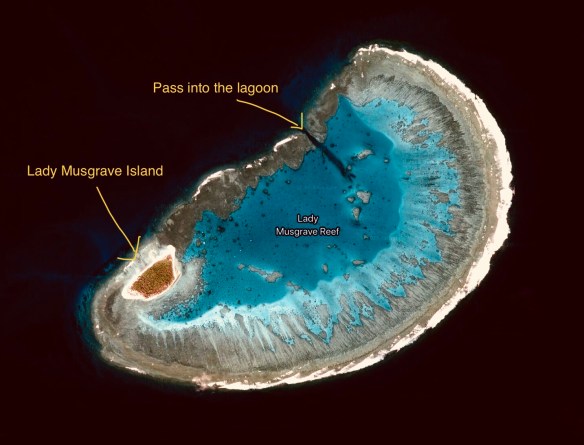
Just after midday Lady Musgrave Island appeared as a dark slither on the horizon, then we spotted the white of breaking waves on the outer reef and as we neared, the wonderful turquoise of the inner lagoon.

The pass through the reef was narrow but clearly marked. Its been a while since we have navigated through areas of coral so we entered slowly and carefully motored around anything we spotted on the seabed until we found a large enough space of clear sand to anchor. There were a surprising number of other boats anchored but the lagoon is over a mile long and there was plenty of room for everyone.

Lady Musgrave Reef on Google Earth, a jewel in the dark ocean

Early the next day we took the dingy ashore to have a look around the island before it got too warm and the tourist boats arrived. We were glad we had put on our sand skippers, the beach was strewn with fragments of coral. As we strolled along the water edge we spotted oyster catchers, egrets and some small green turtles. Pretty Australian firs and screw pines marked the edge of the beach and protected the Pisonia trees that grow in the interior of the island. The Pisonia tree has very broad leaves that are a favourite nesting location for Black Noddies. When we rounded the corner onto the western side of the island the extent of their numbers here was revealed. Suddenly what must have been a thousand birds burst from the trees filling the sky, creating a noisy natural spectacle above our heads.

Thousands of Black Noddies take to the air.

We returned to the boat and cooled off in the calm sea. With the only ripples coming from our own movements we floated gently and let the warm turquoise sea envelope us. Looking back Raya floated resplendent, reflecting in the glassy surface.

Then as the sun became higher in the sky we went over to the southeastern reef to snorkel on a couple of bommies. The visibility, was surprisingly, a little murky but we were just happy to be back amongst the colourful fish and varied corals.

Even the tiny Damsel Fish added to the days turquoise colour scheme.
As we dined on steak from the bbq, with a salad of ripe Australian tomatoes and a glass of full bodied Australian red wine, we agreed it had been a very special day.

Unfortunately the weather again dictated that we leave before we were really ready. As we left the next day through the pass, the water was crystal clear and we realised we should have been snorkelling this side of the reef, but too late, we had a night passage to contend with. Keppel Bay Marina in the aptly named Rosslyn Harbour, about 110nm NW and back on the mainland, will be our shelter from the strong winds forecast for the next few days.

Dramatic Skies

Monday 23rd April 2018

We lie anchored a couple of miles up the Burnett river watchful of the depth gauge. It’s high tide and reading 2.3m under the keel. If this were a spring tide we would be on the bottom at low water but today we have a neap tide and in theory we shouldn’t drop below a metre. We are inexperienced at playing the tidal range rather than using the absolute chart datum, we wait with baited breath as the river gently ebbs.

We are here because tomorrow we are off to Lady Musgrave Island and her surrounding reef and hopefully back to clear turquoise water. Needing to enter the atoll in good light we require an early start. All the motor sailing we have done lately means we were low on diesel. Not wanting to fuel up at five in the morning we left the marina for the fuel dock at lunchtime and now sit ready to go.

Last week continued with a flurry of maintenance jobs and more cleaning, if we say it ourselves Raya is feeling very spick and span. For the time being at least, Rick’s ‘to do list’ is nearly fully ticked off.

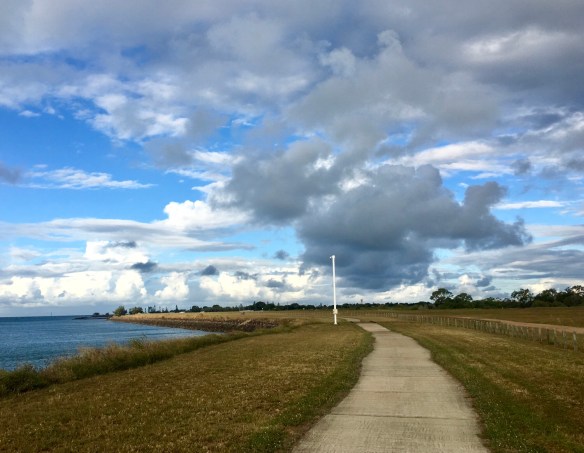
Besides all the hard work, one thing that will stay in our memories of Bundaberg is its incredible skies. The combination of flat surroundings and changeable weather has led to dramatic vistas day and night. Wednesday around midnight, woken by the light coming through the hatch above him, Rick was treated to a spectacular display as distant lightening illuminating far off clouds . The next day as I walked out along the coastal path, with rain threatening, I think almost every type and colour of cloud was present in the huge sky above me.

Dramatic Bundaberg skies

And streaked with the last of the morning haze and dotted with building fine weather clouds, across an intense blue, again Friday the sky was amazing. We had hired a car for the day and driven a short way down the coast to Elliot’s Heads. After the dark reddish beaches around Port Bundaberg it was refreshing to suddenly find some white sand. At the estuary of Elliot’s river extensive sand banks are exposed at low tide, stretching right across the wide river mouth. Clear, warm streams of sea water run in the tangle of gullies that form between them. It made for a perfect hour or so of walking and paddling.

Paddling at Elliots Heads

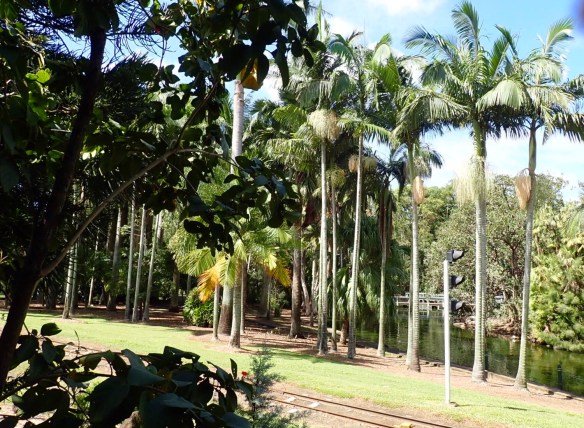
Invigorated from our beach walk, we shunned the normal tourist stops at the Rum Distillery and the Hinkler Aviation museum and instead opted for a stroll through the Botanical Gardens. In delightful contrast to the coast, a shady boardwalk wound us through stately palms and across large ponds full of water birds. It seems that even in the smaller towns Australia does an extremely good job with these gardens.

Back onboard a flock of noisy kookaburras arrive to perch up in the rigging and the tide continues to recede, we play a game of Mexican train as the setting sun turns the sky a burnt orange. Still we have half an eye on the dropping depth, but less worried as our decent slows. As the tide turns we still have the theoretical 1m below the keel, we take to our bed, we have an early start in the morning.

Pottering in Port Bundaberg

Wednesday 18th April 2018

The moment we walked up the steep marina ramp we knew we were somewhere different. The sweet perfume of grass confronts us, a smell previously so familiar but rare to us now. In front of us are neat fields of uncut grass, the seed heads shimmer and wave in the breezy sunshine. And it was not just the scent of our surroundings that felt foreign, it dawns on us that here for the first time in a long time, the land is completely flat. Even the normal hills and mountains, that are forever on the horizon, have gone.

The occupants of the marina are different also, instead of being almost exclusively full of local boats there are plenty of cruisers here, including one Irish and three UK yachts. It is back to sundowners and ‘where to next’ conversations.

Having arrived in Bundaberg a week or two earlier than planned, we have no pressure to achieve anything in particular. So when we discover that the chandeliers can organise to get our rusty anchor delivered to the hot dip galvanising unit, we jump at the opportunity.

That looks a bit better.

Rick settles in, with relish, to potter around the boat, fixing all the little things he has been meaning to get around to for ages and in some cases since we left Southampton. He boxes in the new freezer compressor, services the Davits, washes the sails, properly wires the nav lights, cleans and sorts the dingy………

I tackle the ever present paperwork, work on the navigation for the next part of our trip and clean. How is it there is always so much cleaning to do?

The marina runs a courtesy bus the 15km into town each day, so Monday we hop on and head for downtown Bundaberg. The road in reminds us of a tidy Fiji, fields and fields of sugar cane line each side of the road. This is the sugar capital of Australia and famous for its large distillery producing Bundaberg Rum. In recent years crops have diversified, what at first glance we assume is a vineyard turns out to be rows of tomatoes vines, we spot a field of melons but not the macadamia trees that are also in abundance here.

Bundaberg City was mostly just an urban sprawl, with most buildings being of indifferent late twentieth century architecture, we search in vain to find any character. We wander uninspired for a while before abandoning our quest and heading for the supermarket. The branch of Coles here is large and as always full to bursting with fresh food. We stock up and take a taxi back to the boat.

I have continued to ‘power’ walk each day when I can. I’ve been enjoying the exercise as well as the side effect of getting to explore the local area. Leading from the marina there is a riverside path that run’s out towards the sea. Unlike the pathways I have been using all the way up the coast from Sydney, here I am alone in my lycra and trainers, just meeting the odd dog walker or angler.

On the surface it’s rather a featureless walk with the wide brown Burnett river one side and the dead flat meadow like fields the other. However, of course, the more you look the more you see, the sky is huge and ever changing, the river has small bays of dark sand and at low tide there are mudflats full of birds.

Dark beach at the mouth of the Burnett River

Around our pontoon are the normal groups of cormorants and flocks of gulls, on the mud flats I spot a tall elegant white heron, which google tells me was probably a Great Egret and perched on the marker above him what I think is a type of Kite.

Amongst all of these are the huge, ever present pelicans. We took the dingy for a run up the river and while on a crocodile hunt amongst the mangroves on the far bank, (probably still a little south for crocodiles but thought it was never too early to get some practice in) overhead a flock of pelicans, Jurassic like with their oversized beaks, gave us a magnificent demonstration of formation flying.

A flock of Pelicans always remind us of pterodactyls.
Barred From Mooloolaba

Thursday 12th April 2018

We wake this morning after 12hrs of solid sleep, a little further north than expected. The decks are covered in salt, damp clothes fill the laundry basket and two shattered plates languish in the bin. Our attempts to enter over the bar of our planned destination of Mooloolaba thwarted, we sailed through the night and all the next day in uncomfortable and tiring conditions to reach the Marina at Port Bundaberg.

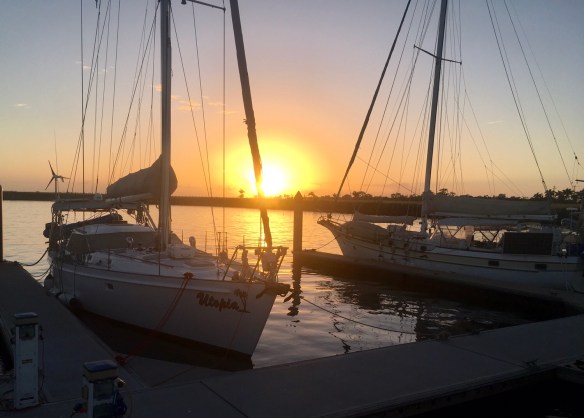
Still at last, lovely sunrise over Bundaberg marina
Tuesday had started with us happily wending our way through the sand banks that litter Moreton Bay, the sun was shinning and the sea was calm. We were taking advantage of a small window of good weather to move 35 miles north to Mooloolaba. We had been looking forward to a few days in Mooloolaba and not just because it has such a brilliant name, other cruisers reports had all been good, the town was close by and it had a great beach just a stroll from the marina. Also it was to be our gateway to explore the Sunshine Coast and the Noosa Everglades.

The entrance to the river and it’s marinas has another of the notorious East Coast bars and is currently being dredged to try and combat the effects of shifting sand across the river entrance. We spoke with the marina, who assured us it would be fine and we downloaded the map that charted the new depths that had recently been posted in the Notices to Marinas published by the Queensland authorities, we timed our entrance towards the end of the rising tide. However we hadn’t reckoned with the swell. As we approached what the charts had as the beginning of the shallows, with an apparent high tide depth of 4m, the swell picked us up and then dropped us with a thump onto the bottom, we ventured a bit further this time we stayed on the sand long enough for another wave to hit us and cause Raya to give a loud, rig rattling, shudder. We reversed quickly and spoke to the dredge master working in the channel, a lot of sucked teeth, he seemed very unsure about our 2.4m draft, depths were obviously not as reported. Probably with a bit of local knowledge or at least some lat/long calibration which strangely was not on the downloaded new Mooloolaba bar chart, we might have tried again. But after a bit of deliberation and watching other boats with much less draft than us struggle, we decided to push on.

Unfortunately pushing on meant an over 200nm sail further north to Bundaberg.

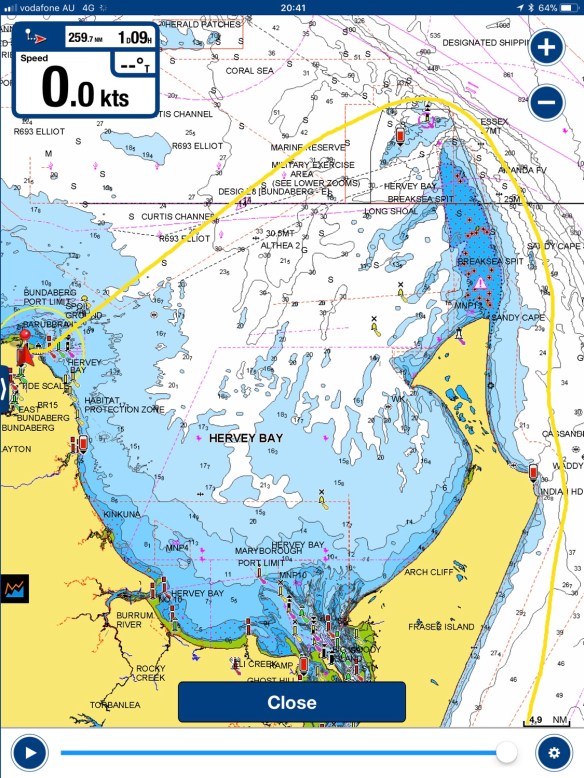
It felt like a long trek north around Fraser Island

I quickly put together a new passage plan, there was another entrance about 6hrs on but we would arrive after dark and it was quickly rejected. The weather forecast was for winds to strengthen and with it the seas to get rougher, not a delightful prospect. And this is the problem with sailing in this part of the world, with weather windows so tight and safe havens so far apart, often needing critical timings and conditions for entry, Plan B’s are always going to be difficult.

The first few hours were fine as we sailed away from Mooloolaba. We smiled in response to a surprise comment on sailraya.com, received from someone who spotted us sailing past. However as the winds steadily increased in strength it turned into a laborious 24hrs, in troubled, often beam seas. Sleeping, eating and everything in between became hard work and the cockpit began to be splashed enough to make everything damp and salty. At least it was warm and not raining we kept telling ourselves. With the odd gust up to 40kts, Rick gradually reefed and further reefed the sails until, still sailing fast, we only had up a small amount of main sail and a reefed stay sail. To add to the fun I was kept entertained during my 11-2 night watch by a dozen or so fishing boats, some with AIS, some without. At one stage one came so quickly towards us I was concerned he hadn’t seen us . Luckily we have good deck lights that light up the sails and make us very obvious. I flicked them on and he turned away.

With such messy seas we had to sail right the way around the 25nm long sand spit at the end of Fraser Island, so for a frustrating few hours we were actually sailing away from our destination. We arrived at the marina just minutes before they left for the day, two very tired and happy sailors. Our traditional ‘got here beer’ was enough to knock us out and by 7.30 we could stay awake no longer.

On the upside we are now far north enough to be in the region termed the Southern Barrier Reef which is rather exciting and after spending yet more money on our continually ailing freezer, that would normally give out after such a bouncy sail, I am pleased to report it is still working, hooray!

Freezer cold – hooray

Nearly Ready for the Tropics

Friday 6th April 2018

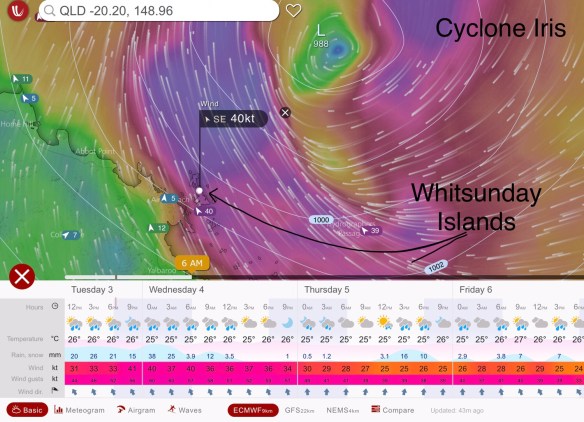
For a few hours on Tuesday afternoon, it felt almost like we were back in the Pacific Islands. The sun was shinning, the sea was calm and turquoise, two large turtles swam around the boat, it was deliciously quiet. We realised that we were well and truly ready to be back tropical island hopping. However we have at least another month to wait before the cyclone season clears, as was well demonstrated by Cyclone Iris, that last week reformed and continues to hang around the Central Queensland coast.

Last weeks forecast for the Whitsunday Islands five hundred miles to our north

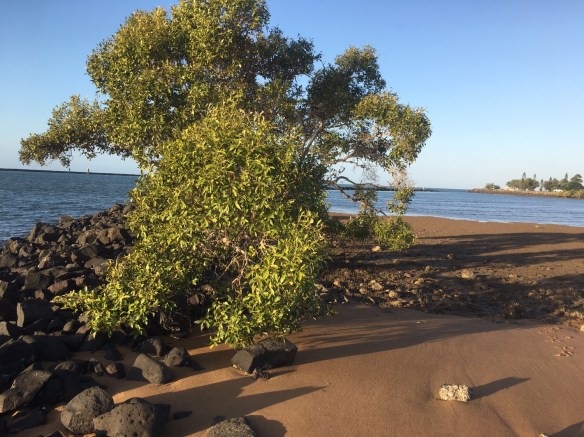
Easter weekend in the Broadway continued to be manic, despite the showery weather everyone was determined to make the best of the holiday. We did brave the choppy waters to go ashore and stretch our legs but plans to cross the narrow wooded South Stradbroke Island were thwarted firstly by the lack of a clear pathway and tales of snakes buried in the sand but mostly by the sight of our anchored dingy being swamped by the wake of every large motor boat that stormed past.

The beach at South Stradbroke Island with the Gold Coast high rises in the distance.

The East Coast of Australia is constantly at the mercy of the Pacific Ocean swell. This makes for the great surfing conditions it is famous for but also makes entering rivers and ports difficult. Entry and exit across the shallow bars that form at these openings has to be timed carefully, especially in the rough conditions that are around at present. So it was that 3.30 am Tuesday morning found us, with the dangerous surf warning cancelled and slack low tide upon us, heading for the Gold Coast seaway and open ocean. Conditions were still rather lumpy and with up to 3kts of current against us we were yet again having to motor sail to keep speeds high enough for us to enter Moreton Bay at high tide. At least the forecast showers held off.

We rounded the top of Moreton Island and headed for the Inner Freeman Channel. At first the sea calmed, the shallower waters turned to hues of turquoise and the tall dunes of this sand island, shone white in the sunshine. However the nerves were jangling, we knew we had a shallow area to cross and although every chart I could lay my hands on said at high tide we would have no less than 2m under our keel, the sight of white, churning choppy waters ahead was frightening. Luckily a small local fishing boat was in front of us and led the way through the narrow channel of deeper water and with a huge sigh of relief we were in Moreton Bay.

We dropped the hook off of South Tangalooma and despite a few other yachts, after the industry of Boatworks and the bustle of the Broadway, it was incredibly peaceful. The sea wasn’t crystal clear but after the inner waterways and muddy creeks it looked lovely. Sitting in the cockpit, behind me I heard a familiar sound, the hufffff of a turtle surfacing for air. We had two large loggerhead turtles feeding around the boat. It was as if they had come to say welcome back.

Moreton Bay is nearly 75miles long and twenty miles wide and separated from the ocean by North Stradbroke and Moreton Island to South and East and by numerous sand banks to the north. It is a shallow area of water and is not only home to turtles but dugongs, dolphins and visiting whales.

Unfortunately it was just a one day break in the weather so the next morning we had to head back into a marina, promising ourselves that as the weather improves, hopefully next week, we would return. A cracking sail took across the bay to the Manly Boat Harbour. On the Western coast of Moreton Bay just south of Brisbane, a convenient place to visit the city.

Sitting on the muddy, meandering Brisbane river, the city is a vibrant combination of a glass clad high rise business district and fun green spaces. The South Bank Parklands with its big wheel, Pagoda and jungle walk and the fantastic man made city beach was buzzing with visitors, many here for the Commonwealth Games being held close by on the Gold Coast. We jumped on the City Hopper Ferry and zigzagged down the river before walking through the crowded central district into the quieter Botanical gardens.

Brisbane ferries and Highrises.

While we wait for the finer weather, it’s back to the marina for the last few bits of boat maintenance. Nearly ready for the next stage of our journey, tropical Queensland and the Great Barrier Reef.

Rain, Repairs and Reunions

Friday 30th March 2018

I’m sitting below in the stuffy atmosphere created by high humidity and closed hatches. Excyclone Iris is just NE of us and is bringing squally winds and heavy showers. Up and down the coast of Queensland the ocean beaches are closed due to extreme high tides and dangerous surf conditions.

We are anchored off South Stadbroke Island back in the protected inner waterway of Broadwater just north of Southport. It’s Easter weekend so again the area is crowded with craft big and small. It doesn’t really feel like we are anchored as not only are we being continually buffeted by the wake of passing speedboats, we are also not facing into the wind. A two knot tide is flowing past us and we are laying with the current rather than with the wind, this in turn means the rain is coming straight into the cockpit and if not closed down through the hatch.

Mad motor boat drivers coming from all directionsi
Last weekends confinent on the hardstand in Boatworks, turned out to be better than expected. The frenetic whirling sanders, polishers and drills and the continuous loud engines of the lifts, that set such a stressful pace to life, all fell quiet. The noxious fumes from the antifouling and painting of dozens of boats dissipated and with no contractors busy around Raya, it was easier to relax. On top of this we had a car. Boatworks not only have good toilets, showers and laundry facilities they also have curtesy cars and we managed to get a set of keys for the weekend.

We used this rare opportunity to hit the nearest shopping centre. While Rick investigated the DIY Warehouse and tool shops, I went into the supermarket and filled a trolly with as much heavy stuff as I could fit in. We restocked all our dried goods and cans, cases of wine and beer and bags full of cleaning agents. Rick bought the biggest adjustable spanner in the universe. Never again would he have to struggle so hard against recalcitrant seacocks or any other ginormous nut for that matter, how have we got this far without one?

Ricks new spanner

Having a car also made it easy to join some friends for a bit of a reunion. Phil and Lynn who we linked up with on the Gold Coast last November, had a couple of other mutual friends, Kieth and Dianne, from our time living in Bahrain thirty years ago, visiting from Spain. We all met up at Sactuary Cove, a typical glitzy Gold Coast Resort, golf courses, gated communities, a marina and dozens of restaurants. We couldn’t work out why all the car parking spaces were so small, until it dawned on us that the people living in the resort mostly get around by golf cart. Real cars, such as our Boatworks Ute, were banished to the car park on its outer edge. Finally seated it was great to catch up with each other’s news, the food lost in the exuberant chatter.

Dinner with old friends

Tuesday morning, finally, Raya was lifted back into the water. The relief from the overheating fridges and freezer, that are water cooled, was almost audible and the comfort of having our sinks and showers back, a delight. A downpour however evidenced a blocked cockpit drain, we poked and rattled and finally blew it out with a hosepipe. One of the rags used by the antifoul team to prevent dripping from the drains during painting is the prime suspect. Luckily the problem was found sat at the dock not while waves were breaking over the boat as we battled a storm at sea.

The tide dictated that we leave early on Thursday morning despite the showers. We motored down the Coomera River observing the huge waterfront houses, so large and ornate were some that they were best described by a phrase coined by an American friend as Starter Castles. In the whole hour we saw nobody actually living in them, sun loungers were stacked and blinds were drawn. The rain turned into a deluge and by the time we had anchored we resembled a pair of drowned rats.

Motoring down the Coomera River in the torrential rain.
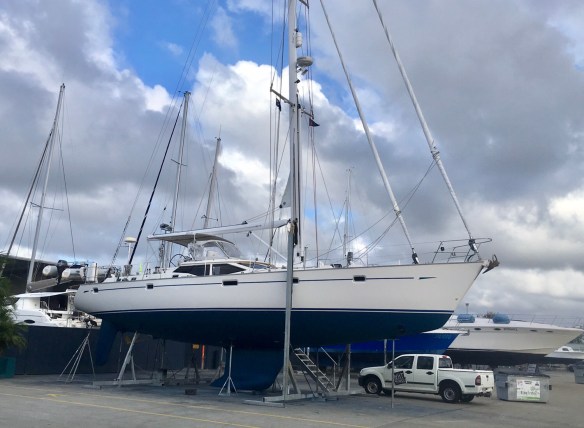
As Good Friday comes to an end, the weather has improved a little, the tide has turned and the stream of motor boats has stopped for the night. No doubt tomorrow they will be back but for now all is tranquil.

High and Dry

Friday 23rd February 2018

We are feeling rather frustrated. After we and the antifoul crew have worked our socks off, dodging showers and running from pillar to post, to ensure Raya is ready to return to the water at 3pm today, we have just been told that they have messed up and our berth in the marina is not available. So here we are stuck high and dry, 15ft in the air until Tuesday.

Ready to be lifted back onto the water

I think it’s fair to say it’s not been one of our most restful weeks. Things started well with a drama free overnight passage up from Coffs Harbour. There was little wind, the large swell, lingering from last weeks storm, undulated gently across a calm sea. Stars shone brightly in the dark moonless sky and as we are gradually creeping back north, the night watches have become pleasantly warm.

The easterly swell did make the Gold Coast Seaway entrance a little lively however and things were not helped by having to share the constricted space with a fleet of racing sailing dinghies, several returning small fishing boats and a group of mad jet skiers. We headed expectantly into the calm of the inner channel – the Broadway, only to find it full of more jet skiers and dozens of fast motor boats. It was Saturday and everyone and their dog was out enjoying the sunshine. The anchorage, just north of Southport Marina where we five months ago had checked in to Australia, is charmingly known as Bums Bay. It was also very busy, especially the blue buoyed area directly in front of us, that turned out to be a jet ski practice course!

We were tired from our trip, we put on the anchor alarm, turned on the cabin fans to block the noise outside and went to sleep. We only had to cope with all the activity until Monday morning when on the high tide we would make our way up the Coomera river to Boatworks, Raya was to be hauled out for her yearly once over.

Sunday morning dawned fine and bright and soon the crowds began to reappear. We had anchored next to our friends from Paw Paw and decided to go ashore together to escape the noise and increasingly choppy waters for a few hours. It’s nice in our transient life to revisit places occasionally, having a bit of local knowledge from our previous stop in the area. We returned to the waterfront Thai restaurant for lunch and walked back along the expansive Main Beach.

Walking on Main Beach with Elaine and Roy from Paw Paw
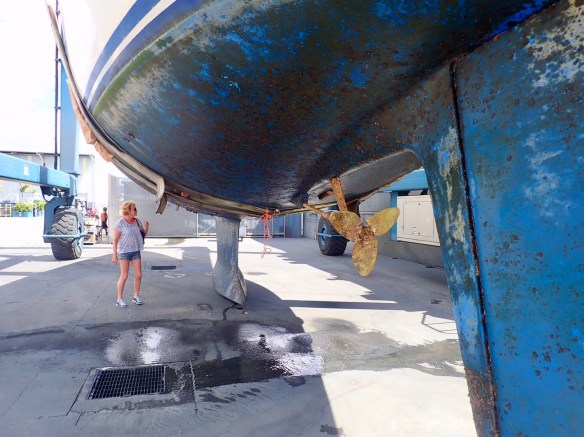
At seven the next morning while doing his normal pre-trip engine check, Rick noticed a leaking coolant pipe. While lifting the anchor I discovered the anchor down switch wasn’t working and with a very tight schedule on the tidal river we had the potential of the perfect storm – an overheating engine, no ability to anchor and quickly swallowing waters. Our normal cautious selves nearly abandoned the trip but we really wanted to make our hard won appointment with Boatworks. With the judicious use of tape to slow the leak, I steered us through the shallows of the river while Rick worked to sort out emergency use of the windless so if necessary we could drop the anchor. Two hours later with a sigh of relief we tied up to the dock and prepared Raya to be lifted.

We were last antifouled, just over a year ago and were hoping the hull might be in decent condition but it was definitely in need of redoing.

Dirty hull!

Our time on the hard was tight, particularly with plenty of rain in the forecast, it was full speed ahead. As Rick fixed the leaking coolant pipe, checked the seacocks, replacing one, greased the prop and investigated the windlass. Complete Antifoul services, cleaned and repainted the bottom, cut and polished the top sides and replaced the cutlass bearings. I organised for the life raft to be serviced, battled to keep the water cooled fridges from over heating, started filling the numerous forms required for entry into Indonesia and ordered new lenses for my damaged varifocal sunglasses – who knew that eyelashes could be so abrasive.

Watching the life raft being checked

So here we are clean, shiny and ready to go back into the water but with no berth to go into it looks like it’s going to be a further few days of washing up in a bucket, lovely.

Charming Coffs

Thursday 15th March 2018

As Ex Cyclone Linda continues to ease and turn SE away from the Australian Coast, we sit under clear blue skies with just a light cooling breeze, the only sign of the strong weather to the north of us is the sound of crashing waves on the northern breakwater.

We have been tied up in Coffs Harbour Marina, since Saturday, enjoying the forced break as we wait for Linda to pass by. Well known amongst cruisers as an entry port into Australia, people have been surprisingly dismissive of Coffs Harbour being anything more than a place to go through customs or a stop off conveniently placed halfway between Sydney and Brisbane. Fair enough the pontoons and docks are a bit rickety, there is quite a bit of noise from the work going on to build up the breakwaters and to get into the town centre is a forty minute walk.

But we like it here, the place has a charming small town feel, an active fishing fleet occupies one half of the inner harbour and the green of Mutton Island dominates our view to the east. Mountains form the backdrop to the town and traffic noise is minimal. Walkways spread out in all directions and three great beaches are within easy reach. The marina itself has a friendly quaint quality, with most activity best being summed up as pottering. There are all the essential services, restaurants, laundry, showers and brilliantly the local Coles supermarket will deliver your groceries right to the side of the boat.

Climbing to the top of Mutton Island, a nesting sanctuary for migrating wedge tailed shearwaters, gives a great overview of the area.

View of the harbour from the top of Mutton Island.

The town of Coffs Harbour started to grow when it’s long jetty was built. Projecting into the harbour it enabled large ships access to the timber cut from the rich forests that cloaked surrounding hills. As roads and railways spread into the area and shipping timber by boat became less profitable, the focus switched to the growing of bananas. Although the largest crop produced now is blueberries and the economy is dominated by fishing and tourism, this area is still known as the Banana coast.

We were hooked on our first morning, we sat at the yacht club eating breakfast overlooking Park Beach, the sand stretched a mile or so to the north, the sun shone and the surfers played, the week of waiting ahead didn’t look so bad after all.

Rick enjoying the view

Wanting to get a few jobs ticked off, Tuesday we set out for the shopping centre in search of new trainers, wine glasses, pillows……

We took the path that runs along the back of Park Beach. Shaded from the midday sun by trees, the bright blue of the sea and sky invaded through the gaps. We love theses glimpses through the tree trunks, the tantalising hidden promise of the world beyond.

Turning into the town we came across the bowls club, the greens sat right on the road and we stopped to catch our breathe and watch for a while, the teams were surprisingly good and as the final bowl smashed all other contenders out of the way, it was almost exciting. The shops were disappointing as they often are, no suitable footwear or homewares, but we did find a box of Mexican Train. A game we have enjoyed on many other yachts, we snapped it up, another way to pass those evenings when anchored in paradise.

Keeping up my campaign to lose weight and get a bit fitter, I walked the couple of kms to take a look at the beach to the South and was rewarded yet again by a spectacular view.

Miles of beaches run South from the harbour
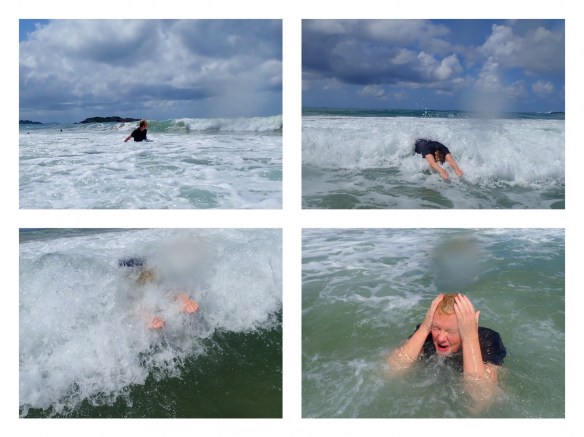
As I paddled back along the calmer inner Jetty Beach, groups of school kids arrived to have surf lessons. Rick is hugely jealous, this is not how he remembers PE at his school. What a great life these Ozzie kids lead.

The water was warm and waiting for the schools to leave at lunchtime, we were tempted back down to Park Beach for a swim. The onshore wind was flattening the waves from behind, the surfers were struggling but for playing in the shallows it was perfect.

Enjoying the tumbling surf

In between the fun we have been keenly watching the weather, firstly to make sure the storm didn’t decide to turn SW and arrive on the coast too close by to us and secondly once it had past to find a narrow window to sail up to Southport. We need a twenty four hour period when the large swell produced by the storm has reduced but before the northerly winds set in. Tomorrow looks like the day, thanks Coffs we’ve enjoyed our stay.

Newcastle

Saturday 10th March 2018

Newcastle city centre

Our short stay in Newcastle was extremely pleasant. As well as a convenient stop on our way north it is the home of our friends from Toothless. Their cruising life is on hold for the time being, Toothless sits moored in Lake Macquarie awaiting her next adventure. Having chatted on email and Facebook we realise that the last time we actually met was over eighteen months ago in Tahiti, it was a shock to see the boys so grown up, school bags in their hands and shoes on their feet. Our timing was particularly lucky as Chris was home for a few days in between legs, he is back competing in the Volvo Around the World Ocean Race. All our tales of extremes at sea pale into insignificance compared to what these guys, and increasingly girls, go through as they battle their way across the oceans. It was great to catch up and the main bit of local knowledge Chris and Megs imparted was to make sure to turn left not right out of the marina.

Like it’s English namesake was a hundred years ago, Newcastle, Australia is a large coal exporting port. At the estuary of the Hunter river, it’s northern banks house the docks and wharfs for the massive tankers that transport the coal and other goods around the World. On the southern side sits the marina and the city centre and sure enough directly outside and to the right of the marina the city is quite run down. However, this situation looks about to change, building is going on everywhere. Hoardings, adorning the building site fences, promise not only a brand new light railway network but also glass covered corporate office blocks, upmarket apartment buildings and wide open manicured public spaces. And sure enough as you walk left towards the city centre, that is what you find.

Wednesday, leaving Rick head in the computer, ear to the phone trying to sort out arrangements to lift Raya out of the water when we get back up to the Gold Coast, I joined the lunchtime joggers, cyclists and other walkers on the the foreshore walkway. Everywhere we have been in Australia these superb public paths and surrounding spaces are a revelation, such a great resource and although not crowded, all are extremely well used. I pass the many waterfront restaurants, glossy offices and apartments neatly fitting with the old buildings of the city centre, I was heading for the beach that we spotted as we sailed in.

Foreshore walkway

I walked on until I found the ocean, as the pathway entered the sand dunes this sign greeted me.

I hesitated for a moment, until the sight of dog walkers, mothers with buggies and strolling retirees, assured me that this was probably just a case of the Port Authority covering its back. Still I carefully watched my step as I walked through the dunes out to yet another magnificent almost deserted beach. The surf crashed in and with the lifeguards red flag flying the only people around were a few brave kite surfers. It was fantastic.

Nobby’s Beach, Newcastle

Back in the marina, in the laundry as is often the case, we found some more friends, last seen in Sydney, fellow Brits Dianne and Graham had arrived to ready their yacht Maunie to be shipped back to Southampton. We joined up for dinner at one of the waterfront restaurants, tales were swapped and too much wine was drunk. We spent Thursday recovering and preparing the boat to set sail, the marina was hosting a fishing competition at the weekend we needed to free up our berth by midday Friday.

We knew conditions weren’t ideal, the wind wasn’t bad but the swell was bigger than we would have liked, however, it was the current that was to be the killer. The Australian East Coast current that had whisked us Southward so quickly last November was now against us. Being bashed by the waves as we did 8-9kts through the water but achieving only 5-6kts over the ground towards our destination was really depressing.

On the upside we did get a great sunset, our first for a while.

Sunsetting behind the big swell